
▶Cat Column, Environment cleaning care
Is Your Cat Eating Less in Singapore’s Hot Weather? What’s Normal, What to Try, and When to Call a Vet
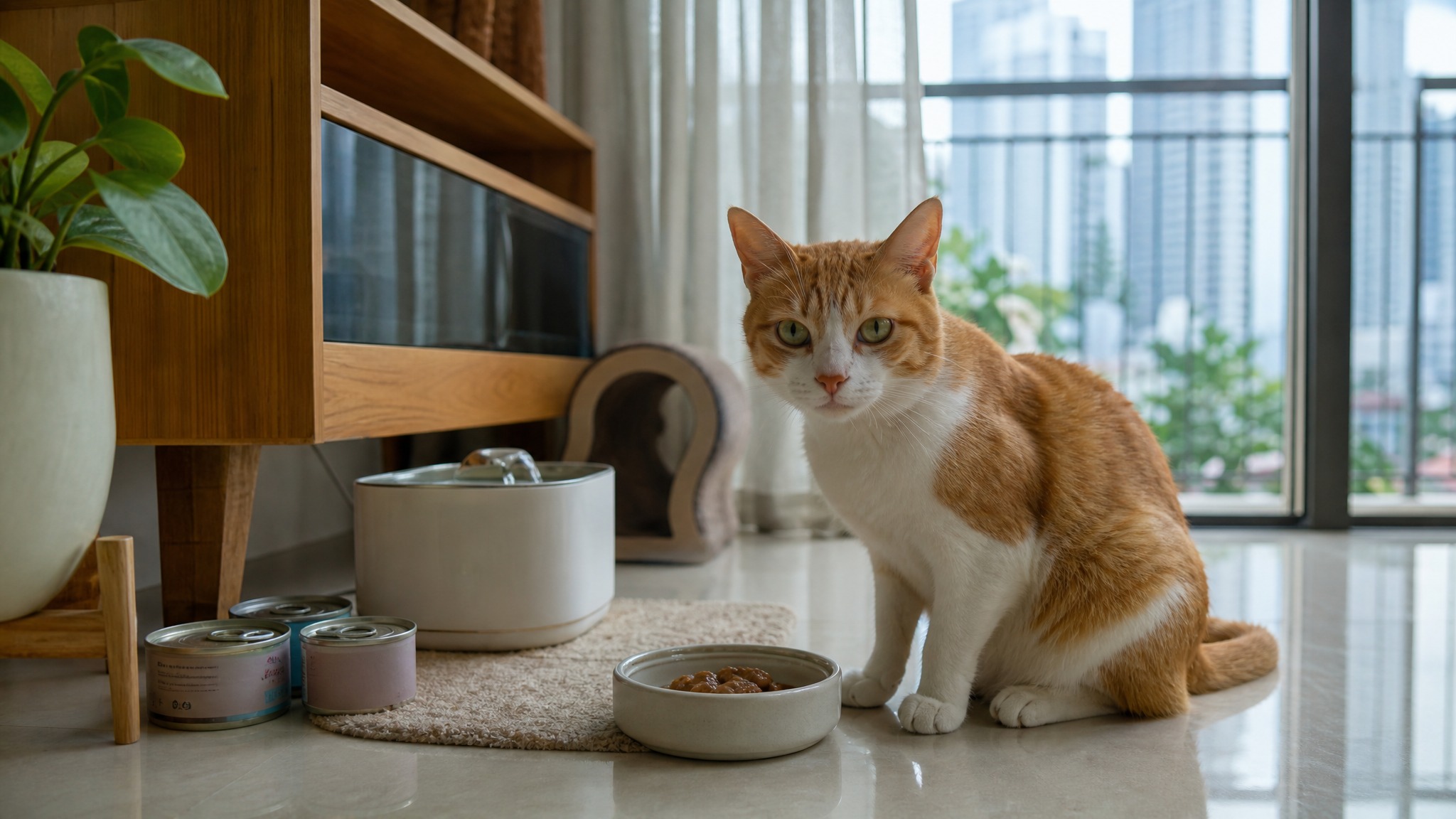
Is it normal if your cat eats less in Singapore’s hot weather?
Many owners notice a drop in appetite when the weather feels especially warm and sticky. In Singapore, that can happen any time of year because the heat is usually paired with high humidity, especially in HDB flats with limited airflow during the day. A mild change in intake can be normal, particularly for indoor cats that nap more and move less when the flat feels stuffy.
This is why cat appetite hot weather is a common concern for local owners. Cats often regulate intake based on comfort, activity level, and how strong food smells in a humid room. If your cat is still alert, drinking, grooming, and eating at least some meals, a small short-term dip may not be unusual.
Hot weather can also affect the food itself. Dry food left out too long may smell stale faster in a humid kitchen, while wet food becomes less appealing if it warms up quickly. Some cats are very particular about scent and texture, so even if the food is technically fine, they may walk away more often when the room is warm.
For working owners in Singapore, this can be more noticeable because meals may be left out while no one is home. A cat that usually grazes might suddenly eat less simply because the food has lost freshness by midday. In homes without air-con running all day, this effect is even more common.
Why cats may eat less during hot and humid weather in Singapore
Cats naturally conserve energy when they feel too warm. In humid weather, cooling down is harder because the body cannot release heat as efficiently, so your cat may sleep more, move less, and show less interest in meals during the hottest parts of the day. This pattern is often seen in indoor HDB cats that prefer to lie on cool tiles or stay near shaded corners.
Another reason is that cats rely heavily on smell to decide whether food is attractive. Heat and humidity can change how food smells, especially once a packet or can has been open for some time. When owners search for cat appetite hot weather, this is one of the most practical factors to check before assuming something is medically wrong.
Hydration also plays a part. Some cats feel slightly off if they are not drinking enough, and that can reduce appetite further. In Singapore homes, a water bowl placed near the litter box, in a noisy service yard, or under direct afternoon sun may discourage drinking.
Stress can quietly contribute too. Loud renovation noise nearby, less comfortable sleeping spots, changes in air-con use, or a bowl placed in a busy walkway can make a cat eat less. During warmer months or hotter spells, these small comfort issues tend to matter more because your cat is already trying to cope with heat.
What counts as normal appetite change and what should worry you
A mild decrease in appetite for a day, especially if your cat still eats treats, wet food, or a smaller portion than usual, can be within the normal range. Some cats simply shift their eating pattern and prefer late evening or very early morning meals when the flat is cooler. If stool, urination, energy, and behaviour stay normal, watch closely but do not panic.
That said, there is a big difference between “eating a bit less” and “hardly eating at all.” If your cat refuses multiple meals, stops eating for most of the day, or seems interested in food but then backs away, take it more seriously. A true cat appetite hot weather issue should improve with simple cooling and feeding adjustments, not continue to worsen.
You should also look at the whole picture. Vomiting, diarrhoea, hiding, drooling, bad breath, panting, lethargy, constipation, or straining in the litter box are not just hot-weather quirks. These signs suggest your cat may need a vet assessment rather than home trial and error.
Kittens, senior cats, and cats with existing medical issues need more caution. If they eat less even for a short period, dehydration and weakness can set in faster. Overweight cats are another group to watch carefully because going without food for too long can become dangerous.
Red flags that should not be ignored
- Not eating for 24 hours, or much sooner if your cat is a kitten, senior, or has a medical condition
- Vomiting repeatedly or unable to keep food down
- Very low energy, hiding, weakness, or unusual breathing
- Signs of dehydration such as tacky gums or very little urine
- Interest in food but obvious pain when trying to eat
Simple ways to support appetite at home
Start with meal timing. Offer food during the coolest parts of the day, usually early morning and late evening, rather than at noon when the flat feels warmest. Many owners see better results just by shifting meal times instead of changing the whole diet immediately.
Wet food is often more appealing in hot weather because it has a stronger aroma and adds moisture. If your cat usually eats dry food, try mixing in a small spoonful of wet food or offering a separate wet meal once or twice a day. This is one of the easiest ways to manage cat appetite hot weather without forcing major diet changes.
You can also gently warm refrigerated wet food to room temperature before serving. Food that is too cold may smell less attractive, while food left out too long in a humid room quickly loses appeal. Serve smaller portions and replace uneaten wet food promptly so each meal smells fresher.
Hydration support matters as much as food. Place multiple water bowls around the home, especially in quiet and shaded spots, and refresh them often. Some cats drink better from wide ceramic or stainless steel bowls that do not touch their whiskers.
Bowl setup and feeding environment
Bowl location can make a surprising difference. Put food away from the litter box, washing machine, and high-traffic paths where people are always walking past. In HDB homes, a calm corner with a fan nearby but not blowing directly on the food is usually more comfortable.
Shallow bowls are often better for picky eaters because they reduce whisker stress. If you have more than one cat, feed them separately so one cat does not feel rushed or guarded. A quiet setup is especially helpful if your cat already tends to eat less in humid weather.
Product checklist for humid flats: what helps and what to look for
If your cat’s appetite dips when the weather is sticky, a few product choices can make day-to-day feeding easier. Choose stainless steel or ceramic bowls that are easy to clean and less likely to hold odour than old plastic. For cats that dislike deep bowls, a wide shallow dish may improve comfort and increase interest in meals.
For food formats, single-serve wet food is practical in Singapore’s humidity. Pouches, trays, or smaller cans reduce leftovers, which means less waste and fewer meals served from food that has sat open too long in the fridge. This also helps working owners who want quick, fresh meals before leaving for the office.
Toppers can be useful if your cat is eating less but still curious about food. Freeze-dried meat toppers, broth-based toppers made for cats, or a small amount of gravy-style wet food can improve aroma. Use them sparingly so your cat does not only wait for the topper and reject balanced meals.
A water fountain can encourage drinking, especially for cats that prefer moving water. In humid flats, choose one that is easy to clean fully because warm conditions can lead to slime build-up if maintenance is skipped. Clean pumps and replace filters on schedule rather than topping up endlessly.
Storage tips for cat food in Singapore humidity
- Store dry food in an airtight container in a cool indoor spot, not beside the window or stove
- Buy bag sizes your cat can finish while still fresh, instead of oversized bags that sit for months
- Refrigerate opened wet food promptly and use it within the manufacturer’s guidance
- Serve small portions first, then top up if needed rather than leaving a full meal out all day
- Wash bowls daily to prevent stale smells that can put sensitive cats off food
These practical changes often help with cat appetite hot weather issues before they become bigger feeding struggles. They are especially useful in apartments where air circulation is limited and food odour changes faster. Good storage and bowl hygiene matter just as much as the recipe itself.
When a reduced appetite needs a vet visit
If your cat is eating less but still behaving normally, you can usually monitor closely while trying simple home adjustments. But if there is a clear drop lasting more than a day, or if your cat refuses favourite foods too, it is safer to contact a vet. Appetite loss can be linked to dental pain, nausea, fever, urinary discomfort, or other problems that hot weather may only make more noticeable.
Do not assume every cat appetite hot weather change is caused by the climate alone. Singapore’s warm conditions can overlap with real health issues, and cats are good at hiding discomfort. Early vet advice is especially important if your cat has had previous urinary, kidney, liver, or gastrointestinal problems.
Before the visit, note how much your cat has eaten, drunk, peed, and passed stool. Take photos of any vomit, unusual litter box output, or food refused, and bring details of the exact cat food Singapore product or treats you have offered. These observations help the vet decide whether the issue is likely dietary, environmental, or medical.
If your cat is breathing with effort, panting for more than a brief stressful moment, collapsing, or seems severely weak, treat it as urgent. Heat stress and dehydration can escalate quickly. In those cases, do not wait to “see if dinner goes better.”
FAQ
1. Do cats naturally eat less in hot weather?
Yes, some do. A mild short-term reduction can be normal, especially if your cat still drinks, stays alert, and eats more during cooler hours. But complete food refusal or a big drop in intake is not something to ignore.
2. How long can I monitor my cat eating less before seeing a vet?
If your cat is otherwise normal, you can monitor briefly while adjusting meal timing, freshness, and hydration. If your cat has eaten very little for 24 hours, or sooner for kittens, seniors, or cats with medical issues, call a vet. If there are other symptoms like vomiting or lethargy, do not wait.
3. Is wet food better than dry food during humid weather?
For many cats, yes. Wet food smells stronger, adds moisture, and can be more appealing when the weather is warm. Just avoid leaving it out too long in a humid room, and serve smaller fresh portions instead.
4. Can air-con help improve my cat’s appetite?
It can help if the flat is very warm and stuffy. A cooler, more comfortable room may encourage both eating and drinking. You do not need to keep the whole home cold, but a calm, cooler feeding area can make a difference.
5. What should I buy first if my cat eats less in Singapore’s hot weather?
Start with basics: a shallow ceramic or stainless steel bowl, a few wet food options your cat already tolerates, extra water stations or a fountain, and proper airtight food storage. These simple upgrades often help more than constantly changing brands.
If you are trying to manage feeding, hydration, and odour control more easily at home, it helps to keep the right cat supplies on hand before your cat gets fussy. Simple upgrades like fresh wet food formats, easy-clean bowls, fountains, food storage containers, and litter that suits humid HDB living can make daily care much smoother. If you want to compare practical essentials for Singapore homes, browse Cat Garden’s Singapore collection of cat supplies and choose products that support comfort, appetite, and cleaner indoor living.
延伸閱讀
- Best Cat Litter for Singapore Humidity: Odour Control, Clumping, and Tracking Checks
- Aiyoh! Why My Cat Suddenly Pee Everywhere? 4 Big Reasons & How to Settle It!
- [2025 Guide] How to Choose Cat Litter? One Article to Understand Everything, No More Stepping on Landmines!
Last updated:2026-06-01 by CatGarden
CatGarden Deodorizing Mineral Cat Litter 3.0