
▶Cat Column, Everyday beauty care
Why Is My Cat Itching More in Singapore’s Humid Weather? Common Skin Causes and When to See a Vet
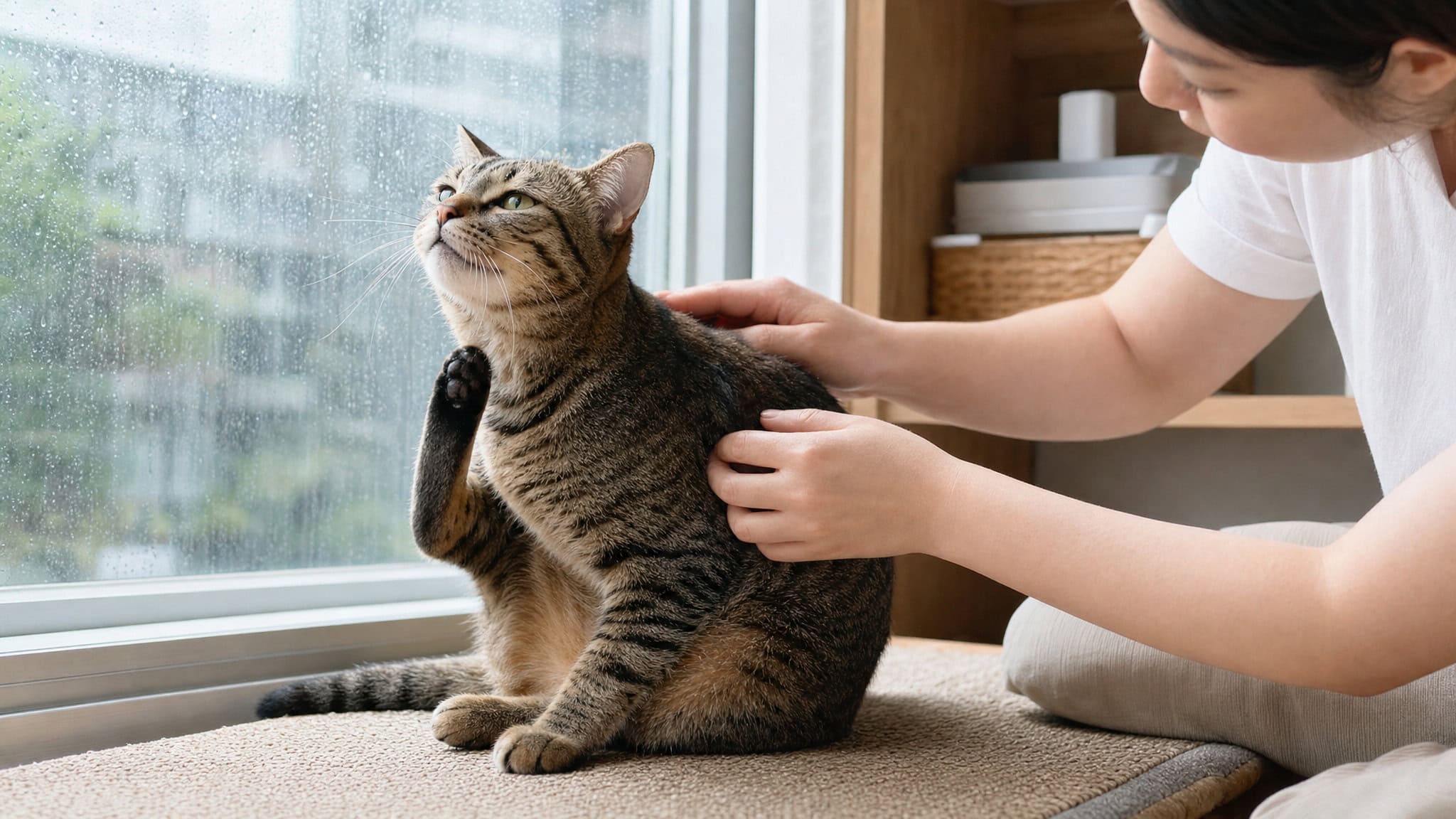
Why cats get itchier in Singapore’s humid weather
Many cat owners notice that scratching seems to get worse during hot, sticky periods, and that is not your imagination. Singapore’s year-round humidity can make the skin feel warmer, oilier, and more irritated, especially for indoor cats living in enclosed HDB flats with limited airflow. When a cat is already prone to cat skin allergy Singapore concerns, humid weather can make mild itchiness flare up more often.
Humidity also creates a friendlier environment for common skin triggers. Fleas, mites, and fungal organisms tend to do better in warm, moist conditions, while sweaty skin folds and dense fur can trap moisture close to the body. Even if your cat stays indoors most of the time, shared lift lobbies, window grilles, shoes brought in from outdoors, and contact with other pets can still expose them to irritants.
Singapore homes can also swing between two extremes: humid rooms during the day and strong air-con at night. That change can stress the skin barrier, especially in cats that already have sensitivities. For some pets, what looks like simple scratching may actually be a mix of environmental irritation and an underlying cat skin allergy Singapore issue.
Busy working owners may miss the early signs because cats groom so often anyway. A bit more licking, chewing at the paws, or rubbing the face on furniture can seem harmless at first. But when these behaviours become frequent, it is worth paying attention before the skin becomes red, infected, or patchy.
The most common skin causes: fleas, mites, fungal issues, allergies, and dry skin from air-con
Fleas and flea allergy
Fleas are one of the most common reasons a cat suddenly becomes very itchy. You may not always see live fleas, especially on cats that groom a lot, but you might spot tiny black specks called flea dirt around the neck, lower back, or tail base. In some cats, just a few bites can trigger a strong allergic reaction, making cat skin allergy Singapore searches very relevant for owners dealing with intense scratching.
Indoor cats are not automatically protected from fleas. Fleas or eggs can enter the home on clothing, bags, or other pets, and once they are inside, Singapore’s warm climate helps them persist. If your cat is scratching mostly around the back, tail, and thighs, fleas should be high on the list of possible causes.
Mites and other parasites
Mites can also cause severe itchiness, especially around the ears, head, face, and neck. Ear mites may lead to head shaking, dark ear debris, and scratching near the ears, while other mites can trigger crusting, hair loss, or widespread irritation. These conditions are uncomfortable and can spread in multi-pet homes if not addressed early.
Because some mite infestations are hard to identify without a vet exam, owners should avoid guessing and over-treating at home. Human skincare products or random over-the-counter treatments can make things worse. If your cat seems constantly irritated and the skin looks inflamed, a vet visit is the safer route.
Fungal issues
Fungal skin problems, including ringworm, are another concern in humid environments. Ringworm does not always look dramatic at first; it may show up as small circular bald patches, flaky skin, or broken hairs. In compact homes where pets share bedding, litter areas, and resting spots, fungal issues can spread more easily.
This matters because some fungal conditions are contagious to people and other animals. If anyone at home develops itchy skin lesions too, do not delay getting your cat checked. What seems like a simple cat skin allergy Singapore problem can sometimes turn out to be a fungal infection that needs proper diagnosis.
Food and environmental allergies
Allergies can be triggered by food proteins, dust, mould, cleaning products, or other household irritants. In Singapore, environmental factors like humidity, dust trapped in soft furnishings, and occasional mould growth in less ventilated corners may worsen skin symptoms. Cats with allergies may scratch the face and neck, overgroom the belly and legs, or develop recurring ear and skin issues.
Food-related reactions can look very similar to environmental allergies, which is why self-diagnosis is difficult. Switching foods too often without a plan may confuse the picture rather than help. If symptoms keep returning, a vet may suggest a proper elimination diet or other steps to narrow down the trigger behind your cat skin allergy Singapore concern.
Dry skin from air-con and low humidity indoors
It sounds ironic in Singapore, but dry skin can still happen, especially in cats spending long hours in air-conditioned bedrooms or studies. Air-con reduces moisture in the immediate environment, and some cats react with flaky skin, dull coat, or mild itchiness. This is more noticeable in cats that sleep directly under cold airflow or in homes where the air-con runs overnight.
Dry skin from air-con is usually milder than parasite or allergy-related itching, but it can still make a sensitive cat uncomfortable. The challenge is that several causes can overlap at once. A cat may have mild dryness, then scratch more, then develop secondary irritation that looks like a bigger cat skin allergy Singapore issue.
What Singapore cat owners can check safely at home before a vet visit
You do not need to do a full medical investigation at home, but a few simple checks can help you notice patterns. Start by looking at where your cat is scratching most: ears, face, neck, belly, paws, or tail base. The location can offer clues, and photos taken over a few days are often useful for the vet.
Next, part the fur gently in good lighting and look for redness, dandruff, black specks, scabs, bald patches, or moist skin. Check bedding, favourite resting spots, and scratching areas too. In HDB homes, where cats may rotate between window ledges, sofas, and bedrooms, comparing these spots can help you spot whether the issue worsens in warmer or more air-conditioned parts of the flat.
You can also review any recent changes in routine. Ask yourself whether you changed cat food Singapore brands, added a new litter, used a stronger floor cleaner, started a diffuser, or brought in new fabric items. Even switching to a dustier cat litter Singapore product can irritate some sensitive cats indirectly, especially if they already have a cat skin allergy Singapore tendency.
Keep your home checks gentle and low-risk. Do not apply essential oils, medicated human creams, or home remedies meant for people. If your cat resists handling, stop and avoid creating more stress, because anxious cats often groom even more after being upset.
- Check the coat: look for flea dirt, flakes, bald spots, or crusting.
- Check the ears: note dark debris, smell, or frequent head shaking.
- Check the paws: watch for chewing, redness, or staining from saliva.
- Track routines: note changes in food, litter, cleaning products, or room temperature.
- Take photos: daily pictures help track whether lesions are spreading.
Warning signs that mean you should book a vet appointment soon
Some itchiness can wait a day or two for observation, but certain signs should push you to book a vet appointment promptly. If your cat is scratching so much that they cannot settle, sleep, or eat normally, the discomfort is already significant. Open wounds, bleeding, swelling, or a strong smell from the skin also need professional attention.
Hair loss is another important sign, especially if it appears suddenly or in expanding patches. Overgrooming until the belly, legs, or sides look thin can point to allergies, pain, stress, or a combination of issues. Because many causes look similar on the surface, a vet exam helps separate parasites, infection, and cat skin allergy Singapore cases more accurately.
You should also book a vet visit if the ears look dirty or painful, if your cat shakes their head repeatedly, or if there is discharge from the skin. Recurrent symptoms matter too. If the itching improves for a short while and then keeps returning, there may be an underlying trigger that needs more than a temporary fix.
See a vet sooner rather than later if your household includes children, elderly family members, or other pets. Some skin conditions are contagious, and fast diagnosis helps protect everyone at home. This is especially practical in Singapore apartments, where shared spaces and close indoor contact make spread more likely.
How to support skin health at home with the right cat supplies
Good home support does not replace treatment, but it can make your cat more comfortable and reduce flare-ups. Start with basics: keep bedding clean, vacuum soft furnishings regularly, and wash fabric resting areas on a schedule. In smaller flats, fur, dust, and skin debris build up quickly, so consistent cleaning makes a real difference.
Choose cat supplies that support sensitive skin rather than adding more irritation. A low-dust litter can help reduce airborne particles, while quality food with clear ingredients may be useful for cats with suspected diet sensitivities. If you are shopping for cat food Singapore or cat litter Singapore, it is worth choosing options that suit your cat’s needs instead of buying whatever is easiest to grab.
For homes that run air-con often, think about comfort and balance. Avoid blasting cold air directly onto your cat’s sleeping area, and provide resting spots in both cooler and naturally ventilated parts of the home. Some cats do better when they have the choice to move between rooms rather than staying in one consistently dry environment.
Regular brushing with suitable tools can also help as part of home coat care. Brushing removes loose fur, lets you spot skin changes earlier, and reduces the amount of saliva your cat deposits through excessive licking. For long-haired cats, this can be especially useful during humid spells when the coat traps heat and moisture.
If your vet recommends parasite prevention, stick to the schedule rather than waiting for scratching to start again. Prevention is often much easier than dealing with a full flare-up later. For cats living fully indoors, owners sometimes assume they can skip this, but indoor-only does not always mean risk-free in Singapore.
Finally, build a simple skin-support routine around practical cat supplies: clean bedding, gentle cleaning products, low-dust litter, suitable food, and parasite control approved by your vet. This approach is especially helpful for HDB cat owners managing work, deliveries, and a busy household. Small, consistent changes at home often make it easier to manage a recurring cat skin allergy Singapore problem.
If your cat has been scratching more lately, start with the basics you can control at home: cleaner bedding, a low-dust litter, a comfortable sleeping area away from direct air-con, and food that suits sensitive cats. These simple changes can support recovery and help reduce future flare-ups, especially in Singapore’s humid weather. When you are ready to improve your setup, explore reliable cat supplies that make daily care easier, from litter and feeding essentials to home products designed for cleaner, more comfortable indoor living. Choosing the right supplies early can save a lot of stress later for both you and your cat.
FAQ
1. Can humid weather alone make my cat itchy?
Humidity can make itchiness feel worse, but it is often not the only cause. Warm, moist conditions may encourage fleas, mites, or fungal issues, and they can also worsen existing allergies. If the scratching is frequent or severe, it is best not to assume weather is the only reason.
2. My indoor HDB cat is scratching. Can it still be fleas?
Yes. Indoor cats can still get fleas through contact with people, other pets, or items brought into the home. Even a small number of flea bites can trigger strong irritation in sensitive cats.
3. When should I worry that it is more than dry skin from air-con?
If you see redness, bald patches, scabs, ear debris, a bad smell, or your cat is scratching constantly, it is likely more than simple dryness. Dry skin tends to be mild, while more obvious skin changes suggest parasites, infection, or allergy. A vet can help confirm the cause.
4. Should I change my cat’s food immediately if I suspect an allergy?
Not without a plan. Randomly switching foods can make it harder to identify whether food is really the trigger. If you suspect an allergy, speak to a vet about the right elimination approach instead of trying multiple products too quickly.
5. Can cat litter affect skin irritation?
It may contribute indirectly in sensitive cats, especially if the litter is very dusty or heavily scented. Dust and fragrance can irritate some cats and may add to discomfort in cats with existing skin issues. Choosing a low-dust, unscented option is often a sensible starting point.
Last updated:2026-06-01 by CatGarden
CatGarden Deodorizing Mineral Cat Litter 3.0