
▶Cat Column, Nutrition eating guide
Should You Let a Stray Cat Into Your Malaysian Home? What to Check Before Making It an Indoor Cat
Why Malaysian Cat Owners Often Feel Torn About Stray Cats
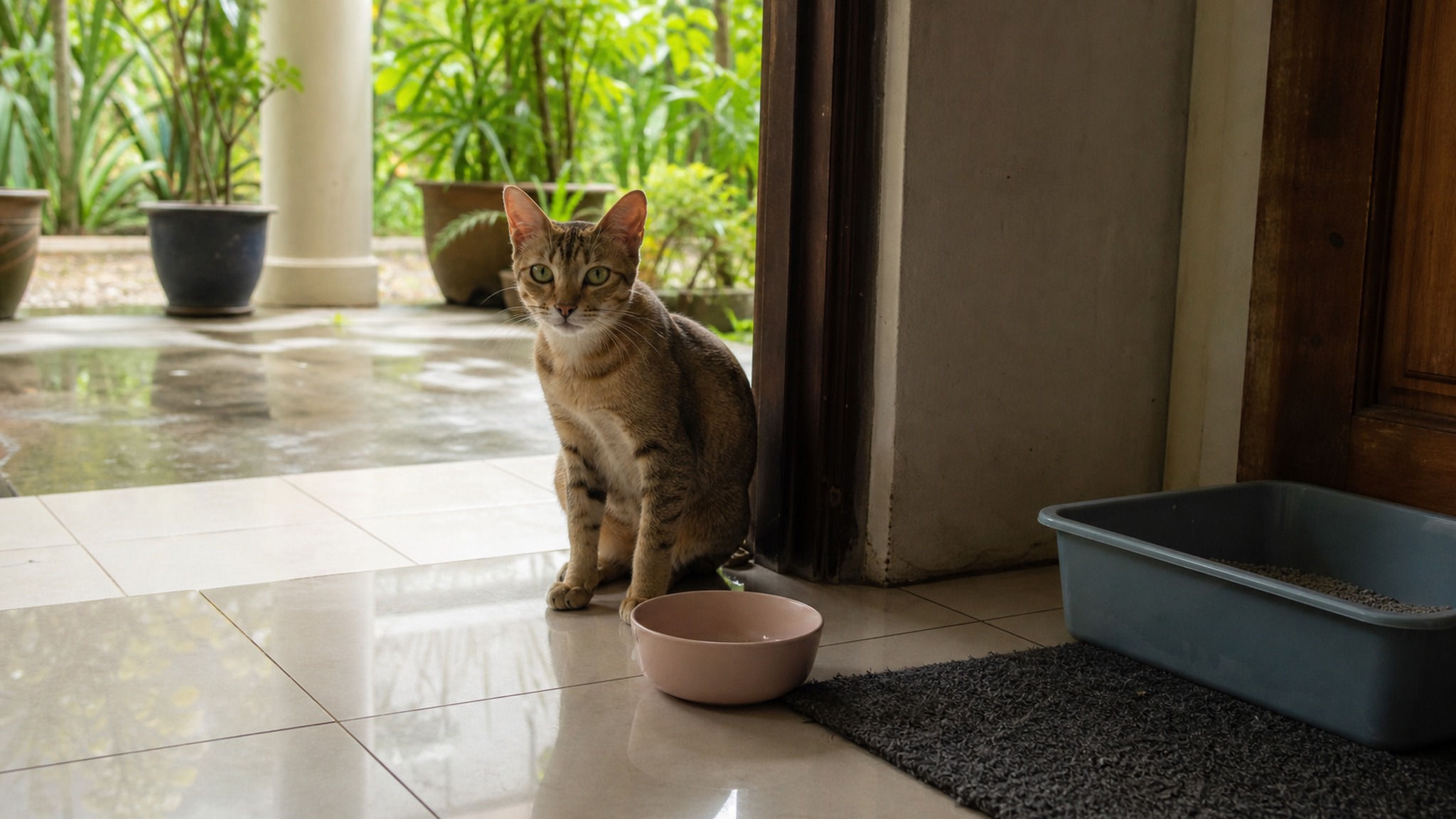
Seeing a friendly cat waiting outside your gate, condo lobby, mamak shop, or car porch can make any cat lover pause. In Malaysia, many community cats learn to approach people because food, shade, and shelter are easier to find near homes. The difficult part is knowing whether helping means feeding the cat outside, finding its owner, arranging vet care, or bringing it indoors for good.
A stray cat Malaysia situation is rarely simple because the cat may not be truly homeless. Some cats belong to neighbours but roam freely, especially around landed houses, back lanes, and shared outdoor areas. Others may be abandoned, lost, or born outdoors and only recently started trusting humans.
Kindness still needs a plan
Letting a cat into your home can feel like the safest choice, especially during heavy rain, hot afternoons, or when the cat looks thin. But indoor life is a big change for a cat that has been exposed to traffic, other animals, parasites, and unpredictable feeding routines. A careful first step protects both the new cat and any resident cats already living with you.
Before you make the cat an indoor cat, think of the first two weeks as a quarantine and adjustment period. This is when you check ownership, observe health, prepare supplies, and reduce stress. With the right setup, helping a stray cat Malaysia case can be compassionate without becoming chaotic.
Before Bringing the Cat In: Ownership, Safety and Neighbour Checks
Start by checking whether the cat may already have a home. Look for a collar, an ear tip, a recently groomed coat, or signs that the cat is comfortable around people. In landed areas, ask nearby neighbours, guards, or shop owners whether they recognise the cat before assuming it is abandoned.
For condos and apartments, speak to the management office or security desk if the cat has been appearing in shared areas. Some buildings have informal feeders, rescue volunteers, or residents who already monitor community cats. This step helps avoid accidentally taking in someone’s outdoor pet or disrupting an existing trap-neuter-return arrangement.
Check immediate safety first
If the cat is injured, heavily pregnant, very weak, or showing breathing difficulty, treat the situation as urgent and contact a local vet or rescuer for advice. If the cat seems stable, avoid grabbing it suddenly or forcing it into a carrier. A frightened cat may scratch, bite, hide under furniture, or bolt through an open door.
Use food to build trust and prepare a secure carrier before attempting to move the cat indoors. If you live in a high-rise unit, make sure windows, balcony doors, and service yard gaps are secured before the cat enters. A scared stray cat Malaysia rescue can panic quickly in an unfamiliar condo or landed home.
Health Risks to Handle First: Fleas, Worms, Skin Issues and Vet Timing
Outdoor cats in Malaysia’s humid climate often carry fleas, ticks, mites, or intestinal worms even when they look healthy. Humidity also makes skin problems, fungal infections, and dirty wounds harder to spot under the fur. Before letting the cat share furniture, bedding, or close contact with resident cats, keep it in a separate room or enclosed area.
Watch for excessive scratching, hair loss, scabs, ear dirt, diarrhoea, coughing, sneezing, eye discharge, or a swollen belly. These signs do not always mean something serious, but they do mean the cat needs proper checking. Do not use random flea products meant for dogs, as some ingredients can be dangerous for cats.
When to visit the vet
Ideally, book a vet visit within the first few days, especially if you plan to keep the cat indoors permanently. Ask the vet about flea control, deworming, vaccination timing, microchip scanning, FIV/FeLV testing, and neutering or spaying. For kittens, senior cats, or visibly sick cats, earlier vet care is better.
If you already have cats at home, quarantine is not optional. Keep bowls, litter trays, towels, toys, and bedding separate until a vet confirms the new cat is safe to introduce. This is one of the most important steps in turning a stray cat Malaysia case into a healthy indoor companion.
How to Set Up an Indoor Space Without Stressing Your Resident Cat
Choose one quiet room first, not the whole house. A spare room, study corner, laundry area, or enclosed bathroom can work if it is safe, ventilated, and easy to clean. The goal is to give the new cat a predictable space with food, water, litter, hiding spots, and minimal foot traffic.
For landed homes, check that back doors, windows, and roof-access areas cannot be pushed open. For condos, pay attention to balcony gaps, sliding doors, window grilles, and air-con ledges. Indoor safety matters because a newly rescued cat may still try to escape when startled.
Introducing the new cat slowly
If you have a resident cat, avoid face-to-face meetings at the start. Let both cats smell each other through a closed door and exchange bedding after a few days. Feed them on opposite sides of the door so they associate each other’s scent with something positive.
Only move to supervised visual contact when both cats are eating, grooming, and resting normally. Hissing or hiding at first is common, but chasing, swatting, or blocking access to food and litter means you need to slow down. A rushed introduction can create long-term tension that is much harder to fix later.
Essential Supplies for the First Two Weeks: Food, Litter, Scratchers and Cleaning
The first two weeks are about stability, hygiene, and observation. You do not need to buy every premium item immediately, but you do need reliable basics. Many Malaysian cat owners compare cat food Malaysia options through Shopee, Lazada, pet shops, and vet clinics, but the best first choice is usually a simple, digestible food the cat will actually eat.
Prepare separate food and water bowls, at least one litter tray, unscented cat litter, a scoop, pet-safe cleaner, towels, and a carrier. If the cat has been eating street food or leftovers, switch slowly to proper cat food to reduce stomach upset. For Malay search terms, this is where owners often look up makanan kucing and pasir kucing, but the priority is suitability, not just price.
Food and water
Wet food can help with hydration, which is useful in Malaysia’s warm weather. Dry food is convenient, but water intake still matters, so keep clean water available at all times. If the cat refuses everything, try warming wet food slightly or offering a plain veterinary recovery diet after checking with your vet.
Avoid giving milk, spicy food, bones, onions, garlic, or heavily seasoned leftovers. These can upset the stomach or cause more serious problems. A stray cat Malaysia rescue may seem grateful for any food, but long-term indoor care needs proper nutrition.
Litter, odour and cleaning
Odour control is a major concern in Malaysian homes because humidity can make smells stronger. Choose a litter that clumps well, controls ammonia, and does not create too much dust in smaller condo rooms. Scoop daily and wash the tray regularly with mild, pet-safe cleaning products.
Keep the litter tray away from food and water. If the cat avoids the tray, try a lower entry tray, different litter texture, or a quieter location. Some outdoor cats need time to understand cat litter, so patience and consistency help more than punishment.
Scratchers, hiding spots and comfort
A scratcher is not a luxury; it helps the cat mark territory and manage stress without destroying your sofa. Cardboard scratchers are affordable and easy to replace, while sisal posts may last longer. Place one near the cat’s resting area and another near the room entrance if space allows.
Give the cat a hiding box, soft towel, or covered bed so it can decompress. Avoid constantly picking it up, bathing it, or inviting visitors to meet it too soon. A calm environment helps a stray cat Malaysia transition from survival mode into indoor life.
FAQ
Can I bring a stray cat straight into my house?
You can, but it is safer to place the cat in a separate room first. This protects your home, your resident cats, and the new cat while you check for fleas, worms, illness, and ownership. A vet visit and short quarantine period are strongly recommended.
How long should I quarantine a stray cat before introducing it to my cat?
Many owners start with at least 10 to 14 days, but the exact timing depends on the cat’s health and vet advice. If there are signs of infection, parasites, or stress, wait longer. Introductions should begin with scent exchange before any direct meeting.
What should I feed a newly rescued stray cat?
Offer clean water and a complete cat food that is easy to digest. Wet food can be helpful for hydration, while dry food is convenient for routine feeding. Avoid milk, spicy food, bones, and seasoned leftovers.
What if the cat keeps crying indoors?
Crying may mean fear, hunger, heat, illness, or a desire to return outside. Check basic needs first: food, water, litter, hiding space, temperature, and safety. If the crying is intense, persistent, or paired with other symptoms, speak to a vet.
Do I need special supplies for a stray cat in Malaysia?
You need practical basics suited to local weather and home layouts. Prioritise flea control from a vet, good litter odour control, washable bedding, a secure carrier, and easy-to-clean feeding items. These are especially useful in humid rooms, condos, and landed homes with outdoor exposure.
Choosing Supplies for a Smoother Start
Bringing a cat indoors is easier when the first two weeks are planned properly. Instead of buying random items one by one, prepare a small starter set: suitable food, clean bowls, reliable cat litter, a litter scoop, scratcher, carrier, flea-safe cleaning products, and a few washable comfort items. If you are comparing cat supplies online in Malaysia, look beyond price and check size, material, odour control, delivery speed, and whether the product matches your cat’s age and health condition. For a new stray cat Malaysia rescue, simple, safe, and easy-to-clean products are usually better than complicated setups. Start with essentials, observe what the cat actually uses, then upgrade gradually as it settles into indoor life.
延伸閱讀
- Is Your Cat Acting Normal? Subtle Illness Signs Malaysian Owners Often Miss
- Are Cat Exercise Wheels Worth It for Indoor Cats in Malaysia?
- Why Is Your Cat Meowing at Night? Condo-Friendly Routine Tips for Malaysian Homes
Last updated:2026-06-18 by CatGarden
CatGarden Deodorizing Mineral Cat Litter 3.0