
▶Cat Column, Nutrition eating guide
Why Is My New Cat Hiding All Day? A Practical Guide for Singapore HDB Owners
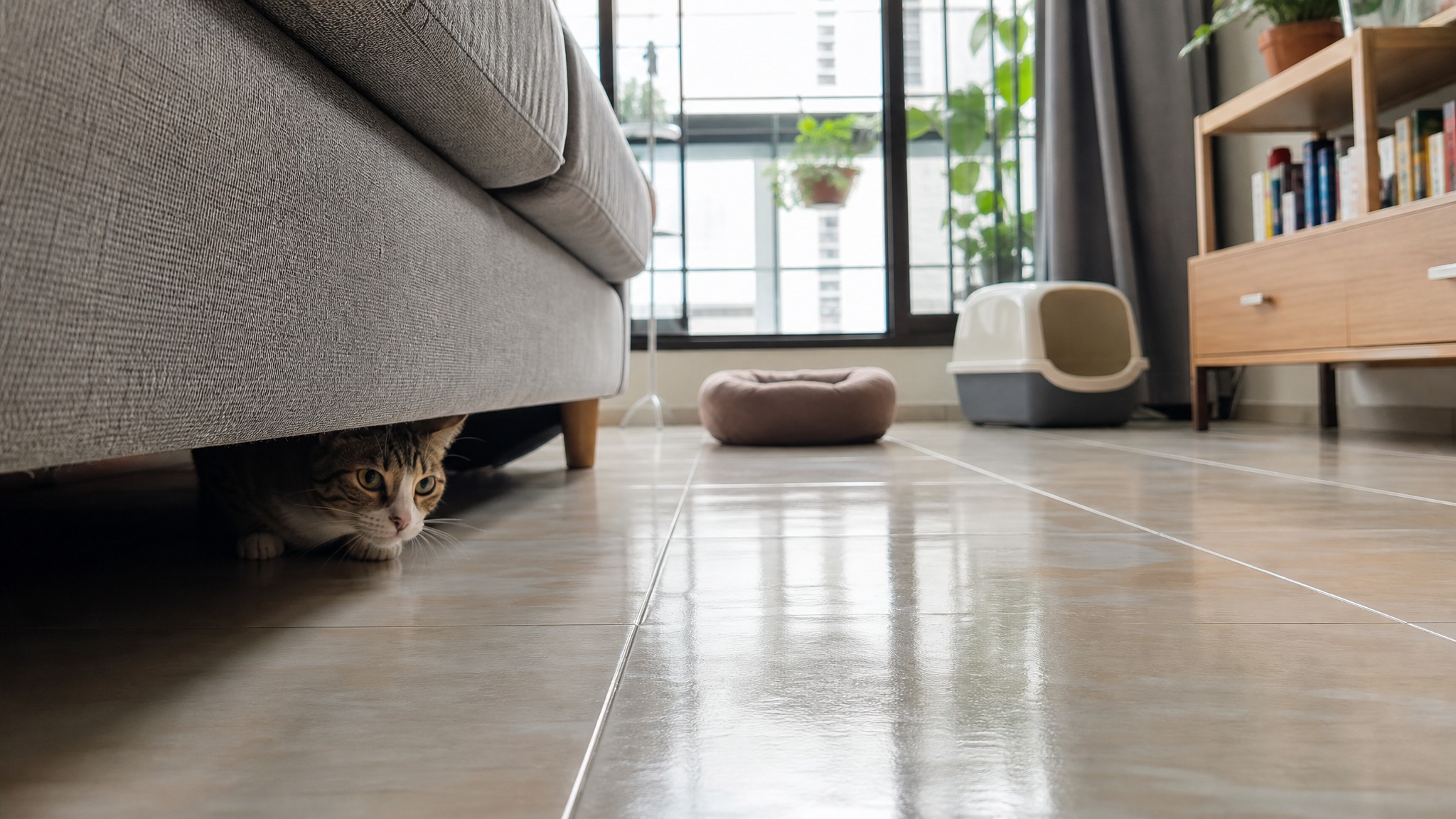
Why a New Cat Hides in a New Home
It is very common for a new cat hiding under the bed, behind the sofa, or inside a cupboard for the first few days after coming home. From your cat’s point of view, everything is unfamiliar: new smells, new sounds, new people, and a different daily rhythm. Even a calm cat can feel overwhelmed when moving into an HDB flat, especially if the environment is busy or noisy.
Cats are naturally cautious animals, and hiding is one of their main ways to feel safe. In the wild, a hidden space protects them from threats while they observe their surroundings. At home, that same instinct appears when a cat is stressed, unsure, or simply taking time to adjust. So if you have a new cat hiding all day, it does not always mean something is wrong.
In Singapore homes, there are a few extra factors that can make a cat retreat more. Lift noises, corridor sounds, renovations nearby, and household appliances can all feel intense in a compact apartment setting. If your home is warm and humid, your cat may also choose cool, dark corners to rest in while adjusting. This is especially true for indoor cats that have just moved from a shelter, foster home, or breeder environment.
Your cat’s personality matters too. Some cats walk out and explore within hours, while others need a week or more before they feel brave enough to eat, play, or use the litter box openly. Age, past experiences, and whether the cat was well-socialised earlier in life all affect how quickly they settle in. The key is to understand what is normal and what is a sign to watch more closely.
What Is Normal in the First 3 to 14 Days
For many owners, the first question is whether their cat’s behaviour is still within the normal adjustment phase. In most cases, a new cat hiding for the first 3 to 14 days is not unusual. During this period, your cat may come out only at night, eat a little when no one is around, and return to hiding when they hear movement. This quiet observation phase helps them map out the space and decide whether it feels safe.
You may also notice your cat eating less than usual in the first one to three days. Mild appetite reduction can happen due to stress, but your cat should still be taking in some food and water. Litter box use may be less frequent at first, especially if the cat is not eating much. However, there should still be gradual signs of settling, such as sniffing around, grooming, or reacting to toys.
Signs your cat is slowly adjusting
Even if your cat is still hidden, small improvements matter. They may start peeking out when the room is quiet, shifting from one hiding spot to another, or eating sooner after you place food down. Some cats begin responding to your voice or watching you from a safe distance before they are ready to interact directly. These are good signs that the adjustment process is moving in the right direction.
Body language is often more useful than the hiding itself. A cat that is tucked away but resting, grooming, or blinking slowly is usually coping better than a cat that is frozen, panting, or constantly tense. If your cat is using the litter box, drinking water, and staying alert, that generally points to stress rather than illness. A new cat hiding with these behaviours often just needs more time and less pressure.
What is less normal during the adjustment period
While some hiding is expected, there are limits. If your cat has not eaten at all for more than 24 hours, has not urinated, or seems extremely weak, do not assume it is just shyness. Kittens, senior cats, and cats with known health issues can deteriorate faster. In Singapore’s humid weather, dehydration can become a concern more quickly if a cat is stressed and not drinking enough.
Also pay attention if your cat is vomiting repeatedly, breathing with effort, or showing diarrhoea that does not improve. These signs go beyond normal settling-in stress. It is always better to speak to a vet early rather than wait too long. New environments can expose underlying health issues that were not obvious before adoption.
How to Help a New Cat Feel Safe in an HDB Flat
The best way to help a nervous cat is to make the environment smaller, quieter, and more predictable. Instead of giving full access to the whole flat on day one, start with one room or one calm zone. Place food, water, litter, bedding, and a hiding option all within easy reach. This setup helps reduce stress and lets your cat build confidence without feeling exposed.
A proper hiding place is important. Many owners try to stop a new cat hiding, but taking away hiding spots often increases fear. Instead, offer safe hiding spaces such as a covered bed, carrier with a towel over it, or a cat cube. When your cat has a place to retreat, they often start coming out sooner because they feel more in control.
Set up the essentials well
In an HDB home, practical setup matters a lot. Put the litter box in a quiet, low-traffic corner away from food and water. Choose a cat litter that controls odour well in humid weather, because strong smells can build up quickly in small flats. Keep the area clean, dry, and easy for the cat to reach, especially at night.
Food and water should be easy to find and separate from the litter area. If your cat is eating poorly, try offering the same food they had before, then switch slowly later if needed. Some cats do better with wet food because the smell is stronger and more appealing. If you are shopping for cat food Singapore options, focus on simple, familiar recipes first rather than changing diet immediately.
Use calm routines, not force
Speak softly and move slowly around your cat’s safe space. Sit nearby and let your cat watch you without trying to touch them. You can blink slowly, read quietly, or place a few treats nearby and then step away. This helps the cat learn that your presence is not a threat.
If you work long hours, keep the routine consistent. Feed at the same times each day, leave the room calm, and avoid loud TV or sudden music when possible. In Singapore, many owners use air-con in one room; if so, make sure the temperature is comfortable and not too cold. Good ventilation and a stable environment can help a stressed cat relax faster.
Common Mistakes That Make Hiding Worse
One of the biggest mistakes is trying to pull the cat out from hiding. This often damages trust and teaches the cat that even their safe place is not secure. A new cat hiding needs time to observe and decompress. Forcing interaction may lead to more stress, defensive behaviour, or even refusal to eat.
Another common issue is introducing too much too soon. Multiple family members crowding around, children trying to play immediately, or resident pets approaching before the new cat is ready can all delay adjustment. Keep introductions slow and controlled. Let your cat gain confidence in the home first before adding more social pressure.
Avoid changing everything at once
Some owners switch litter, food, bedding, and room setup all at the same time after bringing the cat home. That can make it harder to figure out what your cat is comfortable with. Start with what is familiar, then make gradual improvements later. This is especially useful when selecting cat litter Singapore owners prefer for odour control, because your cat may still need time to accept the texture and scent.
Do not place food too far from the hiding area in the beginning. If your cat feels they need to cross an open, busy room to eat or use the litter box, they may avoid both. In a compact HDB flat, a few metres can feel like a lot to a frightened cat. Make the basics easy to access, then slowly expand their world.
Watch the environment carefully
Strong cleaning products, scented litter, and noisy appliances can all be too much for a nervous cat. In humid weather, odours can linger, so owners sometimes overcompensate with fragrances. But many cats prefer low-scent or unscented products. Gentle, clean, and simple is usually best during the settling-in period.
Do not assume hiding means your cat wants to be left alone all the time either. The goal is quiet support, not complete absence. Check food, water, and litter daily, and observe from a distance. A frightened cat still needs steady care, routine, and patient reassurance.
When Hiding Means It Is Time to Call a Vet
Most cases of new cat hiding are behavioural and improve with time, but some situations need medical advice. If your cat refuses all food for more than 24 hours, drinks very little, or has not used the litter box, contact a vet. This is especially important for young kittens, senior cats, and cats with known medical history. Stress can look similar to illness, so do not rely on hiding alone to judge the situation.
You should also call a vet if hiding is accompanied by vomiting, diarrhoea, laboured breathing, discharge from the eyes or nose, or signs of pain when moving. A cat that seems limp, unusually hot, or unable to settle may need urgent assessment. In Singapore, where many owners keep cats fully indoors, changes in appetite and toilet habits are often easier to track. Use that to your advantage and monitor closely from day one.
If your cat was just adopted, arrange a vet check if one has not already been done recently. This helps confirm vaccination status, parasite control, and overall health. It also gives you a baseline for any issues that may appear during the transition. When in doubt, it is always safer to ask a vet than wait for severe symptoms.
Most importantly, remember that hiding itself is not a failure. It is communication. Your cat is telling you they need safety, quiet, and time. With the right setup, most cats begin to relax and explore at their own pace.
If your cat is settling into a new HDB home, the right setup can make a big difference. Simple essentials like low-stress hiding beds, odour-control litter, feeding bowls, and familiar food can help your cat feel secure faster in Singapore’s humid indoor environment. If you are comparing everyday cat supplies for a new adoption, focus on comfort, cleanliness, and easy routine rather than buying too many things at once. A calm home starts with practical basics your cat will actually use. Browse suitable litter, food, and other cat supplies to build a quiet, cat-friendly space that supports a smoother transition.
FAQ
How long will a new cat hide in a new home?
Many cats hide for a few days, while some may take one to two weeks to feel comfortable. As long as your cat is eating some food, drinking water, and using the litter box, the adjustment may still be within a normal range.
Should I leave my new cat alone if it is hiding?
Give your cat space, but do not ignore them completely. Quiet check-ins, fresh food and water, and a calm routine help your cat feel secure without pressure.
Is it normal for a new cat to hide and not eat much?
Yes, mild appetite reduction can happen in the first day or two بسبب stress, but your cat should still eat something. If your cat refuses all food for more than 24 hours, contact a vet.
What is the best room for a new cat in an HDB flat?
A quiet, low-traffic room or corner is best. Include food, water, litter, bedding, and a safe hiding spot so your cat does not have to cross a busy area to meet basic needs.
Can I use treats or toys to encourage a hiding cat to come out?
Yes, but keep it gentle. Place treats nearby or use a soft wand toy from a distance, and let your cat decide whether to approach. Do not force interaction if they are still tense.
延伸閱讀
- Can You Keep Cats in an HDB Flat Now? A Simple Guide to Singapore’s Cat Rules for Owners
- How to Cat-Proof an HDB Flat: A Practical Safety Checklist for Singapore Owners
- Cat Microchipping in Singapore: Cost, Process, and What Owners Should Prepare
Last updated:2026-06-03 by CatGarden
CatGarden Deodorizing Mineral Cat Litter 3.0