
▶Cat Column, Everyday beauty care
Bringing a Kitten Home in Singapore: Vet Checks, Vaccines, Food, and HDB Setup
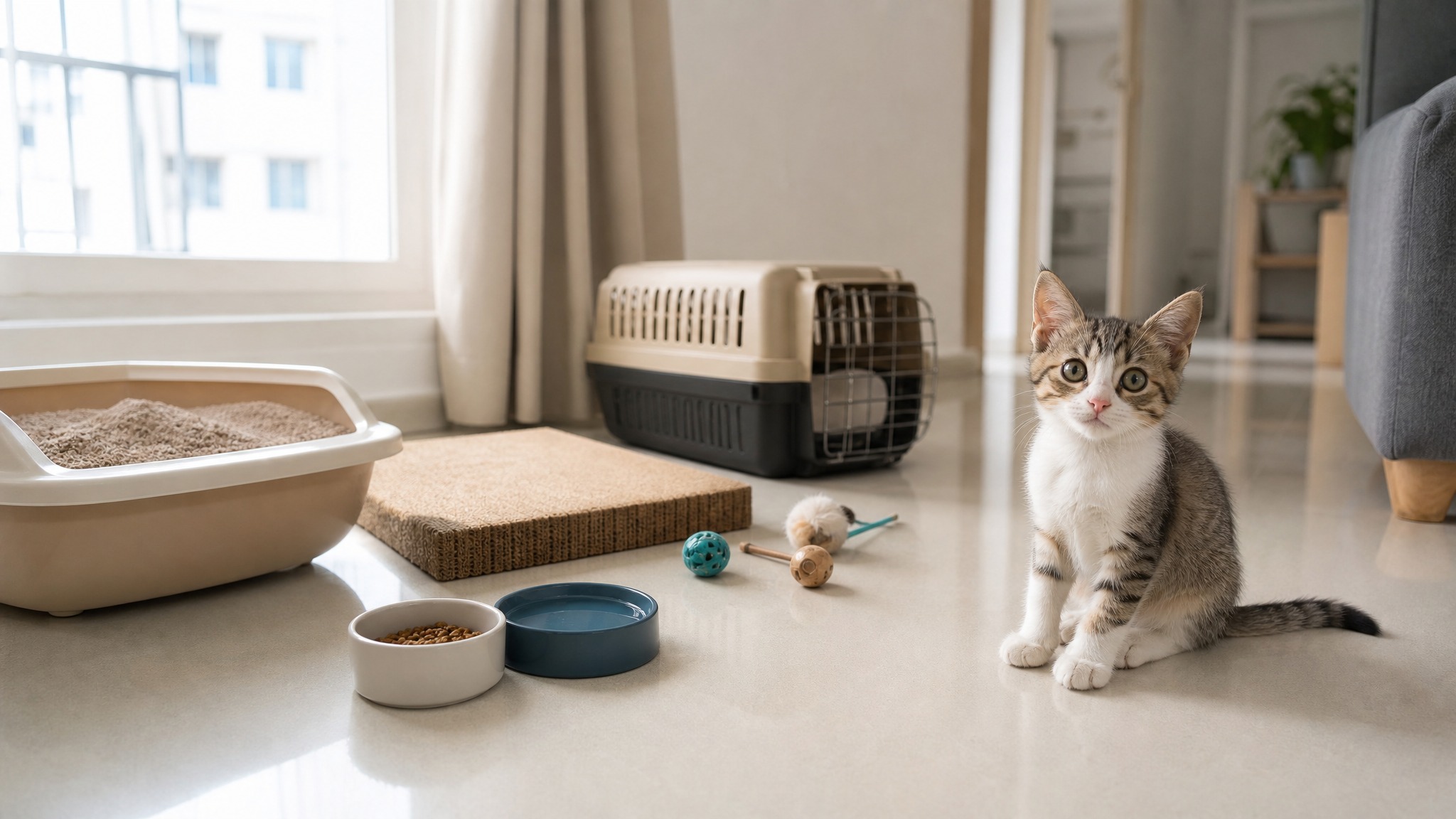
First 48 Hours: Keep Your Kitten Calm, Warm, and Contained
Bringing a kitten home is exciting, but the first two days should feel boring in the best possible way. For good kitten care Singapore owners should set up one quiet starter room before the kitten arrives, especially in an HDB flat where sounds from neighbours, lifts, and corridors can feel overwhelming. Keep the room warm but well-ventilated, with no direct fan blowing at the kitten. If you use air-con at night, avoid making the room too cold and give your kitten a soft bed or covered hideout.
Containment is not punishment; it helps your kitten map the home safely. A bedroom, study corner, or utility room can work if it has no open windows, dangling cords, exposed cleaning supplies, or gaps behind appliances. Place food, water, litter, and a resting area in separate zones so your kitten does not need to cross a scary room to meet basic needs. Let the kitten come to you instead of pulling it out from hiding.
Set Up a Simple Starter Room
Your starter room should have a low-sided litter tray, kitten-safe food and water bowls, a scratcher, a washable bed, and one or two toys. In Singapore’s humid weather, choose bedding that dries quickly and does not trap musty smells. Avoid overloading the room with too many new scents, diffusers, sprays, or strong cleaners. Kittens rely heavily on smell, and a calm scent environment helps them settle faster.
If there are children, other cats, or a dog at home, delay introductions until the kitten is eating, toileting, and resting normally. Short visits through a door gap or baby gate can happen later, but the first 48 hours are for decompression. For busy working owners, this setup also reduces risk while you are not watching closely. A contained kitten is less likely to disappear into a cabinet, chew cables, or get stuck behind furniture.
Vet Checks Singapore Owners Should Book Early
A first vet visit should be booked soon after adoption or purchase, even if your kitten appears bright and playful. In practical kitten care Singapore, early checks help confirm age, weight, body condition, hydration, temperature, teeth, ears, skin, and overall development. The vet can also check for fleas, ear mites, diarrhoea concerns, respiratory signs, and congenital issues that may not be obvious at home. Bring any adoption records, vaccine booklet, deworming history, and food information with you.
Many Singapore kittens come from different backgrounds: home rescuers, fosterers, breeders, shelters, or informal rehoming. Each background may come with a different level of medical history, so do not assume everything is complete. A vet can help you build a schedule from what is documented rather than guessing. If your kitten is very young, underweight, or recently stressed by travel, the vet may adjust the timing of vaccines or parasite control.
What to Ask at the First Visit
Ask your vet what weight gain is appropriate, what food texture suits your kitten’s age, and how often you should feed. You can also ask how to monitor stool quality, what normal kitten energy looks like, and when sneezing or watery eyes should be checked again. If your kitten will be an indoor HDB cat, ask about window safety, enrichment, and sterilisation timing. Indoor cats still need preventive care because people, shoes, bags, and other pets can bring germs or parasites into the home.
It is also useful to ask which emergency clinics are open after hours near your area. Singapore is compact, but travel time still matters when a kitten is weak, breathing badly, or having repeated vomiting. Save your regular vet’s number and one 24-hour clinic contact in your phone. Good kitten care Singapore planning is not about expecting problems; it is about knowing what to do before panic sets in.
Vaccines, Deworming, Flea Control, and Microchip Questions
Vaccination plans should be decided with a licensed vet based on your kitten’s age, health, history, and risk level. Core kitten vaccines commonly protect against serious contagious diseases, but the exact schedule depends on prior records and the vet’s assessment. Do not restart, skip, or combine treatments based only on online advice. If there is no reliable vaccine record, your vet can advise the safest way to proceed.
Deworming is also important because kittens can carry intestinal parasites even when they look healthy. Signs may include a bloated belly, poor weight gain, diarrhoea, vomiting, or visible worms, but some kittens show few signs. Flea control matters in Singapore’s warm, humid climate because fleas can multiply quickly indoors. Always use kitten-appropriate products from a vet or trusted pet pharmacy, as some dog flea products are dangerous to cats.
Microchip and Sterilisation Discussions
Ask your vet whether microchipping is recommended for your kitten and how registration details should be maintained. Even indoor HDB cats can escape through doors, service yards, or windows if a household member is careless for a moment. A microchip is not a GPS tracker, but it can help identify a lost cat if scanned by a clinic or relevant party. Keep contact details updated if you move or change phone numbers.
Sterilisation is another topic to raise early, even if the procedure will happen later. Your vet can advise suitable timing based on your kitten’s weight, maturity, and health. Planning ahead helps prevent accidental mating, roaming behaviour, and stress-related household issues. For multi-cat homes, it also reduces tension as kittens grow into adolescence.
Food, Water, and Cat Litter Choices for Humid HDB Flats
Food is one of the biggest daily decisions in kitten care Singapore, and it should be age-appropriate rather than chosen only by brand popularity. Kittens need food formulated for growth, with enough calories and nutrients to support rapid development. If you are changing food, transition slowly over several days unless your vet gives different advice. Sudden changes can upset the stomach, especially after a stressful move.
In humid HDB flats, food storage matters. Dry food should be sealed tightly and kept away from heat, moisture, and direct sun. Wet food should not sit out for long, especially in a warm kitchen or service yard. If your kitten eats slowly, offer smaller portions more often instead of leaving a full bowl out for hours.
Water and Feeding Rhythm
Fresh water should be available at all times, and some kittens drink more readily from a wide bowl or water fountain. Place water away from the litter tray and away from strong-smelling food if possible. If your home uses air-con often, your kitten may spend more time in cool rooms but still needs easy access to water. Watch urine clumps in the litter tray because changes can sometimes hint at hydration or urinary issues.
Working owners may prefer a predictable feeding rhythm: breakfast, dinner, and a small late meal depending on the kitten’s age. Very young kittens may need more frequent meals, so check with your vet if you are unsure. Automated feeders can help with dry food, but they do not replace daily observation. Your kitten’s appetite is one of the fastest ways to notice when something is wrong.
Cat Litter Singapore Owners Should Consider
Choosing cat litter Singapore homes can live with is about odour, tracking, dust, clumping, and disposal habits. In HDB flats, a covered litter box may reduce scatter, but some kittens prefer open trays because they feel safer and easier to enter. Start with a low tray so the kitten can climb in without effort. If you later upgrade to a larger box, keep the old one nearby for a few days during the transition.
Humidity can make odour control harder, so scoop at least once or twice daily and wash the tray regularly. Avoid strongly perfumed litter if your kitten avoids the box, sneezes, or seems uncomfortable. Good ventilation helps, but do not place the tray beside a window that may receive rain or harsh sun. For kitten care Singapore households, the best litter is the one your kitten uses consistently and your family can maintain cleanly.
When Kitten Symptoms Need a Vet Instead of Home Monitoring
Kittens can decline faster than adult cats, so it is better to be cautious. Call a vet promptly if your kitten refuses food, seems unusually weak, has repeated vomiting, has persistent diarrhoea, struggles to breathe, or has pale gums. Very young kittens have limited reserves, and waiting too long can make treatment harder. If you are unsure whether a symptom is urgent, call a clinic and describe the age, weight, symptoms, and timeline clearly.
Some mild issues can be monitored briefly if the kitten is still eating, drinking, playing, and passing normal urine and stool. For example, one soft stool after a food change may not be an emergency, but repeated watery diarrhoea is different. Sneezing once or twice may happen after dust exposure, but ongoing nasal discharge, eye discharge, or lethargy needs attention. Sensible kitten care Singapore means knowing the difference between “watch closely” and “book a vet now”.
Red Flags You Should Not Ignore
- Not eating: A kitten that skips meals or cannot keep food down should be checked quickly.
- Breathing changes: Open-mouth breathing, noisy breathing, or heavy effort is urgent.
- Severe diarrhoea: Watery stool, blood, or diarrhoea with weakness needs veterinary advice.
- Repeated vomiting: More than one episode, especially with tiredness, is concerning.
- Injury or falls: Window, furniture, or door accidents should not be dismissed.
- Straining in the litter box: Difficulty passing urine or stool needs prompt attention.
Keep a small kitten health log during the first few weeks. Note food type, appetite, stool quality, weight if you can measure it safely, and any medication or parasite treatment dates. This helps your vet make better decisions instead of relying on vague memory. It also helps the whole household stay aligned if different people feed or clean the litter tray.
FAQ
How long should I keep a new kitten in one room?
Many kittens benefit from staying in one starter room for a few days to a week, depending on confidence and behaviour. Move slowly if the kitten is hiding, not eating well, or still unsure about the litter tray. Once it is relaxed, curious, and using the litter box reliably, you can allow short supervised exploration. For HDB flats, check windows, service yards, and balcony access before expanding territory.
What is the best cat food Singapore owners should buy for kittens?
The best cat food Singapore owners can choose is a complete kitten formula that suits the kitten’s age, health, and digestion. Wet food, dry food, or a mixed routine can all work if the diet is balanced and your kitten eats well. Avoid choosing only by price, packaging, or adult cat recommendations. If your kitten has diarrhoea, poor appetite, or slow weight gain, ask your vet before switching repeatedly.
Can an HDB cat be happy indoors?
Yes, an indoor HDB cat can be happy if the home provides safety, routine, scratching areas, climbing options, play, and human interaction. Kittens need daily play sessions to build confidence and burn energy. Window views can be enriching, but windows and grilles must be secure. Indoor living reduces many outdoor risks, but it does not remove the need for vet care and preventive health planning.
How often should I clean kitten litter in Singapore weather?
Scoop the litter tray at least once or twice daily, and clean the full tray regularly based on litter type and odour. Singapore humidity can make smells build up faster, especially in small flats or poorly ventilated corners. If the tray smells strong to you, it is probably unpleasant for your kitten too. A clean tray also helps you notice changes in urine, stool, or litter box habits early.
When should I buy kitten supplies before bringing the kitten home?
Buy essentials before pickup day so the kitten can settle immediately. Prepare kitten food, bowls, litter, litter tray, carrier, scratcher, bed, safe toys, and basic cleaning supplies. Avoid buying too many large items until you learn your kitten’s preferences. Good kitten care Singapore starts with a simple, safe setup rather than a crowded room full of products.
CTA
Starting life with a kitten in Singapore is easier when the basics are ready before the small problems appear. A calm room, suitable kitten food, reliable litter, safe bowls, scratchers, carriers, and cleaning essentials can make the first week smoother for both your kitten and your household. If you are choosing cat supplies for an HDB flat, focus on products that are easy to clean, humidity-friendly, space-conscious, and comfortable for a growing indoor cat. Look for kitten-appropriate food, low-entry litter trays, odour-control litter, washable bedding, and toys that support daily play without cluttering the home. With the right supplies and a sensible vet plan, your kitten gets a safer start, and you get a routine that is much easier to maintain.
延伸閱讀
- Why Is My Cat Itching More in Singapore’s Humid Weather? Skin Triggers and Vet Warning Signs
- Are Selkirk Rex Cats Healthy? Singapore HDB Care, Skin and Coat Checks
- Can Mold in a Humid Singapore Flat Affect Your Cat? Warning Signs, Cleaning Checks, and Vet Thresholds
Last updated:2026-06-10 by CatGarden
CatGarden Deodorizing Mineral Cat Litter 3.0