▶Cat Column, Environment cleaning care
How to Store Cat Food in Singapore Humidity: Kibble, Cans, and Treats Checklist
How to Store Cat Food in Singapore Humidity: Kibble, Cans, and Treats Checklist
Why Singapore Humidity Makes Cat Food Storage Harder
Singapore’s warm, humid weather makes cat food storage more than just a neat kitchen habit. Kibble, opened cans, and treats can lose freshness faster when they sit near heat, moisture, or strong cooking smells in an HDB flat. Even if the food still looks normal, the aroma, texture, and palatability may change. For indoor cats that graze slowly, this can lead to food refusal or tummy discomfort.
Humidity is especially tricky because it affects both food quality and home odour control. Dry food can turn stale, oily, or slightly soft when exposed to damp air. Wet food can spoil quickly once opened if it is left out too long, especially in a non-air-con kitchen. Busy working owners may also forget how long a bowl has been sitting out, so a simple routine matters.
Common Singapore Home Storage Problems
Many Singapore homes have compact kitchens, service yards, and shared storage spaces for cat supplies, cleaning products, and groceries. If cat food is kept beside the stove, washing machine, window, or rubbish chute area, heat and moisture can build up. This is not ideal for long-term freshness. A cool, dry cupboard away from sunlight is usually a better choice.
Another common issue is buying large bags of cat food Singapore shoppers find on sale, then taking too long to finish them. Bulk buying can save money, but only if the food stays fresh until the final scoop. For one cat or a small HDB cat household, a smaller bag may be more practical. Freshness should matter as much as price per kilogram.
How to Store Dry Cat Food Without Losing Freshness
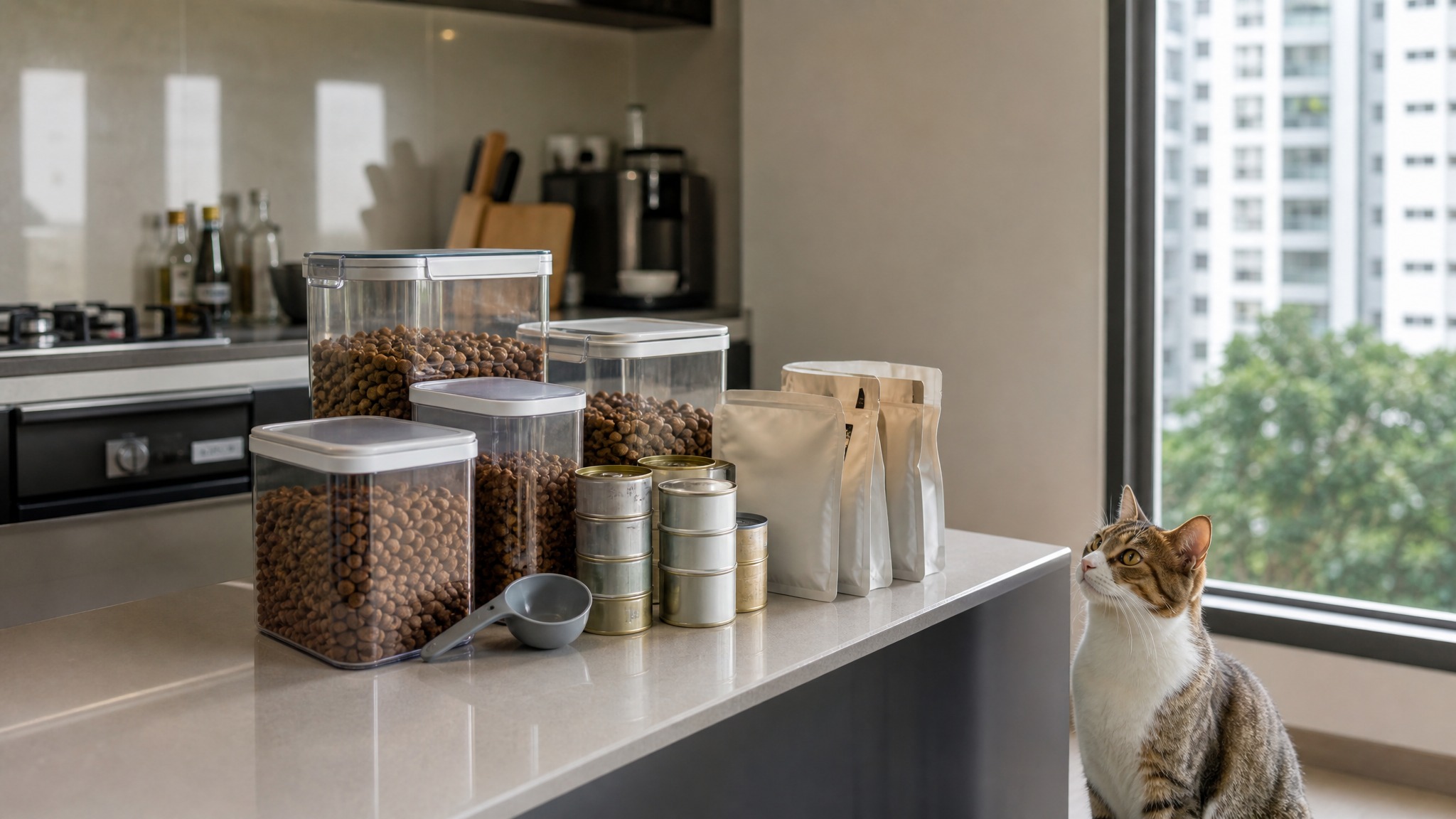
Dry kibble is convenient, but it is not immune to Singapore humidity. Once the bag is opened, oxygen and moisture slowly affect the fats and flavour. Good cat food storage starts with keeping the original bag, because it usually has the batch number, expiry date, feeding guide, and food-safe inner lining. Instead of pouring kibble directly into a plastic bin, place the whole bag inside an airtight container.
After every feeding, press out excess air, roll the bag down tightly, and clip it before closing the container. This gives double protection against humidity and household pests. Avoid leaving the scoop inside the kibble if it is wet, oily, or handled after touching other food. Wash and dry scoops regularly so they do not introduce moisture into the bag.
Best Places to Keep Kibble in an HDB Flat
Choose a cupboard that stays dry and has stable temperature through the day. Avoid areas beside the fridge motor, oven, windows, bathroom wall, or laundry zone. If your kitchen gets hot during afternoon sun, store the food in a living room cabinet instead. Air-con rooms can help, but only if the container is sealed before being moved back into warmer air.
Do not store kibble on the floor if your flat has occasional ants or moisture near the skirting. A raised shelf or closed cabinet is safer and cleaner. If you use automatic feeders, fill only a reasonable amount instead of topping up many days at once. In humid weather, smaller refills help preserve aroma and reduce stale leftovers.
When Dry Food Should Be Replaced
Check the kibble before feeding, especially near the end of a bag. Warning signs include a rancid oil smell, unusual softness, visible mould, clumping, insects, or your cat suddenly refusing food they normally enjoy. If the food smells sour, dusty, or very different from when first opened, do not take chances. Discard it and clean the container before adding a new bag.
If your cat vomits, has diarrhoea, becomes lethargic, or stops eating, speak to a vet rather than assuming it is just picky behaviour. Food freshness is only one possible factor. Cats can hide illness well, so appetite changes should be taken seriously. This is especially important for kittens, seniors, and cats with existing medical conditions.
Wet Food, Opened Cans, and Fridge Safety Checks
Wet food needs stricter handling because it spoils faster once exposed to air. In Singapore’s humid weather, do not leave opened wet food sitting out for hours. As a general habit, serve a portion your cat can finish within a short feeding window, then clear leftovers promptly. Good cat food storage for wet food means thinking about temperature, timing, and clean utensils together.
Opened cans, trays, or pouches should be covered and refrigerated quickly. Use a proper can lid, airtight glass container, or food-safe container instead of leaving an open tin uncovered in the fridge. Label the opening date if you tend to rotate multiple flavours. Most opened wet food should be used soon, and if the brand gives a stricter instruction, follow the label.
Serving Wet Food From the Fridge
Many cats dislike food that is served too cold. You can take the portion out briefly before feeding, or warm it gently by placing the container in warm water. Do not microwave metal cans, and be careful of hot spots if warming food in a microwave-safe dish. Stir and test the temperature before serving.
Never mix fresh wet food into an old bowl that has been sitting out. Wash bowls with dish soap and dry them properly between meals. Stainless steel or ceramic bowls are usually easier to clean than scratched plastic bowls. In small apartments, clean feeding stations also help reduce odour and ants.
Opened Can Safety Checklist
- Smell: Discard food that smells sour, fermented, or unusually strong.
- Texture: Watch for bubbling, slime, dryness, or unusual separation.
- Time: Do not leave wet food out for long in a warm kitchen.
- Container: Refrigerate in a sealed, food-safe container.
- Health: Contact a vet if your cat has vomiting, diarrhoea, or sudden appetite loss.
For households with several cats, separate portions can make monitoring easier. If one cat walks away while another finishes everything, you may miss early signs of appetite change. Separate bowls also help reduce stress during feeding. This is useful in HDB homes where cats share limited space.
Treats and Freeze-Dried Snacks: What to Watch Before Buying
Treats are easy to overlook, but they also need smart cat food storage. Freeze-dried snacks, dental treats, lickable treats, and soft chews all react differently to humidity. Some products absorb moisture quickly after opening, especially if the resealable strip does not close well. Once treats lose their crisp texture or smell stale, cats may reject them or get digestive upset.
Before buying, check the ingredient list, expiry date, feeding guide, and storage instructions. If your cat has allergies, kidney issues, urinary concerns, or a sensitive stomach, ask your vet before introducing new treats. Treats should not replace balanced meals. They are best used for bonding, grooming rewards, carrier training, or small enrichment moments.
Freeze-Dried Treats in Humid Weather
Freeze-dried treats are popular because many cats love the smell and texture. However, they should be kept very dry after opening. If the pack is large, consider transferring a small weekly portion into a clean airtight jar while keeping the rest sealed in the original pack. This reduces the number of times the main pack is exposed to humid air.
Do not handle freeze-dried treats with wet hands or leave them near the sink. If the product becomes soft, damp, sticky, or develops an odd smell, discard it. Some owners like to crumble freeze-dried treats over meals for picky cats, but only do this right before serving. Pre-mixing into a food jar can introduce moisture and shorten freshness.
Buying Treats for Indoor Cats
Indoor cats in Singapore may have lower activity levels, especially if they live in compact flats and spend most of the day alone. Choose treats with portion control in mind. Small packs may be better than large jars if your cat only gets treats occasionally. This prevents waste and keeps variety fresher.
If you are already shopping for cat litter Singapore essentials, bowls, toys, and food together, keep treats away from scented litter or cleaning items during storage. Cats have sensitive noses, and strong smells can affect food acceptance. Store edible items in one clean area and non-food supplies in another. This simple separation keeps your feeding routine more hygienic.
Shopping Checklist for Cat Food, Containers, and Feeding Supplies
A practical shopping setup makes cat food storage easier to maintain. You do not need fancy equipment, but the basics should fit your home, feeding style, and cat’s appetite. For most Singapore households, airtight containers, clips, washable scoops, clean bowls, and fridge-safe covers are enough. The goal is to reduce moisture exposure and make freshness checks automatic.
Think about your cat’s actual eating pattern before buying food sizes. A single cat that eats slowly may do better with smaller kibble bags and smaller wet food portions. A multi-cat household may finish food faster, but still needs proper sealing between meals. Ecommerce delivery is convenient, but avoid overstocking more than your home can store well.
Dry Food Shopping Checklist
- Choose a bag size your cat can finish while it still smells fresh.
- Keep kibble in the original bag inside an airtight container.
- Use a strong clip after every feeding.
- Pick containers that are easy to wash and fully dry.
- Store food away from heat, sunlight, windows, and laundry areas.
When comparing cat food Singapore options, look beyond flavour and price. Check whether the formula suits your cat’s life stage, health needs, and daily activity level. If your cat has urinary, weight, skin, or digestive concerns, your vet’s advice should come before online reviews. The best food is the one that stays fresh, suits your cat, and is fed consistently.
Wet Food and Feeding Supplies Checklist
- Buy can lids or small airtight fridge containers.
- Use stainless steel or ceramic bowls that clean easily.
- Keep a marker or label tape for opened dates if needed.
- Serve smaller portions during hot weather.
- Wash bowls after each wet food meal.
For cats that eat both wet and dry food, organise your feeding area so the routine is easy even on busy mornings. Keep the scoop, clips, and clean bowls within reach. If you use feeding mats, wash them often so food residue does not attract ants. Small habits make a big difference in humid homes.
Container and Home Organisation Tips
Choose containers with a tight seal, but avoid oversized bins that encourage overbuying. Clear containers can help you see stock levels, but they should still be kept away from sunlight. If you decant small portions, label them clearly and keep the original packaging until the food is finished. This helps if you need batch details for a recall or vet discussion.
Separate food, litter, grooming tools, and cleaning sprays into different storage zones. Cat supplies can build up quickly in a small flat, so tidy organisation prevents accidental contamination. Keep an eye on expiry dates once a month, especially for treats and supplements. A simple shelf system can make feeding safer and less stressful.
CTA: Keeping food fresh in Singapore is easier when the right supplies are ready before the bag or can is opened. If you are reviewing your cat’s feeding setup, start with the basics: airtight food containers, can covers, clean bowls, feeding mats, scoops, and portion-friendly treat packs. Then add the everyday extras that support a cleaner HDB home, such as litter accessories, odour-control items, toys, scratchers, and grooming tools for indoor cats. Choosing reliable cat supplies helps you build a routine that fits humid weather, busy workdays, and your cat’s real eating habits. Whether you are restocking dry food, trying new wet food textures, or replacing old containers, shop with freshness, hygiene, and your cat’s comfort in mind.
FAQ
How long can dry cat food stay fresh after opening in Singapore?
It depends on the brand, bag size, storage method, and your home environment. In humid Singapore weather, it is better to finish opened kibble sooner rather than keeping a large bag for months. Always seal the original bag tightly and place it inside an airtight container. If the smell, texture, or your cat’s interest changes, check carefully before feeding.
Should I pour kibble directly into an airtight container?
It is usually better to keep kibble in the original bag and place the whole bag inside the container. The original packaging helps protect the food and keeps important batch and expiry information. Direct pouring can also leave oil residue in the container, which may turn stale if not washed properly. Clean and fully dry containers before starting a new bag.
How long can wet cat food sit out in a Singapore kitchen?
Wet food should not be left out for long, especially in a warm, non-air-con kitchen. Serve smaller portions that your cat can finish within a short feeding window, then clear leftovers. If the food smells off, looks unusual, or has been sitting out too long, discard it. For cats with vomiting, diarrhoea, or appetite loss, consult a vet.
Can I store cat treats in the fridge?
Follow the product label first, because not all treats need refrigeration. Some treats may become damp if moved in and out of the fridge without proper sealing. For freeze-dried treats, keeping them dry is usually more important than keeping them cold. Use airtight packaging and avoid handling them with wet hands.
What is the best storage setup for a small HDB cat household?
A simple setup works well: one airtight container for the original kibble bag, clips, a clean scoop, fridge-safe wet food containers, and washable bowls. Store edible items away from litter, cleaning products, heat, and sunlight. Buy pack sizes your cat can finish comfortably. This keeps food fresher and makes daily feeding easier.
延伸閱讀
- Are Freeze-Dried Cat Treats Worth It in Singapore? Feeding, Storage, and Humidity Checks
- Best Cat Litter for Singapore Humidity: Odour Control, Clumping, and Tracking Checks
- Best Cat Litter for Singapore Humidity: Odour Control, Clumping, and Tracking Checks
Last updated:2026-06-12 by CatGarden
CatGarden Deodorizing Mineral Cat Litter 3.0