
▶Cat Column, Nutrition eating guide
Should You Sterilise Your HDB Cat? Behaviour, Neighbour Complaints, and Vet Timing in Singapore
Why Sterilisation Matters for HDB Cats in Singapore
For many Singapore cat owners, the question is not only whether to sterilise a cat, but how it fits into everyday HDB living. Flats are compact, neighbours live close by, and small behaviour changes can quickly become noise, smell, or safety concerns. Choosing to sterilise HDB cat companions can help owners manage those risks more calmly and responsibly. It is also one of the most practical steps for long-term indoor cat care in Singapore.
In an HDB flat, most cats are indoor cats with limited space to roam and limited ways to release mating-related stress. When hormones start influencing behaviour, owners may notice louder vocalisation, repeated attempts to escape, urine marking, or restless pacing near doors and windows. These behaviours are not signs of a “naughty” cat; they are often natural responses to sexual maturity. Sterilisation helps reduce some of these hormone-driven behaviours, though results can vary depending on age, health, and habit history.
Responsible Cat Ownership in Dense Apartment Living
Singapore’s dense housing environment makes responsible pet ownership more visible. A cat that yowls loudly at night or sprays near the main door can affect not only the household, but also nearby neighbours sharing the corridor or ventilation space. This is why many vets and welfare groups encourage early conversations about sterilisation before behaviour becomes difficult to manage. It gives both the owner and the cat a better chance of settling into a stable indoor routine.
Sterilisation also plays a wider role in preventing unwanted litters. Even an indoor cat can slip out when a gate is opened, during renovation work, or when family members are distracted. Once outside, an unsterilised cat may roam further than expected because mating instinct is strong. For owners trying to sterilise HDB cat family members at the right time, planning ahead is usually easier than reacting after an escape or pregnancy scare.
Behaviour Changes Owners Often Notice Before and After Sterilisation
Before sterilisation, some cats become unusually vocal, especially at night. Female cats in heat may call repeatedly, roll on the floor, raise their hindquarters, and seek extra attention. Male cats may become more territorial, more restless, or more focused on doors and windows. In a small flat, these behaviours can feel intense because there is little distance between the cat, the family, and the neighbours.
After sterilisation, many owners notice that mating-related behaviours gradually reduce. The cat may become less desperate to escape, less vocal during certain cycles, and less likely to mark territory with strong-smelling urine. However, sterilisation is not an instant personality reset. Some changes take weeks, and behaviours that have become habits may still need environmental management, cleaning, and routine adjustments.
What May Improve, and What May Need Training
When owners sterilise HDB cat pets before strong hormone-driven habits develop, the outcome is often smoother. Younger cats may settle into indoor life with fewer patterns of spraying, roaming, or night calling. Adult cats can still benefit, but owners may need more patience if behaviours have been repeated for months or years. A vet can advise what is realistic based on your cat’s age and health.
It is also important not to blame every behaviour issue on sterilisation status. A cat may spray because of stress, dirty litter trays, another cat outside the window, household changes, or a urinary health issue. Excessive vocalisation may be linked to boredom, anxiety, discomfort, or ageing. If behaviour continues after recovery, owners should look at litter setup, enrichment, feeding routine, and medical checks instead of assuming sterilisation “did not work”.
How Sterilisation Can Help With Noise, Spraying, Roaming, and Neighbour Complaints
Noise is one of the most common concerns for HDB cat owners. A cat calling loudly at 2am can be stressful for the family and frustrating for neighbours who need to wake up early for work. Sterilisation may reduce heat-related calling in females and mating-driven restlessness in males. This can make night routines more predictable, especially when combined with play before bedtime and a proper feeding schedule.
Spraying is another issue that can become serious in apartment living. Cat urine has a strong smell, and Singapore’s humid weather can make odour linger if cleaning is delayed or the wrong products are used. Male cats are commonly associated with spraying, but female cats can mark too, especially when in heat or under stress. Sterilisation can reduce hormone-related marking, but owners still need enough litter boxes, good litter hygiene, and enzyme cleaners for affected areas.
Roaming Risks in HDB Flats
Roaming is not just an outdoor problem. In HDB homes, an unsterilised cat may wait by the main door, dash into the corridor, squeeze through service yard gaps, or try to escape through unsecured windows. Once outside, the cat may hide in stairwells, climb ledges, or get lost in nearby blocks. This is why meshing windows and gates remains important even after sterilisation.
Owners who sterilise HDB cat companions often find that the urge to roam becomes easier to manage. The cat may still enjoy looking outside or patrolling the home, but the frantic drive to find a mate can reduce. That said, sterilisation does not replace basic safety measures. Window grilles, mesh, microchipping, ID tags, and careful door habits are still part of responsible apartment cat care.
Handling Neighbour Complaints Calmly
If a neighbour complains about noise or smell, respond calmly and document what you are doing to improve the situation. Let them know you are checking with a vet, improving litter hygiene, or arranging sterilisation if appropriate. This helps show that you are taking the concern seriously. In close living environments, small communication steps can prevent a minor complaint from becoming a bigger conflict.
At home, focus on practical fixes instead of waiting for behaviour to disappear on its own. Scoop litter at least daily, place trays in well-ventilated but private areas, clean sprayed spots with enzyme cleaner, and avoid ammonia-based cleaners that may encourage repeat marking. Use vertical spaces, scratching posts, food puzzles, and daily play to reduce frustration. Sterilisation is helpful, but the home environment still shapes your cat’s daily behaviour.
When to Speak to a Vet About Timing, Health Checks, and Recovery
The best time to sterilise depends on your cat’s age, weight, health, and medical history. Many cats are sterilised when they are still young, before they develop strong mating-related behaviours, but the exact timing should be discussed with a vet. Kittens, adult cats, rescued cats, and cats with existing health conditions may need different assessments. A vet can explain anaesthesia risks, pre-surgery fasting, blood tests, and recovery expectations.
If your cat is already showing signs such as spraying, loud calling, or repeated escape attempts, do not wait too long before asking for advice. The longer a behaviour continues, the more likely it may become a learned habit even after hormones reduce. A vet can also check whether there is an underlying medical issue, especially if urination behaviour has changed suddenly. For example, straining, blood in urine, frequent trips to the litter tray, or crying while urinating should be treated as urgent vet concerns.
Questions to Ask Your Vet
Before booking the procedure, ask what preparation your cat needs and what signs to monitor after surgery. Clarify whether your cat should have a pre-anaesthetic blood test, especially if the cat is older or has unknown medical history. Ask how long your cat needs to wear a recovery collar or suit, and whether pain relief will be provided. You should also confirm when normal eating, drinking, urination, and movement should resume.
It is useful to tell the vet about your home setup. Mention if your cat lives with other cats, if your flat is warm during the day, or if your cat is very active and likely to jump after surgery. Singapore’s humid weather can make wound care more uncomfortable if the cat is kept in a stuffy area. Your vet may advise a cleaner, cooler recovery space and clear limits on jumping, running, or rough play.
Vet Thresholds Owners Should Not Ignore
After sterilisation, some sleepiness and reduced appetite can be expected for a short period, but owners should know when to call the clinic. Contact your vet if your cat refuses food for longer than advised, vomits repeatedly, seems very weak, has breathing difficulty, or shows swelling, bleeding, discharge, or a bad smell from the wound. Also seek help if the cat keeps licking or biting the incision despite a collar or recovery suit. These signs need professional advice, not guesswork.
Owners planning to sterilise HDB cat pets should also prepare for aftercare before the surgery date. Buy recovery supplies early, arrange transport, and avoid scheduling the procedure right before a busy work stretch if no one can monitor the cat. For busy Singapore households, it may help to choose a date when someone can be home for at least the first evening. Recovery is usually manageable, but it still needs attention.
Post-Op Home Setup for Humid Singapore Flats
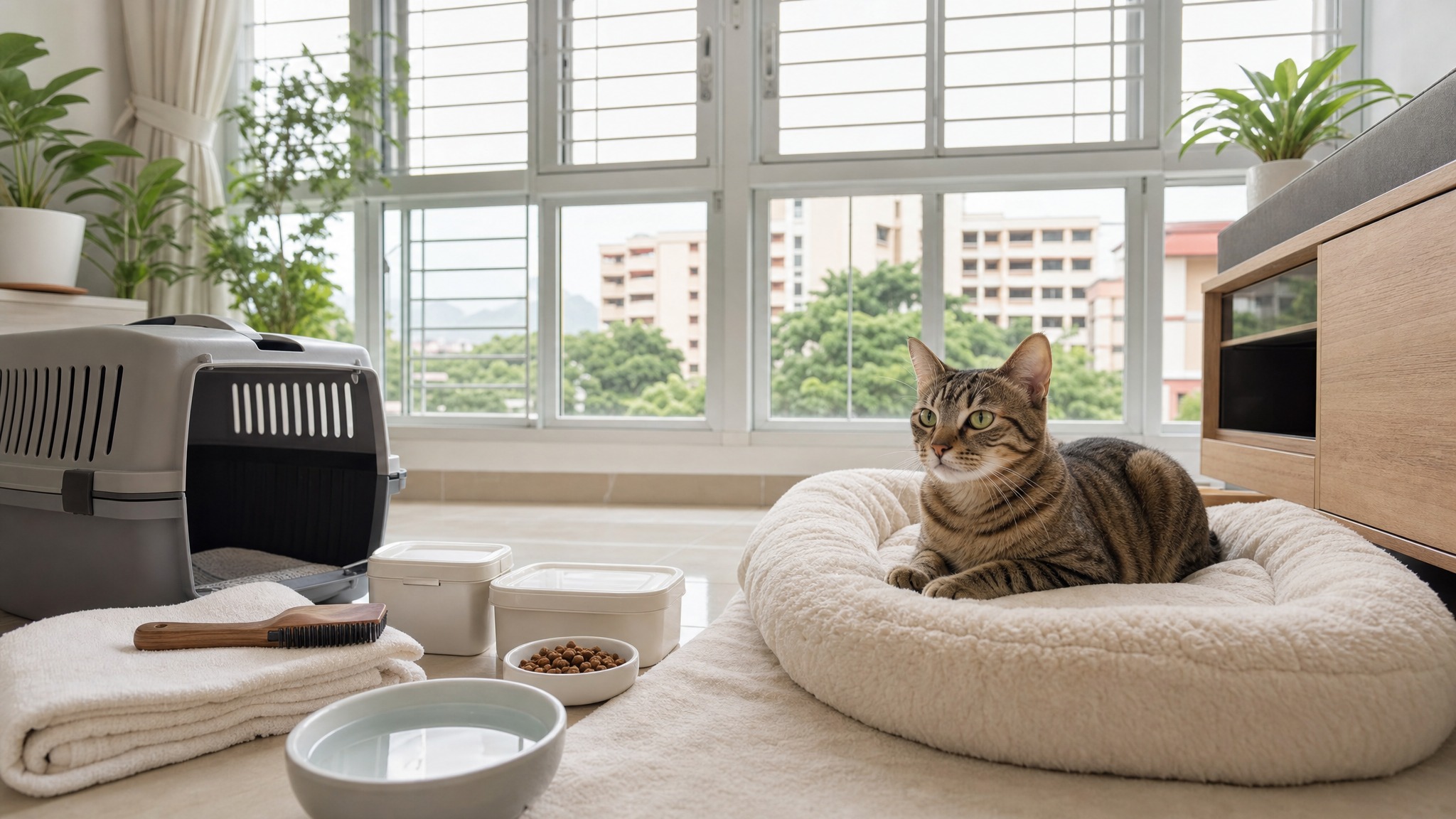
Recovery at home is easier when the space is quiet, clean, and not too warm. Set up a small recovery area away from windows, ledges, and high furniture so your cat cannot jump excessively. If your home uses air-con, keep the room comfortable but not cold, and avoid placing the cat directly under strong airflow. In non-air-con rooms, use a fan for ventilation while making sure the cat is not chilled or stressed by the breeze.
Humidity matters because dampness can make bedding, litter areas, and wounds harder to keep clean. Use washable bedding and change it if there is food, litter dust, urine, or discharge. Keep the litter box nearby so the cat does not need to walk far, but avoid placing it too close to food and water. Choose low-dust litter if your cat is sensitive, and scoop promptly to control odour in the flat.
Food, Water, and Litter During Recovery
Your vet may advise a smaller first meal after surgery, depending on the clinic’s protocol. Offer fresh water and a familiar cat food rather than introducing a new diet immediately after the operation. If your cat has a sensitive stomach, ask the vet whether wet food, smaller portions, or a temporary recovery diet is suitable. Avoid giving human food, supplements, or medication unless your vet specifically approves it.
Litter choice can also affect comfort after surgery. Some owners prefer softer, low-dust options during recovery, especially if the cat has an abdominal incision. In Singapore, odour control is a major concern because warm and humid conditions can make litter trays smell faster. Good cat litter Singapore options should balance clumping, dust control, odour management, and your cat’s willingness to use the tray consistently.
Keeping Indoor Cats Calm
A recovering cat should not be encouraged to jump, chase toys aggressively, or wrestle with other pets. Use calm enrichment such as gentle attention, quiet companionship, and food puzzles only if your vet says normal feeding is allowed. If there are children at home, explain that the cat needs rest and should not be picked up unnecessarily. A recovery suit or collar may look uncomfortable, but it helps protect the wound from licking.
Once your vet clears your cat for normal activity, you can rebuild routine gradually. Resume play sessions, scratching post access, and climbing areas step by step. For HDB cats, this is also a good time to reassess the home: litter placement, window safety, feeding schedule, and enrichment. A well-planned home setup supports the benefits of sterilisation and helps your cat feel secure indoors.
FAQ
Is it compulsory to sterilise an HDB cat in Singapore?
Rules and policies can change, so owners should check the latest official HDB and AVS guidance for cat ownership requirements. Even where sterilisation is not the only consideration, it is widely recommended as part of responsible cat care. It can help reduce unwanted litters and some mating-related behaviours. Speak to a vet for timing and health advice specific to your cat.
Will sterilisation stop my cat from spraying immediately?
Not always. Sterilisation can reduce hormone-related spraying, especially when done before the habit is established. However, spraying can also be caused by stress, litter box issues, environmental triggers, or urinary problems. If spraying continues, check with a vet and review your litter setup, cleaning method, and home stress factors.
What age should I sterilise my HDB cat?
There is no one-size-fits-all answer because timing depends on your cat’s age, weight, health, and development. Many vets discuss sterilisation when cats are still young, before strong mating behaviours appear. Rescued cats or cats with unknown medical history may need extra checks first. Your vet is the best person to advise on safe timing.
Can my cat still be playful after sterilisation?
Yes. Sterilisation does not remove your cat’s personality or ability to play. Some cats become calmer because mating-related stress reduces, but they still need exercise, scratching outlets, climbing space, and interaction. Weight management may become more important after sterilisation, so ask your vet about feeding portions and suitable cat food.
How do I reduce odour in a humid Singapore flat after surgery?
Scoop the litter tray daily or more often if needed, keep the recovery area dry, and use washable bedding. Choose low-dust litter with reliable odour control, and clean any urine marking with enzyme cleaner. Good airflow helps, but avoid making your recovering cat too cold. If there is a bad smell from the surgical wound, contact your vet promptly.
CTA
Preparing to sterilise HDB cat companions is not only about the surgery date. The right home setup makes recovery calmer and daily HDB living easier after that. Before your appointment, stock up on practical cat supplies such as low-dust cat litter, easy-to-clean food bowls, wet food or familiar cat food, washable bedding, enzyme cleaner, and a comfortable recovery collar or suit if your vet recommends one. For Singapore homes, focus on products that suit humid weather, compact flats, and indoor routines: odour control, hydration support, safe play, and simple cleaning matter more than fancy extras. If you are comparing cat food Singapore options or cat litter Singapore choices, choose what your cat will actually use consistently. A comfortable cat, a cleaner flat, and fewer neighbour worries start with steady care at home.
延伸閱讀
- Can Two or More Cats Live Happily in an HDB Flat? A Singapore Multi-Cat Behaviour Checklist
- Should HDB Cat Owners in Singapore Get Pet Insurance? A Practical Checklist Before You Sign Up
- How to Stop Your HDB Cat From Disturbing Neighbours: Noise, Smell, Windows, and Corridor Checks
Last updated:2026-06-12 by CatGarden
CatGarden Deodorizing Mineral Cat Litter 3.0