
▶Cat Column, Nutrition eating guide
Can Two or More Cats Live Happily in an HDB Flat? A Singapore Multi-Cat Behaviour Checklist
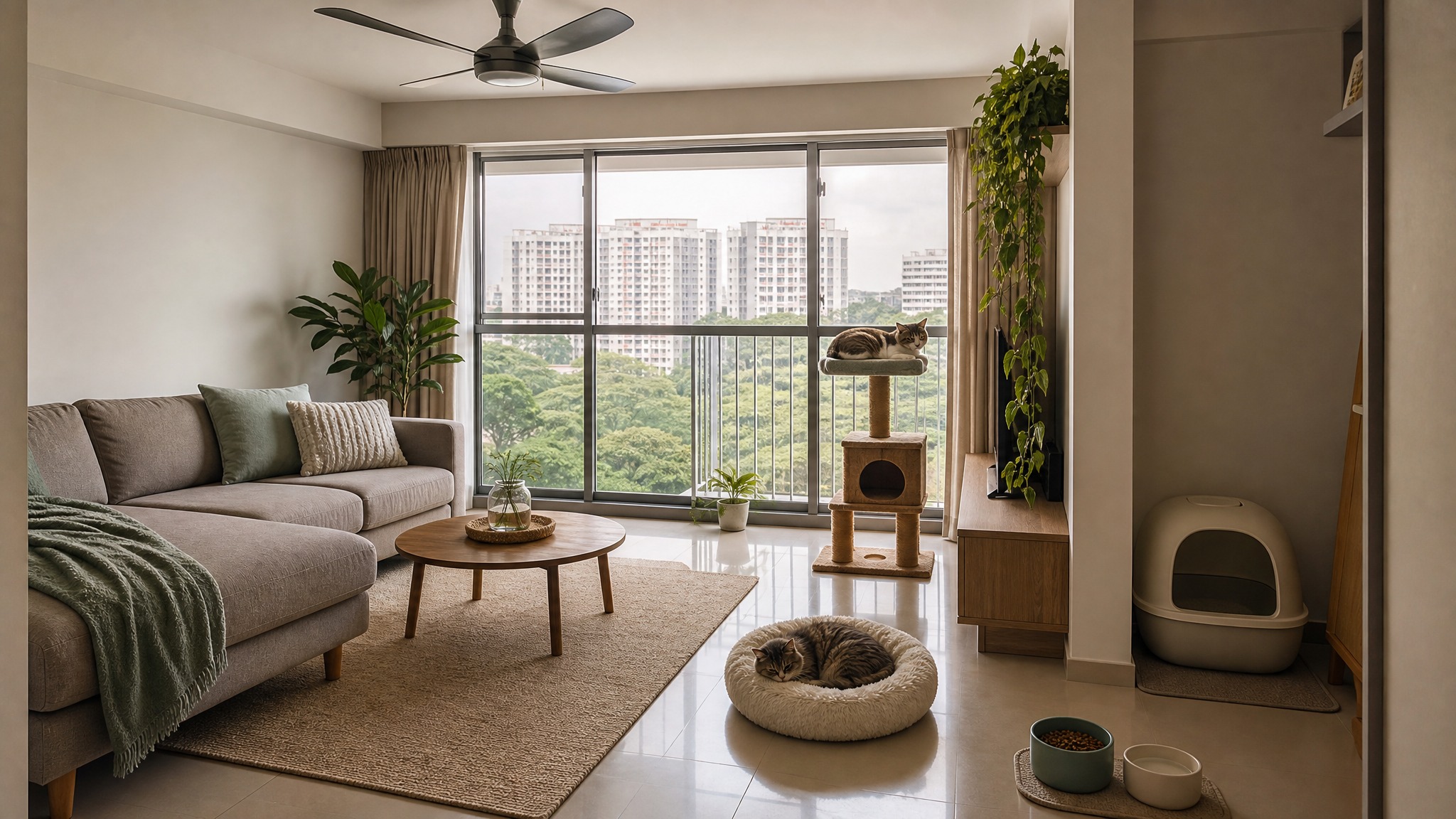
Can Two or More Cats Live Happily in an HDB Flat? A Singapore Multi-Cat Behaviour Checklist
Why Multi-Cat HDB Homes Need More Than Just Floor Space
Two cats can live well in an HDB flat, but a peaceful home is not decided by square footage alone. Cats care about access, escape routes, scent, routine, and whether they can choose when to interact. A multi cat HDB flat needs to be planned like a shared territory, not simply a small home with extra pets inside.
In Singapore, most HDB cats are indoor cats, which makes the home their entire world. That means every corridor, bedroom, service yard, and air-con room becomes part of their emotional map. If one cat blocks the hallway, guards the food area, or stares from the sofa, the other cat may feel trapped even when the flat looks spacious to humans.
Remember the HDB Cat Limit
Under Singapore’s current cat ownership framework, HDB households are generally allowed to keep up to two cats, with licensing and microchipping requirements. Owners who already had more than two cats before the framework started may have separate transition arrangements, but this should be checked with AVS if it applies to your household. Behaviour-wise, two cats can already create a complex social setup, so adding more should never be treated as “just one more bowl and bed”.
A good multi cat HDB flat setup gives each cat a way to eat, toilet, sleep, scratch, and retreat without asking permission from another cat. Vertical space matters a lot in apartments because it creates extra routes without needing more floor area. Cat trees, window perches, shelves, and sturdy side tables can reduce pressure when the cats do not want to share the same zone.
How to Tell If Your Cats Are Coping or Just Tolerating Each Other
Many Singapore owners think their cats are fine because there is no loud fighting. But cats often show stress quietly, especially in indoor homes where they cannot move far away. A cat that avoids certain rooms, eats only when the other cat leaves, or sleeps in hidden corners may be coping rather than comfortable.
Look for relaxed body language when both cats are in the same area. Soft eyes, neutral tails, slow blinking, grooming, and the ability to walk past each other without freezing are good signs. If they can nap near each other without one cat constantly watching the other, that is usually a better signal than forced cuddling.
Signs Your Cats Are Doing Well
- They can eat in the same general area without rushing, staring, or leaving food behind.
- They use litter boxes normally, with no sudden accidents or avoidance.
- They take turns using favourite resting spots instead of one cat always losing access.
- They play, chase, or wrestle with loose bodies and take natural breaks.
- They can separate after interaction without one cat following or cornering the other.
Playful chasing is usually brief, bouncy, and balanced. Bullying looks more one-sided: one cat waits near doorways, blocks the litter box, chases the same cat every time, or attacks when the other tries to move. In a multi cat HDB flat, these small pressure points matter because there may be fewer alternative routes.
Signs They Are Only Tolerating Each Other
Watch for a cat that changes its daily pattern after another cat arrives. Hiding more, eating less, over-grooming, spraying, yowling, or becoming clingier can all be stress signals. Some cats also become “too quiet”, spending most of the day under the bed or on top of a wardrobe because that is the only place they feel safe.
Do not assume the louder cat is always the problem. A silent cat can be the one controlling resources through staring, blocking, or sitting in narrow walkways. If one cat seems confident everywhere and the other lives around its movements, your home needs more resource stations and better escape options.
Litter Boxes, Food Bowls, and Resting Spots: The Setup That Reduces Conflict
The classic rule for litter boxes is one per cat, plus one extra. For two cats, that means three litter boxes if your flat layout allows it. In Singapore HDB homes, space can be tight, but placing two boxes side by side does not count as separate territory from a cat’s point of view.
Spread litter boxes across different areas, such as the bathroom, service yard, or a quiet corner with good ventilation. Avoid putting every box in a dead-end location where one cat can trap another. Good cat litter Singapore choices should control odour in humid weather, clump reliably, and be comfortable enough that cats do not hold their pee or look for softer places.
Food and Water Stations
Food bowls should not become a daily competition. Feed cats with enough distance between bowls, ideally with a visual break such as a cabinet, doorway, or different room. If one cat eats faster and steals food, timed feeding or microchip feeders can reduce tension, especially for busy working owners who are out most of the day.
For water, offer more than one station because some cats avoid drinking near food or litter. Singapore’s humid weather does not mean cats automatically drink enough, especially if they eat mostly dry food. A fountain, wide ceramic bowl, or stainless steel bowl placed away from busy walkways can make drinking feel safer.
Resting, Scratching, and Vertical Space
A well-planned multi cat HDB flat has more resting spots than cats. If there are two cats, aim for at least four comfortable rest zones: one high, one hidden, one near the family, and one in a quieter room. This gives each cat choice without forcing them to compete for the “best” bed.
Scratching posts should also be duplicated because scratching is both nail care and scent marking. Place scratchers near sleeping areas, windows, and common walkways instead of hiding them in one corner. When cats have acceptable places to leave scent, they are less likely to use furniture, door frames, or territorial spraying as communication.
Common HDB Problems With Two or More Cats: Noise, Smell, Chasing, and Door-Dashing
HDB living means your cat’s behaviour can affect neighbours, not just your household. Late-night yowling, litter smell, repeated running, and door-dashing into shared corridors can quickly become stressful. The goal is not to make cats silent or invisible, but to manage their needs before they turn into daily problems.
Noise often increases when cats are under-stimulated, hungry, sexually mature and not sterilised, or stressed by another cat. Evening zoomies are normal, but constant chasing, screaming, or thumping may mean the cats need more structured play and clearer territory. A short play session before dinner and another before bedtime can reduce night-time restlessness.
Odour Control in Humid Singapore Weather
Humidity makes litter odour feel stronger and can make some litters break down faster. Scoop at least once or twice daily in a multi-cat home, and do a full clean often enough that ammonia smell never builds up. Covered boxes may seem tidy to humans, but some cats dislike trapped smell and heat, so monitor whether they still use them comfortably.
Choose cat litter based on your cats’ comfort first, then odour control. Strong fragrance can irritate some cats and may cause litter box avoidance. If smell remains bad despite cleaning, check whether the box is too small, the litter depth is wrong, or one cat is toileting outside because another cat is guarding access.
Chasing and Rough Play
Chasing is not automatically a problem. It becomes a concern when one cat always runs, hides, hisses, or cannot return to normal after the chase. In a multi cat HDB flat, narrow corridors and room doors can turn a chase into a cornering event very quickly.
Add visual blockers and multiple exits where possible. Even a chair, tunnel, low shelf, or open cardboard box can break a direct line of sight and help the chased cat escape. Avoid shouting or physically punishing the cats, because that can make them associate each other with fear and tension.
Door-Dashing and Corridor Safety
Door-dashing is common in HDB homes because the front door opens into an interesting shared corridor full of smells and sounds. Use a second barrier if possible, such as a pet gate, closed room routine, or habit of feeding cats away from the door before leaving. Make sure windows, service yard openings, and balcony-style areas are properly meshed or secured.
Every cat should be microchipped and licensed according to Singapore requirements. For practical safety, also keep updated photos of each cat and note distinctive markings. Indoor cats can panic quickly outside, so prevention matters far more than trying to recover a frightened cat later.
When Behaviour Changes Mean You Should Call a Vet or Cat Behaviour Professional
Behaviour changes are not always “attitude”. A cat that suddenly hisses, hides, pees outside the litter box, refuses food, or attacks another cat may be in pain or unwell. Before treating it as a training issue, speak to a vet, especially if the change is sudden or severe.
Call a vet promptly if you notice straining in the litter box, blood in urine, repeated vomiting, breathing difficulty, collapse, not eating, or sudden weakness. Male cats that strain to urinate need urgent attention because urinary blockage can be life-threatening. This article is behavioural guidance, not medical diagnosis, so health concerns should always be checked professionally.
When to Get Behaviour Help
A cat behaviour professional can help when introductions have gone badly, fights are escalating, or one cat is living in constant fear. They can review your floor plan, litter box placement, feeding routine, and cat body language in context. This is especially useful in HDB flats because small layout changes can make a big difference.
Get help early if there is repeated fur-pulling, injury, stalking, spraying, or one cat being blocked from food, water, or litter. The longer a conflict pattern continues, the more rehearsed it becomes. A good plan usually combines vet checks, environment changes, slow reintroduction, scent work, and predictable routines.
Singapore Multi-Cat HDB Checklist
Use this checklist to review whether your home supports more than one cat comfortably. You do not need a huge flat, but you do need enough separate resources and escape choices. A practical multi cat HDB flat setup should reduce daily negotiation between cats.
- Litter: One box per cat plus one extra, placed in separate zones where possible.
- Food: Separate bowls with enough distance, especially if one cat eats faster.
- Water: At least two water points away from litter and busy walkways.
- Rest: Multiple beds, shelves, perches, or quiet corners for each cat.
- Scratching: More than one scratcher in socially important areas.
- Play: Daily interactive play, especially before meals and bedtime.
- Safety: Secure windows, doors, service yard access, and corridor escape risks.
- Health: Vet check for sudden behaviour changes, appetite change, or litter box problems.
Review this checklist after any major change: moving house, renovation, new furniture, new baby, new helper, or a new cat. Cats are sensitive to territory changes, even when the change looks minor to us. The best HDB cat homes stay flexible and adjust as the cats age.
FAQ
Can I keep two cats in an HDB flat in Singapore?
Yes, HDB households are generally allowed to keep up to two cats under Singapore’s cat management framework, subject to licensing, microchipping, and responsible ownership rules. If your household already had more than two cats before the transition period, check the latest AVS requirements for your specific situation. Behaviour-wise, two cats still need separate resources and careful monitoring.
Is a 3-room or 4-room HDB flat too small for two cats?
Not necessarily. The layout matters more than the flat type. A smaller flat with vertical space, multiple litter areas, and separate feeding stations can work better than a larger flat where one cat controls every important resource.
How many litter boxes do two cats need?
The ideal setup is three litter boxes: one per cat, plus one extra. If space is limited, prioritise separation instead of putting all boxes together. Clean daily, choose suitable cat litter Singapore owners can manage in humid weather, and watch for avoidance or accidents.
Why do my cats chase each other at night?
Night chasing can come from normal energy peaks, boredom, hunger, or social tension. Try daily play before dinner and bedtime, separate resting zones, and enough food access. If one cat always seems scared or cornered, treat it as a conflict issue rather than harmless play.
When should I bring my cat to the vet for behaviour changes?
See a vet if the behaviour change is sudden, intense, or linked to appetite, urination, defecation, vomiting, hiding, aggression, or pain signs. Litter box changes should be taken seriously, especially straining or repeated trips to the box. Medical issues should be ruled out before assuming your cat is being difficult.
Build a Calmer Multi-Cat Home With the Right Cat Supplies
A happy multi-cat HDB home is built through small, practical choices: the right litter box size, odour-control litter that suits Singapore humidity, separate bowls, stable scratchers, washable beds, safe window protection, and toys that help indoor cats release energy. If you are reviewing your setup, start with the areas that create daily conflict: toilet, food, sleep, scratching, and door safety. Choosing cat supplies that match your cats’ habits can make your flat easier to clean and more peaceful for everyone at home. For Singapore cat owners, ecommerce delivery also makes it easier to keep essentials stocked before litter runs out or food changes become urgent.
延伸閱讀
- Should HDB Cat Owners in Singapore Get Pet Insurance? A Practical Checklist Before You Sign Up
- How to Stop Your HDB Cat From Disturbing Neighbours: Noise, Smell, Windows, and Corridor Checks
- Why Does My HDB Cat Keep Trying to Run Out? Singapore Owners’ Guide to Door-Dashing and Safe Containment
Last updated:2026-06-11 by CatGarden
CatGarden Deodorizing Mineral Cat Litter 3.0