
▶Cat Column, Nutrition eating guide
Will a Window Mesh Stop Your HDB Cat? What Singapore Owners Should Check Before Buying
Why Window Mesh Matters More for HDB Cats Now
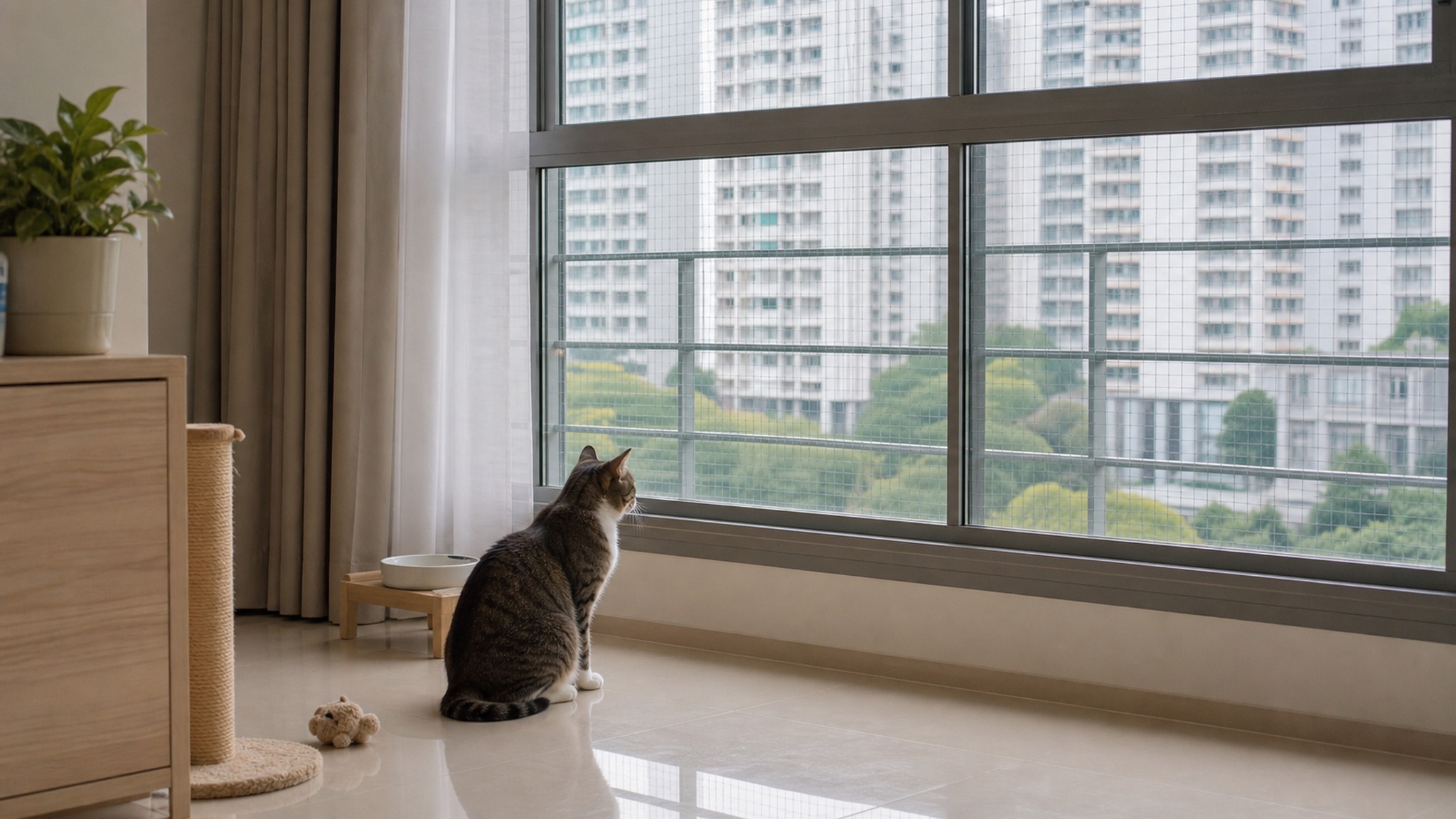
For many Singapore cat owners, the HDB flat is the cat’s whole world. Your cat watches birds, neighbours, rain, and corridor movement from the window, especially if you are out at work for long hours. That makes window safety a daily issue, not a one-time renovation detail. A proper HDB cat window mesh setup can reduce the risk of falls while still letting your home feel bright and liveable.
Indoor cats in Singapore may look calm, but they can still react suddenly to movement outside. A bird landing near the window, a loud renovation sound, or another cat appearing nearby can trigger a leap or scramble. Even older cats may push, scratch, or lean against weak mesh when excited. This is why owners should look beyond simple “cover the window” solutions and check whether the mesh is truly designed for cat pressure.
HDB living changes the safety equation
HDB windows are often used for ventilation because Singapore flats can feel warm and humid quickly. Many owners want airflow without relying on air-con all day, especially in bedrooms, kitchens, and service yards. The challenge is that a window left open for comfort can become a risk point for curious cats. Safety needs to work with your daily habits, not only when you remember to supervise.
Window mesh is also becoming more relevant as more households keep cats fully indoors. Indoor living is generally safer, but it increases the importance of enrichment and environmental design. A cat that lacks play, climbing space, or window-view routines may become more restless around openings. The right mesh is only one part of the setup, but it is a very important first layer.
Can Regular Insect Mesh Really Stop a Cat?
Regular insect mesh is usually made to stop mosquitoes, flies, and small insects. It is not always made to hold the weight, claws, or repeated pushing of a cat. Some insect screens may tear when scratched, pop out at the frame, or sag after months in humid weather. If you are searching for HDB cat window mesh, do not assume every mesh product is cat-safe just because it looks firm.
A cat does not need to be large to damage weak mesh. A quick climb, panic movement, or repeated pawing at the same corner can loosen the material over time. Kittens can also squeeze into gaps that look too small at first glance. For HDB homes, the mesh and the frame both matter because the weakest point is often the edge, clip, magnet, or installation track.
Insect-proof is not the same as cat-proof
Insect mesh focuses on small holes and basic coverage. Cat-safe mesh should focus on strength, tension, anchoring, and resistance to claws. A product may advertise good airflow and mosquito protection, but that does not automatically mean it can withstand a cat jumping against it. Always check the material, installation method, and whether the supplier has actual cat-use guidance.
Owners should be especially careful with temporary magnetic screens or light adhesive screens. They can be useful for insect control, but some cats quickly learn to push at the sides or bottom. If the mesh opens with light pressure, it should not be treated as a safety barrier. For active cats, a stronger fixed system is usually more sensible than a removable screen.
What to Check Before Buying Cat-Safe Window Mesh
Before buying, check whether the mesh material is strong enough for scratching and leaning. Stainless steel, coated metal, or reinforced pet mesh may perform better than soft standard insect netting, depending on the installation. Ask whether the mesh is meant for pets, not just pests. A reliable HDB cat window mesh option should be described in terms of pet safety, frame security, and long-term durability.
Next, look at how the mesh is fixed to the window. Screws, secure tracks, rigid frames, or professionally fitted systems tend to be more dependable than loose clips or weak adhesive. Corners and lower edges deserve extra attention because cats often test those areas first. If you can press the mesh and it easily bends, gaps, or detaches, your cat may eventually find the same weakness.
Measure the real risk points
Walk through your flat and check every window your cat can reach, not only the living room. Bedrooms, kitchens, service yards, and narrow ledges can all become access points. Consider furniture placement too, because a chair, shelf, laundry rack, or bed can turn a window into an easy launch spot. A good safety plan includes both the mesh and the surrounding layout.
Pay attention to window type and opening style. Sliding windows, louvre windows, casement windows, and service yard openings may need different mesh systems. Some setups may require partial coverage, while others need full-height protection. If your cat is a climber, jumper, or persistent scratcher, choose a solution for the cat you actually have, not the cat you hope they will be.
Questions to ask the seller or installer
- Is this mesh designed for cats, or only for insects?
- How is the mesh secured to the window frame?
- Can a cat push open the side, bottom, or corner?
- Will the material rust, sag, or weaken in Singapore humidity?
- Can the mesh be cleaned without loosening the frame?
- Is the system suitable for my HDB window type?
These questions help you compare products more practically. A low-cost option may seem attractive, but replacement, repairs, or a failed barrier can cost much more later. For busy working owners, the best choice is usually the one that remains secure even when you are not watching. The goal is not to create a cage-like home, but to make normal HDB living safer for your cat.
Humidity, Airflow, and Odour Control in Singapore Flats
Singapore’s humid weather affects both comfort and maintenance. A mesh that blocks too much airflow can make rooms feel stuffy, especially when windows are the main source of ventilation. At the same time, leaving windows wide open without proper protection is risky for cats. The best HDB cat window mesh setup balances safety, airflow, and easy cleaning.
Humidity can also affect smell inside a flat, especially around cat litter areas. When air does not move well, litter odour may linger, and moisture can make clumps break down faster. Owners often blame the litter alone, but ventilation, litter box placement, cleaning frequency, and number of cats all matter. Window mesh can help you keep some airflow while maintaining a safer boundary.
Airflow matters for daily cat care
Good airflow helps reduce trapped smells from food bowls, litter boxes, and damp laundry areas. This is especially important in smaller HDB flats where living, sleeping, and cat care zones are close together. If you use air-con often, remember that closed rooms can still need routine airing when your cat is safely away or when secure mesh is installed. A safer window setup gives you more flexibility without constantly moving your cat from room to room.
Mesh maintenance should be part of your cleaning routine. Dust, fur, litter particles, and kitchen grease can build up on mesh surfaces over time. If the mesh becomes clogged, airflow drops and the flat may feel warmer. Choose materials that can be wiped or vacuumed gently without weakening the frame.
Food and litter choices affect the room too
Odour control is not only about the window. Cat food storage, wet food leftovers, and litter type all affect how fresh the home feels. In Singapore, owners often search for cat food Singapore or cat litter Singapore options that suit humid homes and ecommerce delivery schedules. Pairing the right supplies with safe ventilation can make daily care much easier.
For litter, look for options that match your cat’s preference and your cleaning routine. Strong fragrance is not always better because some cats dislike heavily scented litter and may avoid the box. For food, seal opened packs properly and avoid leaving wet food out too long in warm rooms. Window safety, odour control, and product choice should work together as one home-care system.
When Window Safety Needs a Vet or Behaviour Check Too
A strong mesh helps reduce physical risk, but it does not explain why a cat keeps charging at windows. If your cat suddenly becomes obsessed with escape, vocalises at the window, or panics when outside sounds happen, look at the behaviour pattern. Stress, boredom, pain, mating-related behaviours, or changes in the home can all affect how a cat responds. In some cases, a vet or qualified behaviour professional should be part of the solution.
Owners should also watch for changes that happen alongside window fixation. Reduced appetite, hiding, aggression, overgrooming, litter box changes, or unusual restlessness may point to a deeper issue. Do not treat a mesh purchase as a cure for anxiety or medical discomfort. A secure HDB cat window mesh setup protects the opening, while vet care helps address the reason behind unsafe behaviour.
When to speak to a vet
Speak to a vet if the behaviour is sudden, intense, or paired with health changes. Cats often hide pain, and restlessness can sometimes be linked to discomfort rather than simple curiosity. A vet can rule out medical causes before you focus only on training or home changes. This is especially important for senior cats, newly adopted cats, or cats with existing health conditions.
If your cat is not sterilised, discuss it with a vet because roaming drive and window fixation may be stronger during mating-related periods. For young cats, ask about safe growth, activity levels, and enrichment needs. For older cats, check whether vision, mobility, or cognitive changes are affecting how they move around windows. The right advice depends on the individual cat, not a generic online checklist.
Behaviour changes that support window safety
- Provide daily play sessions with wand toys or chase toys.
- Add stable cat trees, shelves, or window-view resting spots away from unsafe openings.
- Use puzzle feeders or slow feeders for mental stimulation.
- Keep litter boxes clean and placed in calm, accessible areas.
- Reduce triggers if outdoor cats, birds, or construction noise cause stress.
These changes can reduce pressure on the mesh because your cat has better outlets indoors. A cat that gets play, rest, food, and litter comfort is less likely to spend all day testing window barriers. Still, enrichment should not replace physical safety. For HDB homes, the practical answer is both: secure the window and improve the indoor environment.
Final Buying Checklist for Singapore Cat Owners
Before you buy, confirm that the mesh is pet-suitable, securely fixed, and matched to your window type. Check all reachable windows, including service yards and rooms your cat enters only occasionally. Think about your cat’s body size, climbing habits, and persistence. A good HDB cat window mesh decision should be based on real home behaviour, not just product photos.
Also consider how the mesh fits into daily Singapore living. It should allow reasonable airflow, handle humid weather, and be easy to maintain. It should not make cleaning so difficult that you avoid opening or checking the window area. The best system is the one that remains practical after the first week, first month, and first rainy season.
Quick checklist before payment
- The mesh is sold or recommended for pet safety, not only insect control.
- The frame or fixing system cannot be pushed open easily.
- There are no gaps at corners, sides, or bottom edges.
- The material can handle claws, humidity, and cleaning.
- The setup suits your HDB window type and daily ventilation habits.
- Your cat still has indoor enrichment, proper food, clean litter, and vet support when needed.
If you are comparing options online, take time to read product details rather than buying only by price. Look for clear photos, measurements, material information, and installation notes. When unsure, ask the seller direct questions about cats, not just insects. A safer HDB cat window mesh setup is worth planning properly because it protects your cat every day.
Once your windows are safer, complete the rest of your indoor cat setup with practical cat supplies that suit Singapore homes. Choose food storage that handles humidity, litter that controls odour without overwhelming your cat, stable scratchers, washable mats, and enrichment toys for busy weekdays. Good supplies make HDB cat care easier, cleaner, and more consistent, especially when ecommerce delivery helps you restock before essentials run out. Build your home around safety, comfort, and daily routines your cat can trust.
FAQ
Is regular insect mesh enough for an HDB cat?
Usually, regular insect mesh should not be treated as a cat safety barrier unless the supplier clearly states it is suitable for pets and the installation is secure. Many insect screens are designed for mosquitoes, not pushing, scratching, or climbing. Always check the frame, corners, and attachment method before relying on it. If your cat is active or heavy, choose a stronger pet-safe option.
Can I install cat window mesh myself?
Some owners can install simple systems themselves, but the risk is in the details. If the mesh is loose, poorly measured, or weak at the edges, a cat may still push through. For high windows, service yards, or very active cats, professional installation may be safer. Whichever route you choose, test the setup carefully and inspect it often.
Will window mesh make my HDB flat too stuffy?
It depends on the material, hole size, and how much of the window is covered. A well-chosen mesh should allow airflow while still reducing risk. In Singapore humidity, cleaning the mesh regularly also helps maintain ventilation. If your flat still feels stuffy, review fan placement, litter box location, and how often rooms are aired safely.
How often should I check cat window mesh?
Check it at least monthly, and more often if your cat scratches or climbs near the window. Look for loose corners, rust, sagging, torn areas, or gaps around the frame. After heavy rain, cleaning, renovation work, or moving furniture, inspect the mesh again. Small weaknesses can become serious if a cat keeps testing the same spot.
What else do indoor HDB cats need besides window mesh?
Indoor cats need safe windows, daily play, scratching surfaces, clean litter, suitable food, fresh water, and resting spots. They also need vet care when behaviour or health changes appear. Window mesh reduces one major home risk, but it does not replace enrichment or medical attention. A complete setup makes indoor living safer and more comfortable long term.
延伸閱讀
- How Many Cats Can You Keep in an HDB Flat? A Singapore Owner’s Multi-Cat Checklist
- Why Does My HDB Cat Yowl at Night? A Singapore Owner’s Guide to Quiet, Calmer Evenings
- Should You Sterilise Your HDB Cat? Behaviour, Neighbour Complaints, and Vet Timing in Singapore
Last updated:2026-06-16 by CatGarden
CatGarden Deodorizing Mineral Cat Litter 3.0