
▶Cat Column, Nutrition eating guide
Why Does My Cat Claim Every Box and Sofa? A Territory Guide for Singapore Flats
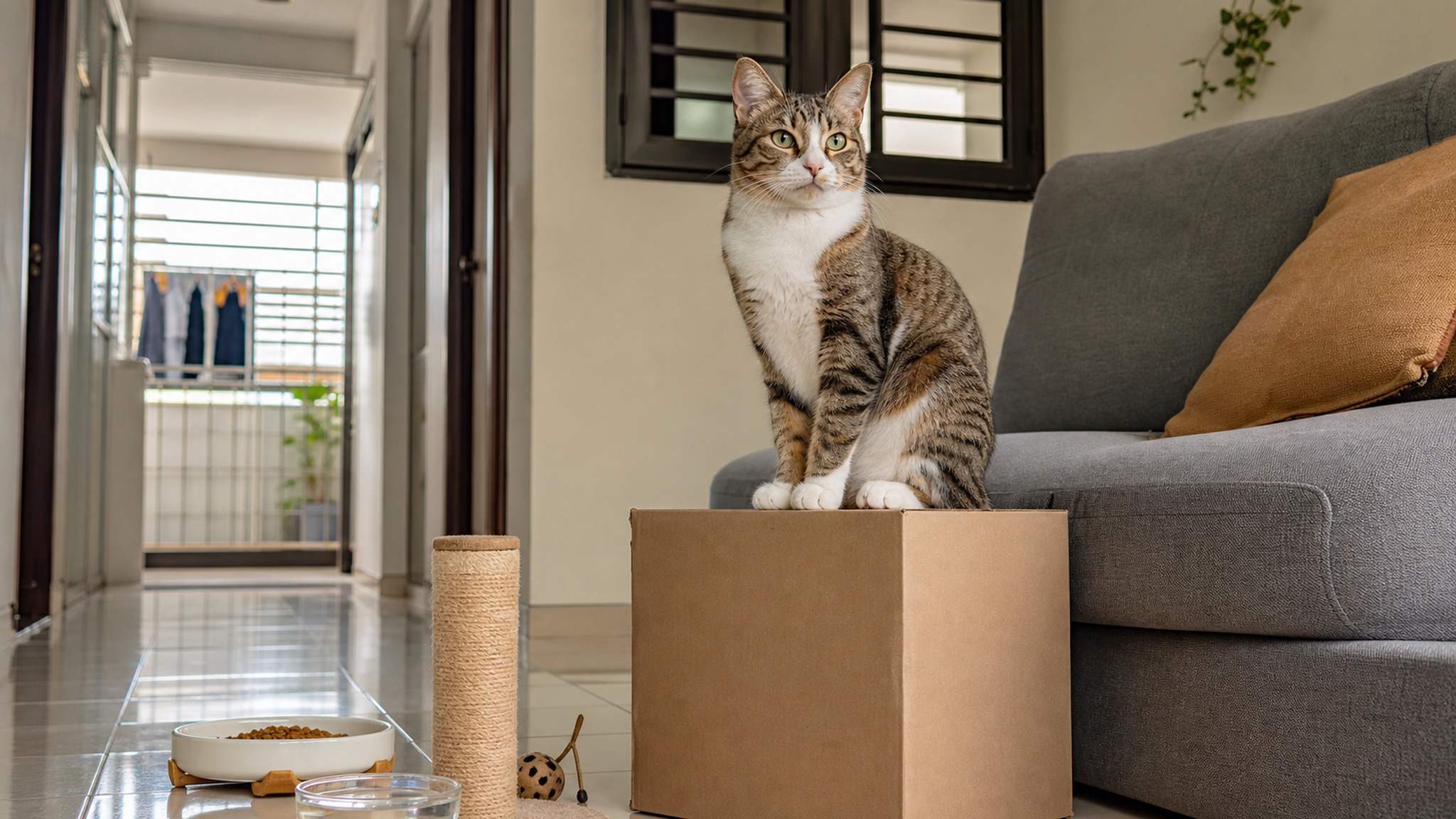
Why Cats Claim Boxes, Sofas, and Corners
Cats do not see your flat as one open living space. They read it as a map of sleeping spots, lookout points, scent zones, escape routes, and shared areas. When your cat squeezes into a delivery box or takes over the sofa, it is often a normal part of how cats create security indoors. For many owners searching for cat territory Singapore, the behaviour looks funny at first, but it also tells you what your cat needs from the home.
A box feels safe because it has walls, a roof-like feeling, and only one or two openings to watch. This helps a cat rest without feeling exposed, especially in a busy HDB flat where people move between the kitchen, living room, and bedrooms throughout the day. Sofas are also attractive because they hold family scent, body warmth, and height advantage. Corners, shelves, and under-table spaces let cats observe without being in the middle of activity.
Boxes Are Not Just Toys
Singapore homes often have a steady flow of parcels, groceries, and ecommerce deliveries, so boxes naturally become part of the cat’s environment. A plain cardboard box can become a den, ambush spot, scratching surface, or temporary cooling rest area. Cats may prefer a box over an expensive bed because the fit feels snug and predictable. If the box is clean, stable, and away from damp areas, it can be a useful part of your cat’s indoor setup.
However, boxes should not become clutter traps in humid weather. Cardboard can absorb moisture, odours, and dust, especially near windows, service yards, or bathrooms. Replace boxes once they smell musty, feel soft, or collect litter dust. In the context of cat territory Singapore, the goal is not to remove every box, but to keep the safe zones clean and comfortable.
Why the Sofa Becomes Prime Real Estate
The sofa is usually the centre of the household, so it carries strong social value. Your cat may claim one cushion because it smells like the people they trust, or because it gives a clear view of the door and walkway. If your cat kneads, rubs their face, or sleeps in the same spot every evening, they are adding familiar scent to that area. This is a quiet form of ownership, not necessarily bad manners.
Problems start when the cat guards the sofa, swats at people, blocks another pet, or becomes tense whenever someone sits nearby. That can mean the cat feels short of safe alternatives. Instead of forcing them off every time, offer a nearby perch, mat, or cat bed that still gives them a good view. Cats cooperate better when the new option meets the same need as the old favourite spot.
What Territory Looks Like in an HDB Flat or Condo
In an HDB flat or condo, territory is vertical as much as horizontal. A cat may care less about square footage and more about whether they can move, climb, hide, scratch, eat, toilet, and rest without pressure. A well-planned small flat can feel more secure than a larger home with poor resource placement. This is why cat territory Singapore advice should always consider apartment living rather than landed-home assumptions.
Indoor cats in Singapore also respond to household routines. The morning rush, work-from-home calls, air-con bedroom access, children returning from school, and evening cooking smells can all change how a cat uses space. Some cats follow people closely, while others retreat to a quiet room when the flat gets noisy. Both patterns are normal if the cat can choose where to go.
Territory Includes Scent, Height, and Routes
Cats mark territory through scent glands on their cheeks, paws, and body. When they rub against furniture or scratch a post, they are leaving information that says the space is familiar. Scratching is not only about claws; it is also a visual and scent marker. A cat that scratches the sofa may be choosing it because it sits in a socially important area, not because they are trying to annoy anyone.
Height matters because it gives control. A cat tree near the living room, a stable shelf, or a window perch can help a cat feel settled without needing to dominate the sofa. Routes matter too: if the food bowl, litter box, and resting area are all in one tight corner, a cat may feel trapped when another pet or person passes by. Good territory design gives cats more than one way in and out.
HDB Cat Life Needs Practical Boundaries
For HDB cat owners, safety is part of territory. Windows, service yards, balconies, and corridor-facing gates need secure mesh or grilles so the cat can observe without risk. A curious cat may treat every ledge as part of their range, even if it is unsafe. Indoor territory should be interesting enough that the cat does not depend on risky access for stimulation.
Condo layouts can bring different challenges, such as larger glass panels, balconies, open-plan kitchens, and multiple rooms with changing air-con use. A cat may choose the cooler bedroom during hot afternoons and the warmer sofa area at night. If certain rooms are closed during work hours, make sure the cat still has water, litter access, and at least one quiet resting place. Territory becomes stressful when important resources disappear behind closed doors.
When Territorial Behaviour Becomes Stress or Conflict
Territorial behaviour is normal, but stress changes its tone. A relaxed cat may rub, nap, scratch appropriate surfaces, and return to favourite spaces without drama. A stressed cat may guard doorways, spray urine, over-groom, hide for long periods, chase another cat, or attack when touched near a claimed spot. If you are researching cat territory Singapore because the behaviour has suddenly changed, look for triggers rather than blaming attitude.
Common triggers include a new cat, renovation noise, visitors, baby items, changed work schedules, new furniture, or a different brand of cat litter Singapore owners bought for odour control. Even a new sofa can unsettle a cat because the familiar scent map has been removed. Some cats become more clingy, while others retreat and defend small areas. The key is to notice whether the cat still eats, toilets, plays, and rests normally.
Signs That Need Attention
Urine marking, repeated litter box accidents, sudden aggression, or hiding for more than a day should be taken seriously. These can be stress-related, but they can also point to pain, urinary issues, digestive problems, or other medical concerns. If your cat strains, cries in the litter box, passes blood, stops eating, or seems lethargic, contact a vet promptly. Behaviour advice should never replace veterinary care when health signs appear.
Conflict between cats often begins with subtle blocking. One cat may sit near the hallway, litter box, food station, or bedroom door so the other cat cannot pass comfortably. Owners may only notice the later stage, such as chasing or fighting. In multi-cat homes, every important resource should be spread out so one cat cannot control everything.
How to Reduce Pressure Without Punishment
Punishing a territorial cat usually increases insecurity. Shouting, spraying water, or forcing a cat out of a hiding place can make the home feel less predictable. Instead, reduce competition and create better choices. Add another scratcher near the sofa, another resting spot near the family area, or a second litter box in a separate location.
For new furniture or layout changes, transfer familiar scent gently. Place a used blanket, cat bed, or scratching mat near the new item so the cat has a bridge between old and new. Keep feeding and litter routines steady while the home changes. A cat that feels in control of small choices is less likely to defend one location too intensely.
How to Set Up Safe Zones in Humid Singapore Homes
Safe zones are not just cute corners with a bed. They are places where your cat can rest, cool down, hide, stretch, and watch without being disturbed. In Singapore’s humid weather, these zones also need airflow, washable materials, and sensible odour control. A strong cat territory Singapore setup balances emotional security with hygiene.
Choose locations that match how your cat already behaves. If your cat hides under the dining chair during visitors, create a better sheltered spot nearby. If they sleep outside the air-con bedroom door, they may want cool air without being shut inside. If they always sit on the sofa arm, they may want height and company at the same time.
Build One Quiet Zone and One Social Zone
A quiet zone should be away from the main walkway, washing machine, front door, and loud kitchen activity. It can include a covered bed, open carrier, box, or low shelf with a soft mat. Keep water nearby, but avoid placing food directly beside the litter box. The cat should be able to enter and leave without being cornered.
A social zone sits closer to family life. This could be a cat tree near the living room, a window perch with secure screening, or a washable mat beside the sofa. Social zones help cats be near people without needing to sit on laptops, dining tables, or cushions all the time. For many busy working owners, this makes evening bonding calmer and more natural.
Control Humidity, Odour, and Heat
Humidity affects bedding, litter, food freshness, and cardboard. Wash fabric beds regularly and choose materials that dry quickly. If your cat uses cardboard boxes, rotate them often and keep them away from damp corners. A dehumidifier, fan, or well-ventilated room can help, but make sure your cat can move away if the airflow feels too strong.
Litter placement is especially important in flats. Strong-smelling litter boxes in a closed service yard can become unpleasant quickly, while boxes near food can discourage eating. Choose a low-dust litter that suits your cat, scoop daily, and avoid heavily perfumed products if your cat is sensitive. Good cat litter Singapore choices should control odour without making the litter area harsh or overwhelming.
Useful Cat Supplies That Help Indoor Cats Feel Secure
The right supplies do not “fix” a cat’s personality, but they can support natural behaviour. Indoor cats need places to scratch, climb, hide, toilet, eat, drink, and play in ways that make sense inside a flat. When owners search for cat food Singapore, litter, beds, or scratchers, it helps to think in terms of territory rather than buying random items. A useful product should solve a real daily friction point.
For cat territory Singapore, start with the basics before adding novelty. A stable scratcher in the right location is more valuable than a fancy toy that is ignored. A washable bed in a quiet corner may be better than a plush cave that traps humidity. A well-placed water fountain may encourage drinking better than an extra bowl beside noisy appliances.
Scratchers, Beds, and Perches
Scratchers should be tall enough for a full stretch and stable enough not to wobble. Place one near the sofa if that is where your cat already scratches, because location is often the reason the sofa is targeted. Different cats prefer sisal, cardboard, carpet-like textures, or wood. Offer options, then keep the one your cat uses most.
Beds and perches should match the cat’s confidence level. A shy cat may prefer a covered hideout at floor level, while a bold cat may love a high perch. In hot weather, some cats reject thick beds and choose rattan-style surfaces, cooling mats, or simple cotton towels. Washability matters because sweat, fur, and humidity build up quickly in Singapore homes.
Food, Litter, and Enrichment Tools
Food stations should feel calm and separate from the litter area. If you have more than one cat, feed them apart so each cat can eat without being watched or rushed. Puzzle feeders and slow feeders can add enrichment, especially for indoor cats that get bored between work hours. Always choose cat food based on age, health needs, and veterinary advice if your cat has medical conditions.
Litter boxes should be easy to enter, easy to clean, and placed where the cat feels safe. Covered boxes can help with odour for humans, but some cats dislike trapped smells or limited escape routes. For multi-cat homes, having more than one litter station reduces guarding. This is one of the simplest ways to improve cat territory Singapore problems in apartments.
FAQ
Why does my cat sit in every new box?
New boxes are interesting because they offer shelter, scent exploration, and a fresh texture to scratch or rest in. In a flat, a box can feel like a private room within a larger shared space. Let your cat enjoy clean boxes, but replace them if they become damp, dusty, or musty. Avoid boxes that held chemicals, strong fragrances, or unsafe packing materials.
Is it bad if my cat claims the sofa?
Not necessarily. The sofa smells like the family and often sits in the best viewing position, so it is naturally valuable to a cat. It becomes a concern if your cat guards it aggressively, scratches it heavily, or blocks people and pets from using the area. Add a nearby scratcher, perch, or washable mat so your cat has an acceptable alternative.
How many safe zones should an HDB cat have?
Most cats benefit from at least one quiet zone and one social zone. The quiet zone helps with rest and stress recovery, while the social zone lets the cat stay near the family without feeling exposed. Multi-cat homes need more options so one cat cannot control all the best spots. Spread resources across the flat instead of placing everything in one corner.
When should I see a vet for territorial behaviour?
See a vet if the behaviour is sudden, intense, or paired with health changes. Warning signs include urine accidents, straining in the litter box, blood in urine, loss of appetite, lethargy, sudden aggression, or hiding for long periods. Stress can cause behaviour changes, but medical issues must be ruled out first. A vet can help separate health problems from environmental stress.
What cat supplies help with territory in Singapore homes?
Useful items include stable scratchers, washable beds, secure perches, low-dust litter, easy-clean litter boxes, puzzle feeders, and safe window screening. In humid weather, choose products that dry quickly and do not trap odour. Focus on placement as much as the product itself. A simple scratcher in the right place can work better than an expensive item placed where the cat never goes.
Choose Cat Supplies That Support a Calmer Indoor Home
Your cat’s favourite box, sofa corner, or hidden shelf is not random. It is part of how they build comfort inside a Singapore flat. When you choose cat supplies, think about what each item helps your cat do: scratch, climb, hide, cool down, toilet comfortably, eat peacefully, or rest near the family. For indoor cats in HDB flats and condos, practical details matter: washable fabrics, stable perches, odour-control litter, safe window setups, and food storage that handles humid weather. Start with the spots your cat already chooses, then improve them with better surfaces and safer placement. A thoughtful setup can reduce stress, protect your furniture, and make daily cat care easier for busy Singapore owners.
延伸閱讀
- How Much Playtime Does an Indoor Cat Need in a Singapore HDB Flat?
- Will a Window Mesh Stop Your HDB Cat? What Singapore Owners Should Check Before Buying
- How Many Cats Can You Keep in an HDB Flat? A Singapore Owner’s Multi-Cat Checklist
Last updated:2026-06-18 by CatGarden
CatGarden Deodorizing Mineral Cat Litter 3.0