
▶Cat Column, Nutrition eating guide
Why Is My Cat Suddenly Attacking Me? Common Behaviour Triggers in Malaysian Homes
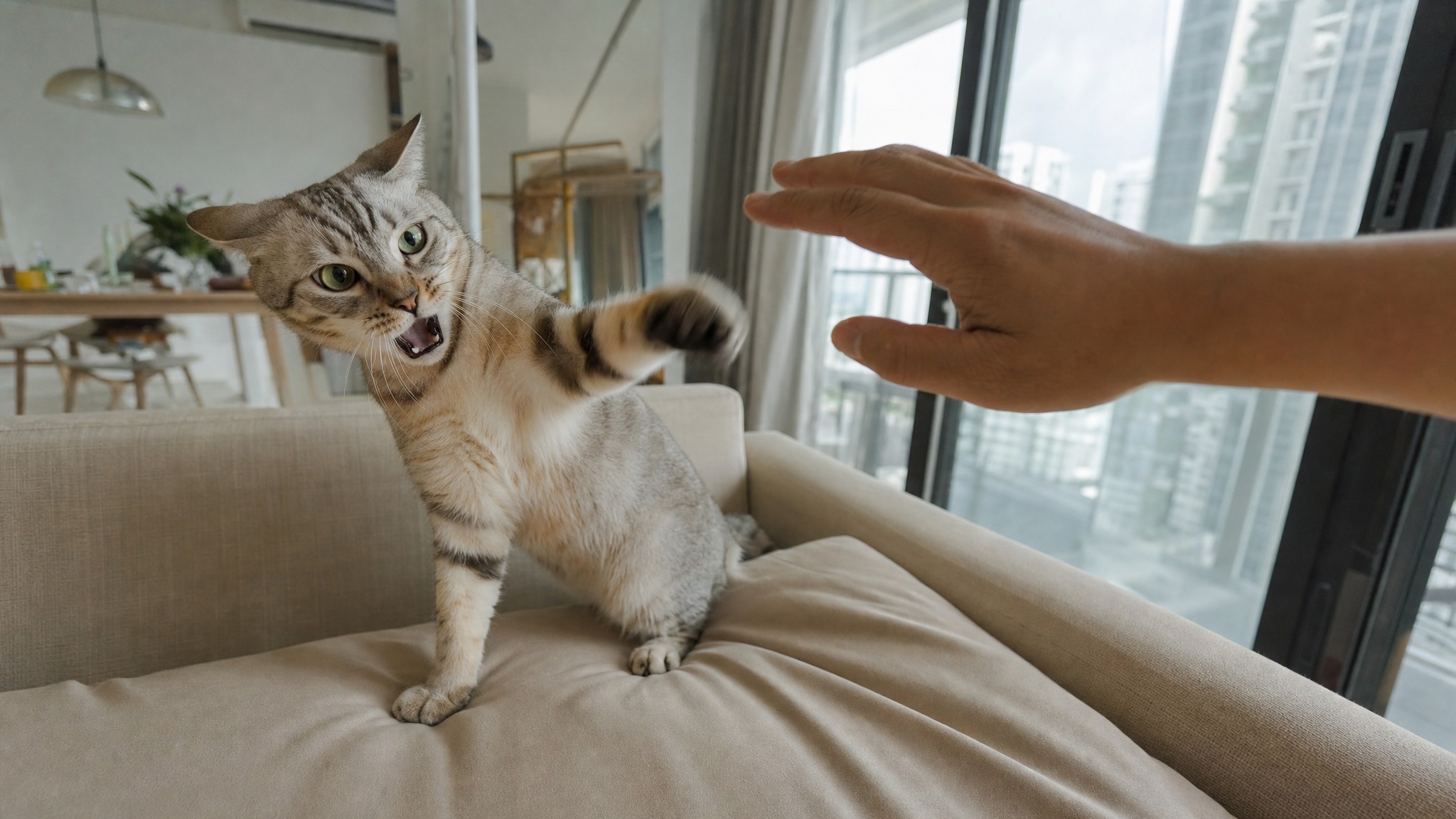
Why a Cat May Suddenly Attack a Familiar Person
If your cat suddenly attacking you seems to come out of nowhere, you are not alone. Many cat owners in Malaysia notice this behaviour even with a cat that is usually affectionate, calm, or very manja. In most cases, the attack is not “random” at all — there is usually a trigger linked to stress, pain, overstimulation, or the environment at home.
Cats rely heavily on routine, body language, scent, and a sense of control over their space. When something changes, even in a small way, a familiar person can suddenly become the target of a defensive or reactive response. This is especially common in homes where the cat is indoor-only, shares space with other pets, or is exposed to sudden sounds from the outside.
It is also important to remember that scratching, biting, pouncing, or ambushing can mean different things. A cat may be trying to play, asking for space, reacting to discomfort, or redirecting frustration after seeing another animal. Understanding the reason behind a cat suddenly attacking behaviour is the first step to stopping it safely.
Common Triggers in Malaysian Homes: Heat, Noise, Stress and Routine Changes
Malaysian homes have some unique environmental factors that can affect cat behaviour. The hot and humid weather can make cats more irritable, especially if the home has poor airflow or the cat’s preferred resting spots become too warm. Some cats become less tolerant of touch, more restless at night, or quicker to swat when they are physically uncomfortable.
Noise is another major trigger in condos and landed homes. Renovation works, motorbikes, loud thunderstorms, fireworks, school traffic, and even the vacuum cleaner can create ongoing stress. A cat that appears calm on the outside may still be carrying tension, and this can build up until the cat lashes out at the nearest person.
Routine changes also matter more than many people realise. If you recently changed feeding times, moved furniture, brought home a baby, started working longer hours, or introduced a new cat food Malaysia pet owners often buy during online sales, your cat may feel unsettled. Cats do best when daily life is predictable, so even positive changes can lead to a cat suddenly attacking incident if the adjustment is too abrupt.
Indoor-outdoor exposure is another common factor in Malaysia. A cat that watches strays, hears mating calls, or smells other animals near the window or gate may become aroused and frustrated. In that state, if you walk over to pet or pick up the cat, redirected aggression can happen very quickly.
Is It Play, Fear, Pain or Redirected Aggression?
Play aggression
Sometimes a cat suddenly attacking owner is not being “mean” — it is playing in an inappropriate way. Young cats and highly active adults may stalk ankles, bite hands, or jump from behind doors because they have excess energy and no proper outlet. This is especially common in smaller condos where the cat has limited climbing space and not enough structured playtime.
If the attack happens during movement, such as when you walk past the hallway or make the bed, play aggression is a likely cause. The body language is often energetic rather than fearful: wide eyes, crouching, tail flicking, then pouncing. Hands and feet should never be used as toys, because that teaches the cat that human skin is a target.
Fear-based aggression
Fear can look sudden, but usually the cat has already been giving warnings. Flattened ears, a low body posture, tense whiskers, a twitching tail, or moving away before striking are all common signals. If these signs are missed and the cat feels cornered, it may bite or scratch to create distance.
Fear-based attacks can happen after visitors come over, during festive seasons with loud sounds, or when a cat is forced into a carrier or confined space. In Malaysian homes with frequent household activity, some cats struggle more with unpredictable movement and noise. A fearful cat needs space and gentle management, not punishment.
Pain or medical causes
If your friendly cat has started cat suddenly attacking behaviour during touching, grooming, lifting, or when being approached, pain should be considered. Dental issues, arthritis, skin irritation, abscesses, urinary discomfort, or flea-related itchiness can make a cat react aggressively. In Malaysia’s humidity, skin problems and parasite flare-ups are not rare, especially for cats with some outdoor access.
A painful cat may also hide more, eat less, groom too much, or resist being handled. If the aggression is new and unusual, a vet check is important. Behaviour changes are often one of the earliest signs that something physical is wrong.
Redirected aggression
Redirected aggression is one of the most confusing situations for owners. Your cat sees or hears something upsetting — like another cat outside the grill door, a barking dog, or a loud crash — and then attacks the nearest person instead. The owner did not cause the problem, but happened to be close at the wrong moment.
This type of cat suddenly attacking behaviour can be intense and may continue for several minutes. The cat is highly aroused and not thinking clearly, so trying to touch or calm it immediately may lead to more bites or scratches. Giving the cat space is usually the safest first response.
What To Do Right Away After Your Cat Attacks You
First, do not shout, hit, or chase your cat. Punishment increases fear and stress, and it can make future aggression worse. Instead, create distance calmly by stepping away, using a pillow or blanket as a shield if needed, and allowing the cat to move to a quiet area.
Next, check your own injury properly. Cat bites and scratches can become infected, so wash the area thoroughly with soap and running water. If the wound is deep, swollen, or painful, seek medical advice quickly.
Once everyone is safe, try to identify what happened just before the incident. Was there a loud noise, a visitor, another cat outside, rough play, or touching near a sensitive area? A simple note on your phone about the time, trigger, and body language can help you spot patterns if your cat suddenly attacking episodes happen again.
If the cat still looks aroused — staring, growling, tail thumping, ears back — do not try to pet or carry it. Give at least 20 to 30 minutes of quiet time, sometimes longer. Place water, litter access, and a safe resting spot nearby so the cat can settle without being disturbed.
How To Prevent Repeat Attacks With Better Home Setup and Daily Routine
Prevention starts with making the home feel predictable and safe. Feed meals at regular times, keep litter boxes clean, and make sure your cat has multiple resting spots away from foot traffic. In humid Malaysian weather, cool ceramic tiles, shaded corners, fans, or better ventilation can help reduce discomfort and irritability.
Environmental enrichment is especially important for indoor cats. Add vertical space like shelves or cat trees, window perches with controlled visual access, and short interactive play sessions using wand toys. This reduces boredom and gives your cat a healthier outlet than ambushing your ankles in the corridor.
If noise or outside animals are a trigger, manage the visual environment. Frosted window film, curtains, or partial barriers can reduce the chance of the cat fixating on strays outdoors. In condos and landed homes alike, even small changes around doors, gates, and windows can lower the risk of a cat suddenly attacking response.
Good daily care also matters. Flea control, comfortable bedding, the right cat litter, and clean feeding areas all support a calmer cat. Many owners comparing products on Shopee or Lazada focus only on price, but choosing suitable basics — from pasir kucing to scratching pads and feeding bowls — can make a real difference in stress levels at home.
Structured play is one of the best ways to prevent attacks that are actually hunting behaviour. Two or three short sessions a day can help your cat stalk, chase, and “catch” appropriately. Finish with a small meal or treat so the hunting cycle feels complete and the cat is more likely to rest afterwards.
If the aggression is frequent, severe, or linked to handling, do not wait too long to get help. A vet can rule out pain or illness, and a qualified feline behaviour professional can help with a plan for your home setup and routine. Early action is much easier than trying to manage a long-term pattern.
If your cat has been tense, overstimulated, or reactive at home, the right everyday setup can help more than many owners expect. Small improvements like better scratching options, cleaner cat litter, cooling mats, interactive toys, flea care, and feeding tools can support a calmer routine and reduce stress triggers. If you are reviewing products the way many Malaysians do before buying online, it helps to focus on practical, home-use essentials instead of guesswork. Explore quality cat supplies that fit your cat’s space, habits, and comfort needs, so you can build a safer and more peaceful home for both of you.
FAQ
1. Why is my cat suddenly attacking me for no reason?
There is usually a reason, even if it is not obvious at first. Common causes include overstimulation, fear, pain, redirected aggression, boredom, or changes in the home environment. Watch for patterns around noise, touch, routine, or outside animal activity.
2. Can heat make my cat more aggressive in Malaysia?
Yes, it can contribute. Hot and humid conditions may make some cats less comfortable, less tolerant of handling, and more restless. Better airflow, cooler resting areas, and less crowding can help.
3. Should I punish my cat after it bites or scratches me?
No. Punishment often makes aggression worse because it increases fear and damages trust. The safer approach is to create distance, let the cat calm down, and then identify the likely trigger.
4. When should I take my cat to the vet for sudden aggression?
If the behaviour is new, intense, or linked to touch, movement, eating, grooming, or litter box use, a vet check is recommended. Pain, dental issues, skin irritation, or other medical problems can cause aggressive behaviour. Sudden changes in temperament should always be taken seriously.
5. How do I stop play attacks on my hands and feet?
Use wand toys, kicker toys, and scheduled play sessions instead of hand play. Avoid encouraging biting during play, and redirect stalking behaviour onto proper toys. Giving your cat daily physical and mental activity is key.
6. Can dirty litter boxes cause stress and aggression?
Yes, they can add to stress, especially in multi-cat homes or smaller spaces. A clean box with suitable pasir kucing helps cats feel more secure and reduces frustration around toileting. Good hygiene is part of a calmer home routine.
延伸閱讀
- Cat Skin Problems in Malaysia: Is Humidity Causing Itching, Dandruff or Hot Spots?
- Cara Memilih Makanan Kucing Terbaik: Panduan Bahan, Protein & Kucing Cerewet 2026
Last updated:2026-06-01 by CatGarden
CatGarden Deodorizing Mineral Cat Litter 3.0