
▶Cat Column, Nutrition eating guide
Why Newly Adopted Indoor Cats Try to Escape: Door-Dashing Tips for Malaysian Homes
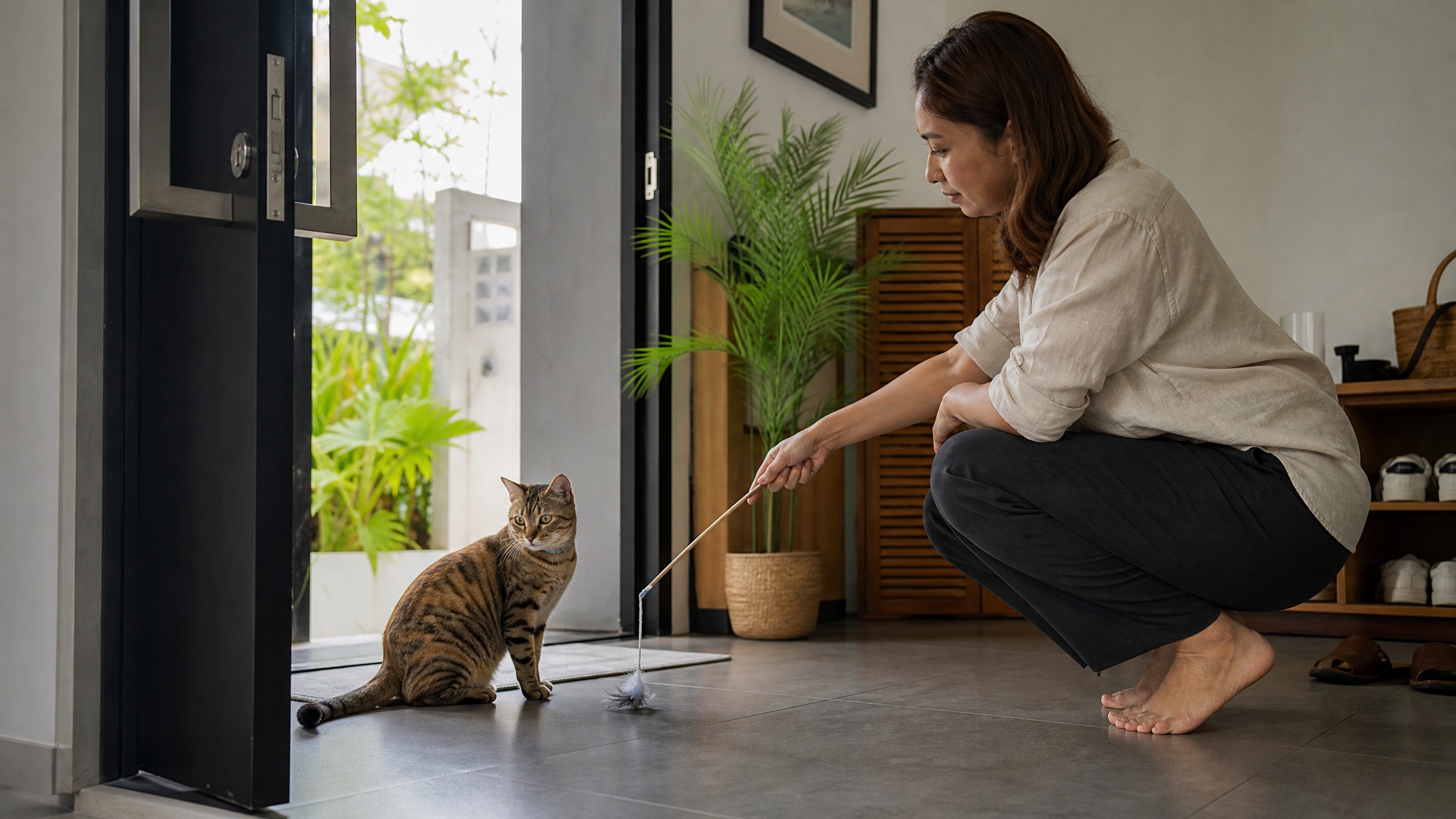
Why Newly Adopted Indoor Cats Try to Run Outside
A newly adopted cat may look calm on the sofa, then suddenly rush towards the door the moment someone comes home. This behaviour can worry any family trying to keep an indoor cat Malaysia home safe, especially when the cat has only been with you for a few days or weeks. Door-dashing is not always about wanting to “go back outside”; often, it is a mix of curiosity, stress, habit and poor timing around the entrance area.
Many cats need time to understand that your home is now their secure territory. If they came from the street, a foster home, or a noisy shelter, the main door may feel like the fastest route to something familiar. Even cats that were previously indoor-only may run because they are startled by door sounds, delivery riders, neighbours, shoe racks, or people moving in and out quickly.
Curiosity Can Look Like Escape Behaviour
Cats are naturally alert to movement, smell and sound. In Malaysia, corridors, condo lift lobbies, front gates and car porches can carry many interesting scents from other pets, food deliveries, rain, shoes and outdoor drains. A cat that keeps sniffing near the door may not be planning a dramatic escape; it may simply be collecting information about a new environment.
This curiosity becomes risky when the door area is also the busiest part of the home. If family members return with groceries, parcels, school bags or food delivery, the cat may find a gap before anyone notices. For an indoor cat Malaysia household, the goal is not to punish curiosity, but to redesign the routine so curiosity does not turn into a dangerous dash.
Stress Makes Cats Choose Fast Exits
Newly adopted cats often go through an adjustment period where they are not fully relaxed. They may hide, over-groom, eat less, meow at night, or keep checking windows and doors. When the home feels unpredictable, the front door may become a tempting “escape route” even if the outside world is much more dangerous.
Stress-related door-dashing is especially common when a cat is introduced to too much too quickly. Loud visitors, children chasing the cat, immediate access to the whole house, or pressure to interact can make the cat feel trapped. A calmer adjustment plan gives the cat more confidence and reduces the urge to run when the door opens.
Malaysia Home Risks: Condos, Landed Houses, Balconies and Gates
Keeping an indoor cat Malaysia lifestyle is not just about closing the main door. Malaysian homes have different escape points depending on whether you live in a condo, apartment, terrace house, semi-D, bungalow or kampung-style property. A cat that slips out may face traffic, stray animals, fleas, ticks, drains, construction areas, hot weather, heavy rain and unfamiliar territory.
Humidity also matters. In warm, damp conditions, fleas and parasites can be more active, and a short outdoor adventure may bring problems back into the home. Even if your cat returns safely, you may later notice scratching, dirty paws, muddy fur, or litter box changes caused by stress.
Condo and Apartment Risks
In condos, the front door may open into a corridor that seems safer than a road, but it still carries real risks. A frightened cat can run into a lift, stairwell, service room, car park, or another resident’s unit. Balconies are another concern, especially when cats squeeze through railing gaps, climb air-conditioning ledges, or chase insects at night.
For condo homes, check balcony netting, window grilles, sliding doors and laundry areas carefully. A cat does not need a large gap to create trouble; a partly open window or loose mesh can be enough. If you rent, use removable safety solutions where possible and inspect them regularly after storms or strong wind.
Landed Home Risks
In landed houses, the main risk is often the layered exit: house door, grille, porch, gate and street. Families may feel safer because there are multiple barriers, but cats can learn routines quickly. If the auto gate opens for a car, or the grille is left ajar while someone carries items in, a fast cat can move through several points before anyone reacts.
Outdoor drains, neighbouring dogs, motorcycles, delivery riders and cars make landed homes especially risky for door-dashing cats. Some cats also hide under cars or behind storage items in the porch, making them hard to retrieve. If your cat has just been adopted, do not assume it knows how to come back when called.
How to Create a Safer Door Routine Without Scaring Your Cat
A safer door routine should feel calm and repeatable, not like a panic response every time someone enters. If people shout, stomp, or chase the cat away from the door, the cat may become more anxious and more determined to bolt. For an indoor cat Malaysia home, the best routine uses barriers, predictable steps and positive redirection.
Start by treating the entrance area as a management zone. Shoes, parcel storage, food delivery pickups and guest greetings should not happen while the cat is free to hover at the door. The more predictable the routine, the easier it is for the cat to learn that the door is boring and other areas of the home are more rewarding.
Use a Two-Layer Barrier
If your home layout allows it, create a “buffer” before the main exit. This could be a baby gate, a closed room, a pet playpen, a grille, or a habit of placing the cat in a safe room before opening the front door widely. The point is to avoid relying only on human reaction speed.
For condos, a simple routine may be: unlock door, step in, close door fully, then greet the cat. For landed houses, handle the gate and car movement first, then open the house only when the porch is secure. Small routine changes can prevent the high-stress moment where the cat, bags and people all move at once.
Train a Station Away From the Door
A “station” is a place where your cat learns to go when the door opens. It can be a mat, cat tree, bench, scratching post, or feeding corner placed away from the entrance. Use treats, a favourite toy, or part of the cat’s meal to reward the cat for staying there.
Practise when you are not actually leaving. Touch the door handle, reward the cat at the station, open the door slightly, close it, and reward again. Over time, the sound of the door becomes a cue to move away from it instead of rushing towards it.
Brief Visitors and Family Members
Door safety fails when only one person understands the rule. Everyone in the home should know not to hold the door open while chatting, collecting food, or looking for keys. Visitors should be asked to enter quickly and close the door before interacting with the cat.
For homes with children, make the rule simple: door first, cat later. Children may love greeting the new cat, but sudden excitement near the entrance can create the exact situation you want to avoid. A calm family habit protects the cat without making the home feel tense.
Enrichment and Feeding Timing That Reduce Door-Dashing
Door-dashing often becomes worse when a cat is under-stimulated. If the entrance area is the most exciting place in the home, the cat will keep returning to it. A good indoor cat Malaysia setup gives the cat better options: climbing, scratching, hunting-style play, window watching and predictable feeding.
Malaysia’s humid weather also affects home-care routines. Cats may rest more during hot afternoons and become active in the evening when families are returning home. If your cat’s peak energy matches your busiest door time, you need to plan enrichment before that rush begins.
Play Before Busy Door Times
Schedule short play sessions before common door-dashing triggers, such as evening returns, food delivery time or guests arriving. Use wand toys, tossable toys, or chase games that allow the cat to stalk, pounce and “catch.” A tired, satisfied cat is less likely to sit at the entrance waiting for action.
Keep sessions short but focused. Five to ten minutes of active play can be more useful than leaving random toys on the floor all day. After play, offer a small meal or treat so the routine follows a natural hunt-eat-rest pattern.
Make Indoor Life More Interesting
Enrichment does not need to be expensive. A sturdy scratching post, a window perch, puzzle feeder, cardboard box, rotating toys and safe hiding spaces can make a big difference. For Malaysian homes, choose items that are easy to clean and less likely to trap odour in humid weather.
If you are comparing cat supplies online, think beyond price alone. Look at material, washability, stability, size, reviews from local homes, and whether replacement parts are easy to find. Shopee and Lazada-style browsing can be useful, but the best item is the one your cat will actually use consistently.
Feeding Timing Can Change Door Behaviour
Some cats rush the door because they associate people entering with food. If every homecoming leads to immediate feeding near the entrance, the cat learns to wait there. Move feeding to a quiet area and avoid rewarding the cat while it is crowding the door.
You can also use food strategically. Give a small puzzle feeder or treat scatter in another room before opening the door for deliveries or guests. For cats motivated by makanan kucing, this can redirect attention without shouting or chasing.
When Escape Attempts Mean Stress, Boredom or a Poor Adjustment Plan
Not every door-dashing attempt is the same. A confident cat may dash because the outdoors is interesting, while a fearful cat may dash because it feels overwhelmed inside. Watching the full pattern helps you decide whether the problem is habit, boredom, anxiety or a rushed adoption adjustment.
If your newly adopted cat is constantly trying to escape, review the first few weeks at home. Did the cat have a quiet starter room? Were introductions to people, pets and spaces gradual? A stable indoor cat Malaysia routine usually starts with controlled access, clear hiding places and low-pressure interaction.
Signs Your Cat Needs a Slower Adjustment
A cat that hides all day, eats only at night, avoids the litter box, growls, swats, pants, or freezes near people may not be ready for full-home freedom. If the door-dashing happens after loud events or forced handling, stress is likely part of the issue. Slow the routine down and rebuild trust.
Give the cat a smaller safe zone with food, water, litter, scratching, bedding and hiding options. Spend time nearby without demanding contact. When the cat becomes more confident, expand access gradually instead of opening every room at once.
When Boredom Is the Main Trigger
Bored cats often create their own entertainment. They may knock things down, attack feet, meow at doors, scratch furniture, or wait by the entrance for movement. This does not mean the cat is “naughty”; it means the indoor environment is not meeting its natural needs.
Add daily play, vertical space and scent-safe exploration. Rotate toys so they feel fresh, place scratching areas where the cat already likes to stretch, and use puzzle feeding to slow meals. Good cat litter, pasir kucing, cleaning routines and odour control also help keep the indoor space comfortable enough for the cat to settle.
When to Get Professional Help
If escape attempts are intense, frequent, or paired with aggression, severe fear, not eating, or litter box problems, speak with a vet or qualified cat behaviour professional. Medical discomfort can make cats restless, irritable or desperate to leave certain spaces. Behaviour plans work best when health issues are ruled out early.
Also consider whether the home routine is too unpredictable. Renovation noise, new pets, visitors, long work hours, or inconsistent feeding may all affect a newly adopted cat. A calmer plan can often reduce door-dashing within a few weeks, but serious stress should not be ignored.
FAQ
How long does it take for a newly adopted indoor cat to stop trying to escape?
Many cats settle within a few weeks, but some need one to three months depending on their history, confidence and home routine. Street-rescued cats, anxious cats and cats moved between several homes may need longer. Focus on consistency instead of expecting instant change.
Should I let my indoor cat explore outside for a short time?
For most homes, unsupervised outdoor access is not worth the risk. Malaysian roads, drains, dogs, parasites, heat and sudden rain can make even a short escape dangerous. If you want outdoor enrichment, consider secure balcony protection, window perches, or harness training only after proper gradual training.
Is spraying water a good way to stop door-dashing?
No, spraying water may scare the cat and damage trust, especially during the adoption period. It can also make the cat associate the entrance or family members with fear. Use barriers, training, redirection and better timing instead.
What supplies help prevent door-dashing?
Useful supplies include a sturdy scratching post, cat tree, puzzle feeder, wand toy, treat pouch, baby gate or playpen, secure carrier and washable bedding. For an indoor cat Malaysia home, also choose cat litter and cleaning products that handle humidity and odour well. The right setup makes indoor life more rewarding than the doorway.
Can neutering or spaying reduce escape attempts?
Yes, it may help if the cat is trying to roam because of mating behaviour. Unneutered cats may be more determined to get outside, vocalise, spray or search for other cats. Speak with your vet about the right timing for your cat’s age and health.
Build a Safer Indoor Routine With the Right Cat Supplies
A door-dashing cat is not trying to make life difficult; it is showing you that the home routine needs better safety, confidence and enrichment. For Malaysian homes, the most useful changes are usually simple: a calmer entrance routine, secure windows or balcony areas, daily play, predictable meals, and products that suit humid weather. If you are setting up for a newly adopted cat, choose cat supplies that support real indoor living, not just the basics. Look for stable scratchers, washable beds, puzzle feeders, odour-control cat litter, flea-aware cleaning tools, secure carriers and toys that make the inside world feel worth staying in. When the home becomes predictable, comfortable and interesting, your cat has fewer reasons to rush the door and more reasons to relax where it belongs.
延伸閱讀
- Is Your Indoor Cat Bored or Anxious? Simple Enrichment Ideas for Malaysian Homes
- Adopting Two Cats Together in Malaysia: How to Set Up a Calm Indoor Home
- Found a Cat Outside in Malaysia? How to Tell If It’s Stray, Lost or Abandoned
Last updated:2026-06-09 by CatGarden
CatGarden Deodorizing Mineral Cat Litter 3.0