
▶Cat Column, Everyday beauty care
Is Your Cat’s Weight Changing? Home Tracking Tips Malaysian Owners Should Start Before It Becomes Serious
Why Small Weight Changes Matter More Than They Look
A cat’s body is small, so even a slight weight change can mean more than it appears. A 300g gain or loss may not look dramatic on a fluffy cat, but it can be a meaningful percentage of their total body weight. For Malaysian owners, this can be easy to miss because cats may look “normal” under thick fur, especially indoor cats that spend most of the day sleeping in cool corners.
Regular cat weight tracking helps you notice patterns before they become serious. Weight changes can be linked to food portions, reduced activity, stress, dental pain, parasites, or underlying illness. In Malaysia’s humid weather, cats may also eat less during very hot periods, while indoor cats in condos may gain weight from limited movement.
Why visual checks are not enough
Many owners rely on how their cat looks, but appearance alone can be misleading. Long-haired cats may hide weight loss, while short-haired cats may look thin after a normal shedding period. A cat that feels “a bit heavier” when carried may already have been gaining weight for months.
Touch is helpful, but it works best together with numbers. You should be able to feel the ribs with light pressure, and your cat should have a visible waist when viewed from above. Still, the scale gives you a clearer record, especially when more than one family member is feeding treats or wet food.
How Often Should Malaysian Cat Owners Weigh Their Cats?
For healthy adult cats, weighing once a month is a practical routine. It is frequent enough to catch gradual changes, but not so frequent that every small daily fluctuation becomes stressful. If your cat is on a diet, recovering from illness, pregnant, elderly, or still growing, your vet may suggest weekly weighing instead.
Malaysian homes can have different routines depending on whether the cat lives in a landed house, condo, or semi-indoor environment. Cats with outdoor access may burn more energy, but they may also face higher parasite and flea exposure. Indoor condo cats may be safer from traffic and stray-cat fights, yet they often need more play time and portion control.
Best time of day to weigh your cat
Try to weigh your cat at the same time of day each session. Morning before breakfast is ideal if your cat tolerates it, because the reading is less affected by meals. If mornings are too rushed, choose another consistent time and stick with it.
Consistency matters more than perfection. Use the same scale, the same method, and record the date clearly. Over time, your cat weight tracking notes will show whether the change is a one-off fluctuation or a steady trend.
What counts as a concerning change?
As a general guide, a change of around 5% of body weight deserves attention, especially if it happens over a short period. For a 4kg cat, that is about 200g. A 10% change is more serious and should be discussed with a vet promptly.
Do not wait until your cat looks obviously thin or overweight. Cats are good at hiding discomfort, and many health issues progress quietly. A simple monthly record can give your vet useful information if a check-up becomes necessary.
Weight Gain vs Weight Loss: Warning Signs to Watch
Weight gain usually happens slowly, so it is often mistaken for a healthy appetite or “cute chubbiness”. In reality, excess weight can make jumping harder, reduce grooming ability, and increase stress on the joints. In Malaysia’s warm and humid climate, overweight cats may also become less active because they feel hot and tired more easily.
Weight loss can be even more worrying, especially when your cat is still eating normally. Some cats lose weight because of dental pain, digestive issues, parasites, kidney disease, diabetes, thyroid problems, or chronic stress. This is why cat weight tracking should always be considered alongside behaviour, appetite, litter box habits, and grooming.
Signs your cat may be gaining too much weight
- Difficulty jumping onto beds, shelves, or window ledges
- Less interest in playing, chasing toys, or climbing
- No visible waist when viewed from above
- Greasy or matted fur near the back because grooming is harder
- Breathing more heavily after short activity
If your cat is gaining weight, check the full feeding routine before changing food. Count dry food, wet food, treats, table scraps, and “just a little” extras from family members. Many owners compare cat food Malaysia options on Shopee or Lazada, but portion size often matters as much as the brand.
Signs your cat may be losing weight
- Ribs, spine, or hip bones becoming easier to feel
- Eating more but still getting thinner
- Reduced appetite, picky eating, or dropping food while chewing
- Vomiting, diarrhoea, or changes in stool
- Drinking more water or urinating more than usual
Weight loss should not be dismissed as ageing. Senior cats can become slimmer, but sudden or steady loss still needs attention. If your cat’s appetite changes together with weight loss, arrange a vet visit instead of only switching makanan kucing or adding supplements.
Simple Home Tools That Make Tracking Easier
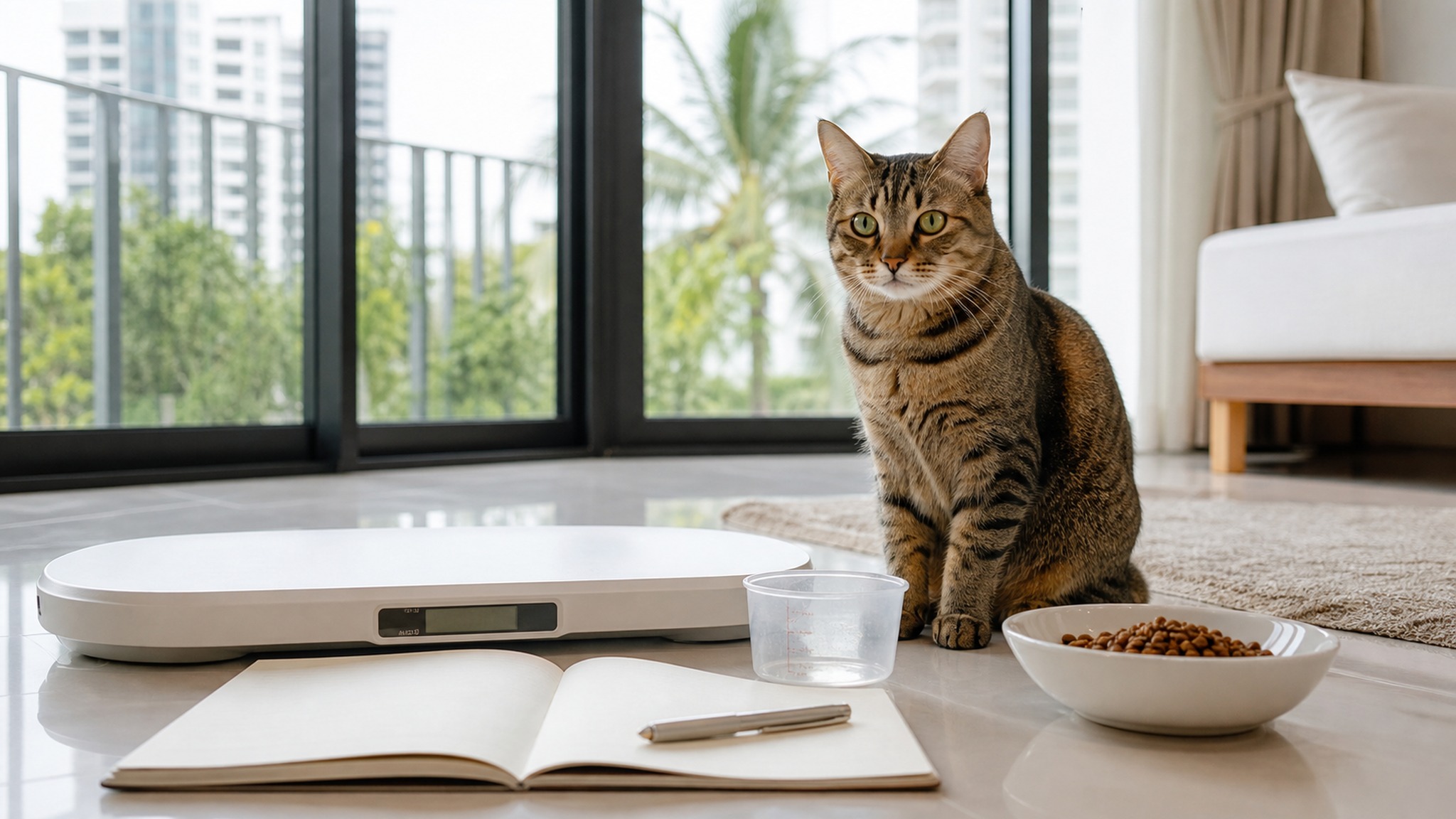
You do not need expensive equipment to start cat weight tracking at home. A digital baby scale is the easiest option because it can measure small changes more accurately than a regular bathroom scale. If you do not have one, you can weigh yourself, then weigh yourself while holding your cat, and subtract the difference.
For nervous cats, make the scale part of normal home life. Place it on the floor for a few days, let your cat sniff it, and reward calm behaviour with praise or a small treat. Avoid forcing the process, because stress can make future weighing much harder.
Useful items for a simple tracking setup
- Digital scale: A baby scale or pet scale gives more accurate readings.
- Notebook or spreadsheet: Record date, weight, food changes, and health notes.
- Measuring cup or kitchen scale: Helps keep dry food portions consistent.
- Food storage container: Keeps kibble fresh in Malaysia’s humid weather.
- Interactive toys: Encourages movement for indoor cats in condos or apartments.
Humidity can affect food freshness, especially if dry kibble is left open for too long. Stale food may reduce appetite, while poorly stored food can attract ants or pests. Airtight containers are useful for both cat food and cat litter storage, especially in landed homes where insects are more common.
What to record besides weight
A useful record should include more than the number on the scale. Note appetite, energy level, water intake, stool quality, vomiting, hairballs, and any change in litter box use. If you recently changed food, treats, pasir kucing, flea control, or feeding schedule, write that down too.
Photos can also help. Take a top-view and side-view photo once a month in similar lighting. When paired with cat weight tracking, photos make it easier to notice body condition changes that happen too gradually for daily observation.
When Weight Changes Need a Vet Check
A vet check is recommended if your cat loses weight quickly, gains weight despite controlled feeding, or shows other symptoms at the same time. Warning signs include vomiting, diarrhoea, poor appetite, increased thirst, hiding, bad breath, weakness, or changes in urination. Cats can appear calm even when they are unwell, so behaviour changes should be taken seriously.
If your cat has outdoor access, mention this to the vet. Malaysia’s indoor-outdoor cats may have more exposure to fleas, ticks, worms, stray cats, and contaminated food sources. Parasite control and deworming history can help your vet understand whether weight loss may be linked to exposure risk.
Do not start a strict diet without advice
If your cat is overweight, avoid sudden severe food restriction. Cats that stop eating or eat far too little can develop serious liver problems. A healthy weight-loss plan should be gradual, with proper calories, protein, and monitoring.
Your vet may recommend a target weight, feeding amount, and review schedule. They may also check for medical causes before assuming the issue is only overfeeding. This is especially important for senior cats, cats with chronic illness, and cats that have sudden appetite changes.
Bring your tracking notes to the clinic
Your home records can make the consultation more useful. Bring the weight log, food brand, daily portion, treat amount, and any recent changes in cat supplies. If possible, show photos from previous months so the vet can compare body condition visually.
Good cat weight tracking does not replace a vet, but it gives better context. Instead of guessing when the change started, you can show a clear timeline. That helps your vet decide whether to run tests, adjust diet, check teeth, or review parasite prevention.
Building a Practical Weight Routine at Home
The best routine is one you can actually keep. Choose one day each month, such as the first Sunday, and make it your cat’s weighing day. Keep the scale, notebook, and treats in the same place so the process takes only a few minutes.
For multi-cat homes, record each cat separately. This is especially important if cats share bowls, because one cat may be eating more while another eats less. Separate feeding stations can help you understand real intake, not just how much food disappears from the bowl.
Make the routine low-stress
Keep weighing short and calm. Let your cat step onto the scale voluntarily if possible, and reward them after the reading. If your cat dislikes being handled, use a carrier on the scale and subtract the carrier’s weight.
Never turn weighing into a struggle. A stressed cat may hide, scratch, or avoid the area next time. The goal is to make health monitoring feel like a normal part of home care, just like cleaning the litter box or checking for fleas.
Use products to support the routine, not replace it
Food, litter, toys, and supplements can support a healthier lifestyle, but they should not replace observation. A high-quality diet still needs correct portions, and a good litter setup still needs daily checking. When buying cat supplies online, compare ingredients, sizing, storage needs, and whether the product fits Malaysia’s humid home environment.
Look for practical items that make daily care easier. Airtight food containers, odour-control cat litter, flea combs, slow feeders, and interactive toys can all support better home monitoring. Small improvements in routine often lead to better long-term results than sudden big changes.
Conclusion: Start Before the Change Looks Serious
Weight changes are easier to manage when you catch them early. A monthly record can reveal slow gain, quiet loss, or sudden changes that deserve attention. For Malaysian cat owners, this habit is especially helpful because heat, humidity, indoor living, outdoor exposure, and shared feeding routines can all affect a cat’s body condition.
Start simple: weigh your cat, write it down, watch their appetite, and check their litter box habits. Over a few months, your cat weight tracking routine becomes a reliable health signal. If the numbers move in the wrong direction, you will be ready to act before the problem becomes harder to treat.
CTA: A healthier weight routine starts with the right everyday setup. If you are reviewing your cat’s food portions, litter habits, flea control, or indoor activity, it may be time to refresh the basics at home. Choose cat supplies that suit Malaysian homes: airtight food storage for humid weather, odour-control cat litter for condos, easy-clean bowls, grooming tools, slow feeders, and toys that encourage movement. When comparing products online, look beyond price and check size, ingredients, material, refill cost, and whether it fits your cat’s age and lifestyle. Small, practical upgrades can make feeding, weighing, cleaning, and monitoring much easier. Build a home-care corner that helps you notice changes early, keep routines consistent, and support your cat’s comfort every day.
FAQ
How often should I weigh my cat at home?
For most healthy adult cats, once a month is enough. Kittens, senior cats, overweight cats, and cats recovering from illness may need weekly checks. Follow your vet’s advice if your cat already has a medical condition.
What is the easiest way to weigh a cat without a pet scale?
Use a bathroom scale by weighing yourself first, then weighing yourself while holding your cat. Subtract your weight from the combined weight. This method is less precise than a baby scale, but it can still show larger trends.
Is it normal for cats to eat less during hot Malaysian weather?
Some cats may eat slightly less during very hot or humid days, especially if they are less active. However, ongoing appetite loss, weight loss, vomiting, or lethargy is not normal. If the change continues, arrange a vet check.
Can indoor cats become overweight easily?
Yes. Indoor cats, especially in condos or smaller homes, may move less if they do not have enough play, climbing space, or feeding control. Measuring portions and using interactive toys can help reduce gradual weight gain.
When should weight loss become urgent?
Sudden weight loss, weight loss with poor appetite, or weight loss with vomiting, diarrhoea, increased thirst, or weakness should be checked quickly. Even if your cat still seems calm, unexplained weight loss can signal a medical problem.
延伸閱讀
- Cat First Aid Kit for Malaysian Homes: What to Keep Ready Before Heat, Fleas or Minor Wounds Happen
- Do Indoor Cats in Malaysia Still Need Flea Prevention? What Humid Homes Should Watch For
- Are Cat Supplements Worth It in Malaysia? What to Check Before Buying for Skin, Joints and Digestion
Last updated:2026-06-17 by CatGarden
CatGarden Deodorizing Mineral Cat Litter 3.0