▶Cat Column, Nutrition eating guide
Why Does My Cat Follow Me Around the Flat? A Singapore Owner’s Guide to Clingy Indoor Cats
Why Cats Follow Their Owners Around the Flat
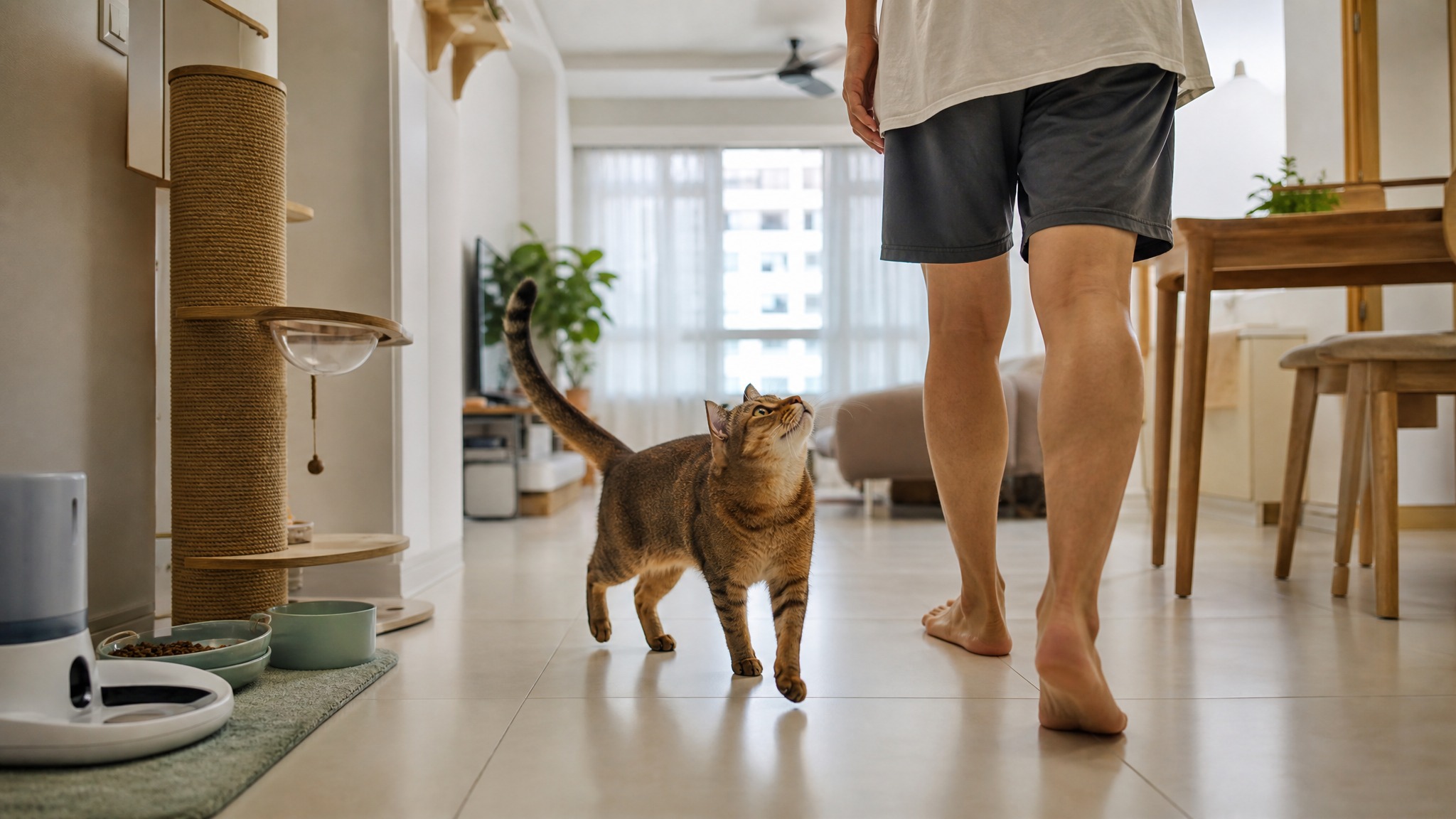
If your cat follows you from the bedroom to the kitchen, waits outside the toilet, and settles near your work desk, you are not alone. Many indoor cats in Singapore flats build their daily rhythm around their owners because the home is their whole world. In an HDB or apartment setting, your movement often signals food, play, attention, fresh water, or a comfortable air-con room. For many cats, following is simply a practical way to stay close to the most important person in the flat.
A clingy cat Singapore owner worries about may not always be anxious or unwell. Cats are social animals in their own selective way, and some breeds or personalities are naturally more people-oriented. If your cat eats normally, uses the litter box well, plays, rests, and can be alone for parts of the day, following you may just be attachment. The key is to look at the whole pattern, not only the fact that your cat is always nearby.
They associate you with routine
Cats are excellent pattern readers. They notice when you wake up, prepare cat food, open the balcony door, switch on the fan, or sit down after work. In a compact flat, those small routines are easy for your cat to monitor. Following you can be their way of predicting what happens next.
This is especially common for indoor cats whose environment does not change much. Your cat may follow you because your movement is the most interesting event in the home. If you work long hours, your return can become the highlight of the day. That excitement may look like clinginess, but it can also be a request for interaction.
Normal Attachment vs Stress-Related Clinginess
Normal attachment feels relaxed. Your cat follows you, sits nearby, blinks slowly, grooms, naps, or asks for a short play session before moving on. A healthy attached cat can still settle in another room, eat without you standing beside the bowl, and explore familiar spaces. This kind of clingy cat Singapore homes often see is usually manageable with routine, enrichment, and predictable care.
Stress-related clinginess feels more urgent. Your cat may vocalise constantly, pace, block your path, scratch doors, refuse food when alone, or become unsettled whenever you prepare to leave. Some cats overgroom, hide after loud noises, or become more reactive to touch. If the behaviour appears suddenly or keeps getting stronger, it deserves closer attention.
Signs your cat is comfortably attached
A comfortably attached cat may shadow you around the flat but still has a balanced day. They eat their meals, drink water, use their cat litter normally, play when invited, and rest in favourite spots. They may prefer your company, but they do not panic when you are busy. Their body language usually stays soft, with a relaxed tail, normal pupils, and easy movement.
These cats often do well with small adjustments rather than major intervention. A few scheduled play sessions, a window perch, puzzle feeders, and cosy resting places can make them feel more independent. You do not need to push them away or ignore them completely. The aim is to help them feel safe even when your attention is not available.
Signs clinginess may be stress-related
A stressed cat may follow you with tension in the body. They may meow sharply, cling before you leave for work, or seem unable to relax unless they are touching you. Some cats become extra needy after a move, renovation noise, a new baby, a new pet, or a change in your schedule. In Singapore flats, even corridor noise or nearby construction can affect sensitive indoor cats.
Watch for physical changes too. Reduced appetite, vomiting, diarrhoea, litter box accidents, sudden aggression, hiding, excessive grooming, or changes in urination are not just personality quirks. A cat that suddenly becomes clingy may be seeking comfort because something feels wrong. When in doubt, check with a vet rather than assuming it is only behavioural.
Singapore Flat Triggers: Heat, Noise, Routine, and Small Spaces
Singapore’s humid weather can make indoor cats more sensitive to comfort zones. A cat may follow you into air-con rooms, near fans, or away from warm corners because they are looking for a cooler place to rest. Some cats also become more demanding when their water bowl gets warm or when litter odour builds faster in humid conditions. For a clingy cat Singapore climate can amplify small discomforts into daily habits.
Flat living also means shared sounds. Lift lobbies, corridor footsteps, doorbells, renovation drilling, traffic, thunder, and neighbours’ pets can all make a cat seek safety near you. In a smaller home, there may be fewer places to retreat from sound and movement. Your cat following you may be less about wanting attention and more about using you as a safe base.
HDB and apartment routines
Many Singapore owners keep cats fully indoors, which is safer and more practical for HDB and apartment life. But indoor-only living means your cat depends heavily on the flat layout for exercise, stimulation, and rest. If the home has limited vertical space or few quiet corners, your cat may follow you because there is not much else to do. A simple shelf, cat tree, or cleared window perch can make a noticeable difference.
Busy working owners may also see stronger following behaviour in the evenings. After a long day alone, your cat may want food, play, and social contact all at once. If you respond only when they meow or trail your feet, they may repeat the behaviour more intensely. A predictable after-work routine helps reduce this pressure.
Humidity, odour, and comfort
Humidity affects more than human comfort. Cat litter Singapore owners choose needs to manage moisture and odour well, especially in smaller flats where the litter box is near living areas. If the box smells strong, feels damp, or is placed in a hot corner, your cat may become restless and seek you out. Cleaning frequency and litter choice can influence behaviour more than many owners expect.
Food storage matters too. Cat food Singapore homes keep should be sealed properly because humidity can affect freshness and smell. Cats with sensitive noses may become fussy if dry food turns stale or wet food is left out too long. If mealtimes become stressful, your cat may follow you around asking for replacement food or reassurance. Good storage, portioning, and fresh water can prevent some of this daily frustration.
How to Help a Clingy Cat Feel More Secure
The goal is not to make your cat stop loving your company. The goal is to help them feel safe, occupied, and confident when you are not directly engaging with them. A clingy cat Singapore family can support by building structure into the day. Cats feel calmer when food, play, rest, and quiet time happen in a predictable rhythm.
Start with short, high-quality interaction. Two or three play sessions of 10 to 15 minutes can be more effective than random attention throughout the day. Use wand toys, chase games, and puzzle feeders to mimic hunting, then offer a meal or snack after play. This helps your cat complete a natural cycle of chase, catch, eat, groom, and sleep.
Create secure resting zones
Give your cat resting spots that do not depend on your lap or your desk chair. A quiet corner, elevated perch, covered bed, or soft mat near a familiar scent can help. In air-con rooms, make sure your cat can choose whether to stay cool or move to a warmer spot. Choice is important because cats feel safer when they can control their own comfort.
Place resources in more than one location if your flat allows it. Water, scratching surfaces, beds, and toys should not all be clustered in one busy area. If your cat follows you because the only comfortable resting place is beside you, add another appealing option nearby first. Over time, you can encourage more independent resting without making your cat feel rejected.
Use enrichment that suits small flats
You do not need a large home to enrich an indoor cat’s life. Rotate toys weekly, offer cardboard boxes, use food puzzles, and create vertical access where safe. A window view can be valuable, but make sure windows and grilles are secure. For many HDB cat households, vertical territory is the easiest way to make a small space feel bigger.
Build calm departure habits if your cat becomes anxious when you leave. Avoid dramatic goodbyes, and give a small food puzzle or safe treat before heading out. Keep your leaving routine low-key so your cat does not learn that every bag, key, or shoe movement is a major event. When you return, greet them calmly, then offer play once you have settled.
When Following Behaviour Needs a Vet or Behaviour Check
A sudden change in behaviour should always be taken seriously. If your independent cat becomes intensely clingy overnight, there may be pain, illness, sensory changes, or stress behind it. Cats often hide discomfort, so behaviour shifts can be one of the first visible signs. A vet can help rule out medical issues before you treat it as a training problem.
For an ongoing clingy cat Singapore owners cannot manage with routine changes, a behaviour-focused consultation may help. This is especially useful if your cat shows separation distress, aggression, litter box issues, overgrooming, or fear responses to household sounds. Behaviour problems are easier to improve when you address them early. Waiting until the pattern becomes severe can make recovery slower.
Vet thresholds to watch
Book a vet check if clinginess comes with appetite loss, weight change, vomiting, diarrhoea, coughing, limping, hiding, or unusual tiredness. Also watch for urinary signs such as frequent litter box trips, straining, blood in urine, or peeing outside the box. These signs can be urgent, especially for male cats. Do not try to solve possible medical discomfort with toys or discipline.
Senior cats need extra attention when behaviour changes. Older cats may follow more because of vision changes, hearing loss, cognitive changes, arthritis, or discomfort. They may also seek warmer or quieter spots more often. A vet can advise what is normal ageing and what needs treatment or home adjustments.
Behaviour support and home review
If the vet clears medical causes, review the home environment. Look at litter box placement, food routine, scratching options, hiding spaces, noise exposure, and whether your cat has enough predictable play. A behaviour professional can help identify triggers that are easy to miss. Small changes in layout and routine can reduce clinginess without damaging your bond.
Avoid punishment, spraying water, shouting, or locking your cat away for following you. These responses can increase anxiety and make your cat more insecure. Reward calm independent behaviour instead, such as resting on a mat, using a perch, or playing with a puzzle feeder. With patience, many cats learn that they can be close to you without needing to monitor every step.
FAQ
Is it normal for my cat to follow me everywhere in my Singapore flat?
Yes, it can be normal, especially for indoor cats in HDB flats or apartments. Your cat may associate you with food, play, comfort, and safety. If they still eat, sleep, play, and use the litter box normally, it is often healthy attachment. If the behaviour is sudden, intense, or paired with physical changes, arrange a vet check.
Does a clingy cat mean my cat has separation anxiety?
Not always. A clingy cat Singapore owners notice may simply enjoy company or have a routine built around the owner. Separation anxiety is more likely if your cat panics when you leave, vocalises excessively, damages items, refuses food, or shows litter box issues. Track when the behaviour happens and what triggers it. This helps your vet or behaviour consultant assess the pattern more clearly.
Can humid weather make my cat more clingy?
Humid weather can affect comfort, litter odour, food freshness, and resting preferences. Your cat may follow you into cooler rooms or seek attention if their environment feels warm or uncomfortable. Keep water fresh, store food properly, and choose cat litter that controls moisture and odour well. Good airflow and clean resting areas can reduce daily restlessness.
How do I stop my cat from following me into the toilet or kitchen?
First, give your cat an attractive alternative before you enter those areas. Offer a perch, mat, puzzle feeder, or short play session nearby. Close doors calmly when needed, without scolding or making the moment dramatic. Over time, reward your cat for waiting quietly or settling in their own spot.
What cat supplies help a clingy indoor cat feel more secure?
Useful supplies include wand toys, puzzle feeders, scratching posts, elevated beds, covered resting spots, water fountains, and reliable litter systems. For Singapore homes, consider humidity-friendly food storage and cat litter with strong odour control. The best choices depend on your cat’s age, energy level, and flat layout. Start with comfort, routine, and enrichment before buying too many items at once.
Choosing Better Everyday Support for Your Indoor Cat
A clingy cat is often asking for comfort, rhythm, and a home that feels secure. For Singapore flats, the right everyday setup can make a real difference: fresh food storage, odour-controlling litter, engaging toys, scratching surfaces, water bowls or fountains, and cosy rest zones that suit humid weather and indoor living. If you are reviewing your cat supplies, focus on items that solve actual daily problems instead of buying only cute extras. Think about where your cat eats, drinks, toilets, scratches, plays, cools down, and hides. Better choices can reduce stress, support independence, and keep your bond healthy. Explore cat supplies that fit Singapore apartment life, ecommerce delivery routines, and the needs of indoor cats who depend on their home environment every single day.
延伸閱讀
- Why Does My HDB Cat Keep Trying to Run Out? Singapore Owners’ Guide to Door-Dashing and Safe Containment
- How Much Space Does an Indoor Cat Need in a Singapore HDB Flat?
- Bored HDB Cat? 9 Simple Enrichment Activities Singapore Owners Can Do at Home
Last updated:2026-06-08 by CatGarden
CatGarden Deodorizing Mineral Cat Litter 3.0