
▶Cat Column, Nutrition eating guide
How Often Should You Reset Your Cat’s Room in a Singapore Flat?
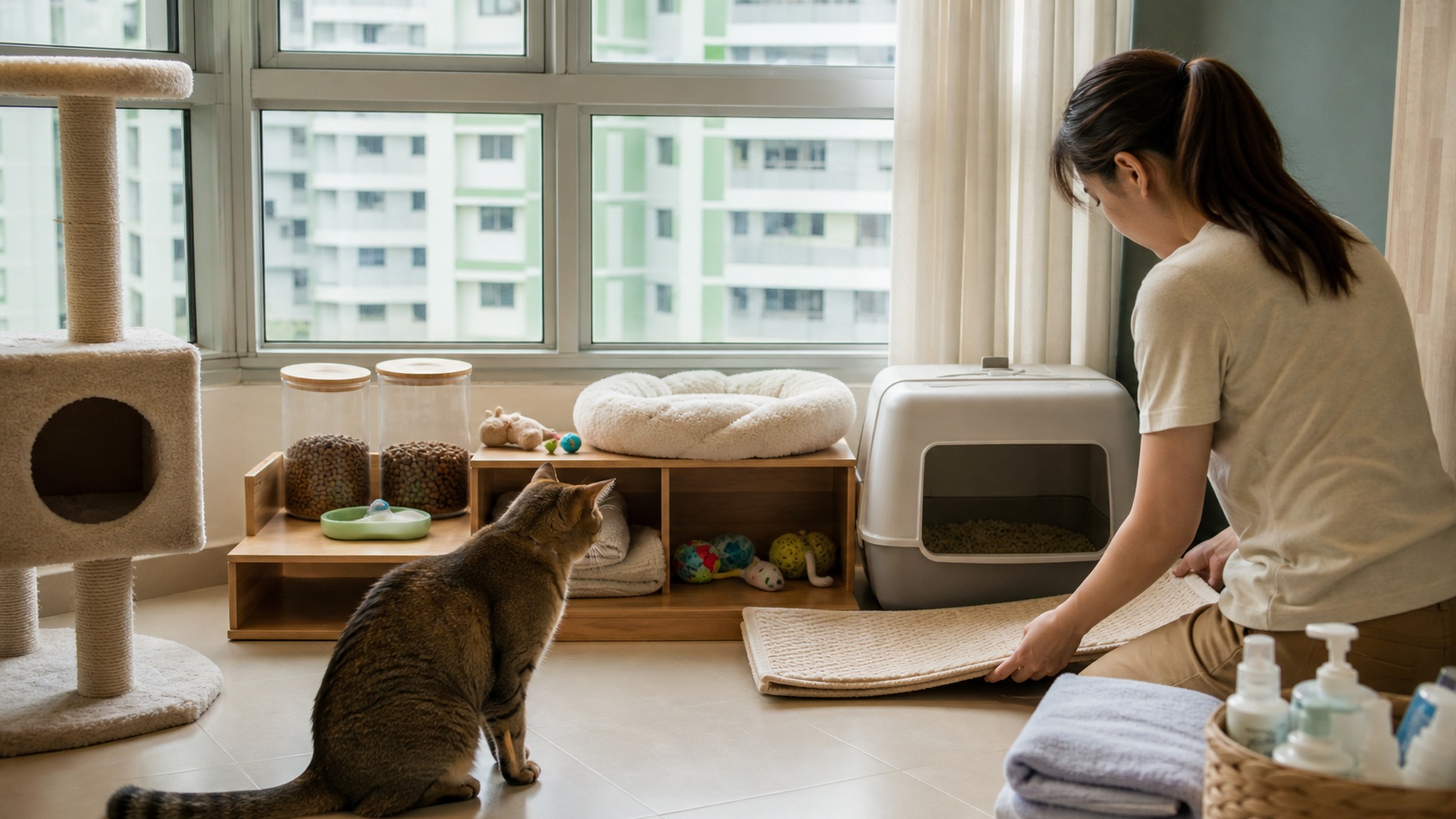
What Is a Cat Room Reset, and Why Singapore Flats Need One
A cat room reset is a regular refresh of the spaces your cat uses most: sleeping spots, litter area, toys, feeding corner, scratching zones, and nearby surfaces. It is not a deep clean that removes every trace of your cat’s scent. Instead, it is a practical routine that keeps the area clean, comfortable, and predictable for an indoor cat living in a Singapore flat.
For many Singapore cat owners, the “cat room” may not be a separate room at all. It might be a corner of the living room, a service yard setup, a bedroom nook, or a compact HDB cat area beside a window. Because flats are enclosed, smells, humidity, fur, dust, and litter tracking can build up quickly if the space is left untouched for too long.
A good cat room reset Singapore routine helps balance hygiene with your cat’s need for familiarity. Cats feel safest when their environment smells and looks somewhat predictable. The goal is to remove dirt, odour, dampness, and clutter without making the whole space feel suddenly unfamiliar.
Why HDB and apartment cats need a reset rhythm
Indoor cats in Singapore often spend many hours in the same few rooms, especially when owners are at work. Air-con use, closed windows, humid weather, and smaller living spaces can all affect how fast bedding, litter corners, and food areas become stale. Even a clean-looking area may hold trapped smells or moisture if airflow is poor.
A reset rhythm also helps owners notice small changes earlier. You may spot reduced appetite, unusual litter box habits, toy disinterest, mould on nearby furniture, or damp bedding before it becomes a bigger issue. If anything looks linked to pain, illness, sudden behaviour change, or repeated litter box avoidance, it is safer to check with a vet instead of treating it as a cleaning problem.
How Often to Reset Bedding, Litter Areas, Toys, and Feeding Corners
Most Singapore homes do well with a light daily tidy, a weekly reset, and a deeper monthly check. The exact frequency depends on how many cats you have, whether your cat sheds heavily, how humid your flat is, and how enclosed the cat area feels. A single indoor cat in a breezy flat may need less work than two cats sharing a compact HDB corner.
For a practical cat room reset Singapore schedule, think in zones rather than doing everything at once. Bedding, litter, toys, and feeding areas each collect different kinds of mess. Resetting them at the right pace keeps the room fresher without overwhelming your cat with constant change.
Bedding and sleeping spots
Cat beds, blankets, hammocks, and favourite cushions should usually be shaken out or vacuumed once or twice a week. In humid weather, check whether the fabric feels damp, smells musty, or has trapped fur underneath. Wash bedding every one to two weeks, but keep one familiar item unwashed if your cat is sensitive to change.
If your cat sleeps in an air-con room, bedding may seem clean for longer, but fur and skin flakes still collect. If the bed is near a window, laundry area, or bathroom wall, check more often for moisture. Avoid strong fragrances when washing cat bedding, as many cats dislike heavy scents and may stop using the bed.
Litter areas
The litter box area needs the most consistent attention because smell spreads quickly in flats. Scoop at least once daily, and more often if you have multiple cats or use a smaller box. Wipe litter tracking around the box several times a week, especially if the box sits near the living room, bedroom, or walkway.
For cat litter Singapore setups, the type of litter matters. Clumping litter, tofu litter, paper litter, and mixed formulas all manage odour and tracking differently in humid weather. Whatever you use, do a full litter change and box wash based on the product’s instructions, your cat’s habits, and any smell that remains after scooping.
Toys and enrichment items
Toys do not need to be washed as often as litter accessories, but they should not be ignored. Fabric toys can hold saliva, dust, and humidity, while plastic toys can collect grime in corners or seams. Rotate toys weekly so your cat keeps interest without feeling that everything has disappeared.
During a reset, throw away broken toys, loose strings, detached feathers, or anything your cat could swallow. Wipe hard toys with a pet-safe method and let them dry fully before returning them. Keep a few favourite toys in place so the reset feels like a refresh, not a total replacement.
Feeding corners
Food and water areas should be cleaned more often than many owners expect. Bowls should be washed daily, especially for wet food, raw food, or toppers that leave residue. In Singapore’s humid weather, leftover food can smell quickly and attract ants if the area is not maintained.
If you buy cat food Singapore online or in bulk, check storage conditions during your reset. Kibble should stay sealed, dry, and away from heat, while wet food should be handled according to label directions. Wipe the floor or mat under bowls at least a few times a week, because small spills can become sticky or sour in a warm flat.
Why Cats Need Familiar Scent After Cleaning
Cats rely heavily on scent to understand whether a space is safe. When you clean every bed, toy, mat, scratcher, and surface at the same time, your cat may feel as if their territory has been erased. This can lead to hiding, stress, over-marking, or avoiding a newly cleaned area.
A balanced cat room reset Singapore routine should keep some familiar scent in the room. You can wash one blanket while leaving another favourite cushion unchanged, or clean the litter area without moving the scratcher and bed on the same day. This approach is especially useful for shy cats, senior cats, newly adopted cats, and cats that dislike household changes.
How to keep scent without keeping dirt
The easiest method is to reset in layers. Clean the dirtiest or most urgent zones first, such as bowls and litter tracking, while leaving low-risk comfort items for another day. If you are washing bedding, keep one small blanket or soft toy that already smells like your cat.
You can also return items to the same place after cleaning. Cats notice when beds, bowls, litter boxes, and scratchers move around too often. If you need to change the layout for airflow, safety, or easier cleaning, do it gradually and observe whether your cat still eats, drinks, rests, and uses the litter box normally.
When a clean room becomes stressful
A room can be clean but still uncomfortable for a cat. Strong disinfectant smells, slippery floors, loud vacuuming, and sudden furniture movement can make a reset feel threatening. Always allow cleaned items to dry properly and air out before your cat uses them again.
If your cat starts spraying, hiding, refusing food, or avoiding the litter box after a major clean, consider whether too much changed at once. Put back a familiar blanket, restore the old bed position, and reduce strong scents. If the behaviour continues or appears linked to pain or urinary discomfort, contact a vet promptly.
Humidity, Odour, and Mold Checks for HDB Cat Corners
Singapore humidity is one of the biggest reasons cat spaces need regular resets. Even when a flat feels tidy, moisture can sit in fabric, cardboard scratchers, litter mats, wall corners, and storage baskets. This is especially common in service yards, rooms with poor airflow, and corners close to bathrooms or windows.
A strong cat room reset Singapore habit includes checking for dampness, not just visible mess. Run your hand over bedding, mats, and nearby shelves to feel for moisture. Smell the area at cat height too, because odours can be stronger near the floor where litter dust, fur, and food crumbs settle.
Odour control in small flats
Odour control starts with daily litter scooping, clean bowls, and good airflow. Avoid masking smells with heavy air fresheners, as cats may find them unpleasant and some scented products are not suitable around pets. Instead, remove the source of the smell and improve ventilation where possible.
For HDB cat corners, placement matters. A litter box beside food bowls can make both areas unpleasant, while a box in a hot, enclosed corner may smell stronger. If space is limited, use washable mats, easy-access cleaning tools, and litter products that suit your cat’s comfort as well as your flat’s odour needs.
Mold and dampness checks
Mould can appear behind furniture, under mats, inside fabric beds, or on cardboard items that sit too long in humid spaces. During each weekly reset, lift beds, mats, storage boxes, and scratchers to inspect the floor and wall behind them. If an item smells musty or stays damp, it may be better to replace it than keep washing it.
Be careful with damp litter areas too. Some litter types may break down faster in humidity or track more when moisture is high. If your cat’s litter box area smells sour, feels wet, or attracts insects, review your cleaning frequency, litter choice, and airflow rather than simply adding more fragrance.
A Simple Weekly Reset Routine for Busy Singapore Cat Owners
A weekly reset should be simple enough to repeat even during busy work weeks. You do not need to empty the whole room or buy new products every time. The most useful routine is one that keeps your cat’s core areas clean, dry, and familiar without taking over your weekend.
For busy owners, a 30 to 45 minute cat room reset Singapore routine is usually realistic. Prepare a small cleaning kit with pet-safe wipes or cloths, a vacuum or lint roller, spare litter bags, bowl sponge, rubbish bag, and fresh bedding. Keeping everything nearby makes the reset easier to start and less likely to be skipped.
Weekly reset checklist
- Scoop and inspect the litter box: Remove waste, check smell, wipe tracking, and look for unusual changes in urine or stool.
- Refresh the feeding corner: Wash bowls, wipe the mat, check food storage, and remove crumbs or ants.
- Shake, vacuum, or wash bedding: Clean the dirtiest fabric items while leaving one familiar-smelling comfort item.
- Rotate toys: Keep a few favourites out, clean hard toys, and remove damaged items.
- Check humidity points: Lift mats, inspect wall corners, and look behind beds, scratchers, and storage baskets.
- Reset airflow: Open windows safely if appropriate, use a fan or dehumidifier if needed, and avoid strong fragrances.
This checklist works well for most indoor cats, but it should be adjusted for your home. A flat with several cats, poor airflow, or a litter box in a narrow corner may need more frequent attention. A cleaner, breezier setup may only need a light midweek touch-up between weekly resets.
The point is consistency, not perfection. Cats benefit from a space that stays predictable, dry, and comfortable. When your weekly routine becomes automatic, you are more likely to notice small health, appetite, litter, or behaviour changes early.
Monthly deep check
Once a month, take a closer look at the full setup. Check whether your cat has outgrown a bed, whether the scratcher is still stable, whether litter mats are trapping too much dust, and whether food storage is still airtight. This is also a good time to review whether your current supplies still match your cat’s age, health, and habits.
Do not change every product at once unless there is a clear reason. Cats can be fussy about litter texture, bowl height, bed material, and toy style. If you need to switch cat litter, food, or other essentials, introduce changes gradually and ask your vet for guidance when diet or health concerns are involved.
FAQ
How often should I do a cat room reset in a Singapore flat?
Most homes should do a light daily tidy and a fuller weekly reset. Daily tasks include scooping litter, washing food bowls, and removing leftover food. Weekly tasks can include bedding refresh, toy rotation, litter area wipe-down, and humidity checks.
Should I wash all my cat’s bedding at the same time?
It is usually better not to wash everything at once. Cats feel secure when some familiar scent remains in their space. Wash the dirtiest bedding first and keep one favourite blanket, cushion, or soft toy available.
How do I control cat odour in an HDB flat?
Start by removing the source of the smell instead of covering it with fragrance. Scoop litter daily, wash bowls, clean litter tracking, and improve airflow where safe. If odour continues despite good cleaning, review your litter type, box size, box location, and vet-related possibilities.
Can humidity affect cat litter in Singapore?
Yes, humid weather can affect how litter clumps, breaks down, smells, or tracks around the home. Some litter types handle moisture better than others, but your cat’s comfort still comes first. If changing litter, do it gradually so your cat does not reject the box.
When should I contact a vet instead of just cleaning more?
Contact a vet if your cat suddenly avoids the litter box, urinates more or less than usual, strains, cries, stops eating, hides, or shows major behaviour changes. Cleaning can improve the environment, but it should not replace medical advice. Litter box changes can sometimes point to stress, pain, or health issues.
CTA: Keep Your Cat’s Space Fresh With the Right Supplies
A good reset routine is much easier when your everyday items fit Singapore flat living. Choose cat supplies that help with humid weather, odour control, easy washing, safe feeding, and indoor enrichment. From suitable litter and washable mats to food storage, bowls, scratchers, and toy rotation, the right setup saves time and keeps your cat’s corner more comfortable. If you are reviewing your weekly cat room reset Singapore routine, start with the items your cat uses every day and replace what is worn, damp, hard to clean, or no longer practical for your home.
延伸閱讀
- Why Does My Cat Claim Every Box and Sofa? A Territory Guide for Singapore Flats
- How Much Playtime Does an Indoor Cat Need in a Singapore HDB Flat?
- Will a Window Mesh Stop Your HDB Cat? What Singapore Owners Should Check Before Buying
Last updated:2026-06-19 by CatGarden
CatGarden Deodorizing Mineral Cat Litter 3.0