
▶Cat Column, Nutrition eating guide
How Many Cats Can You Keep in an HDB Flat? A Singapore Owner’s Multi-Cat Checklist
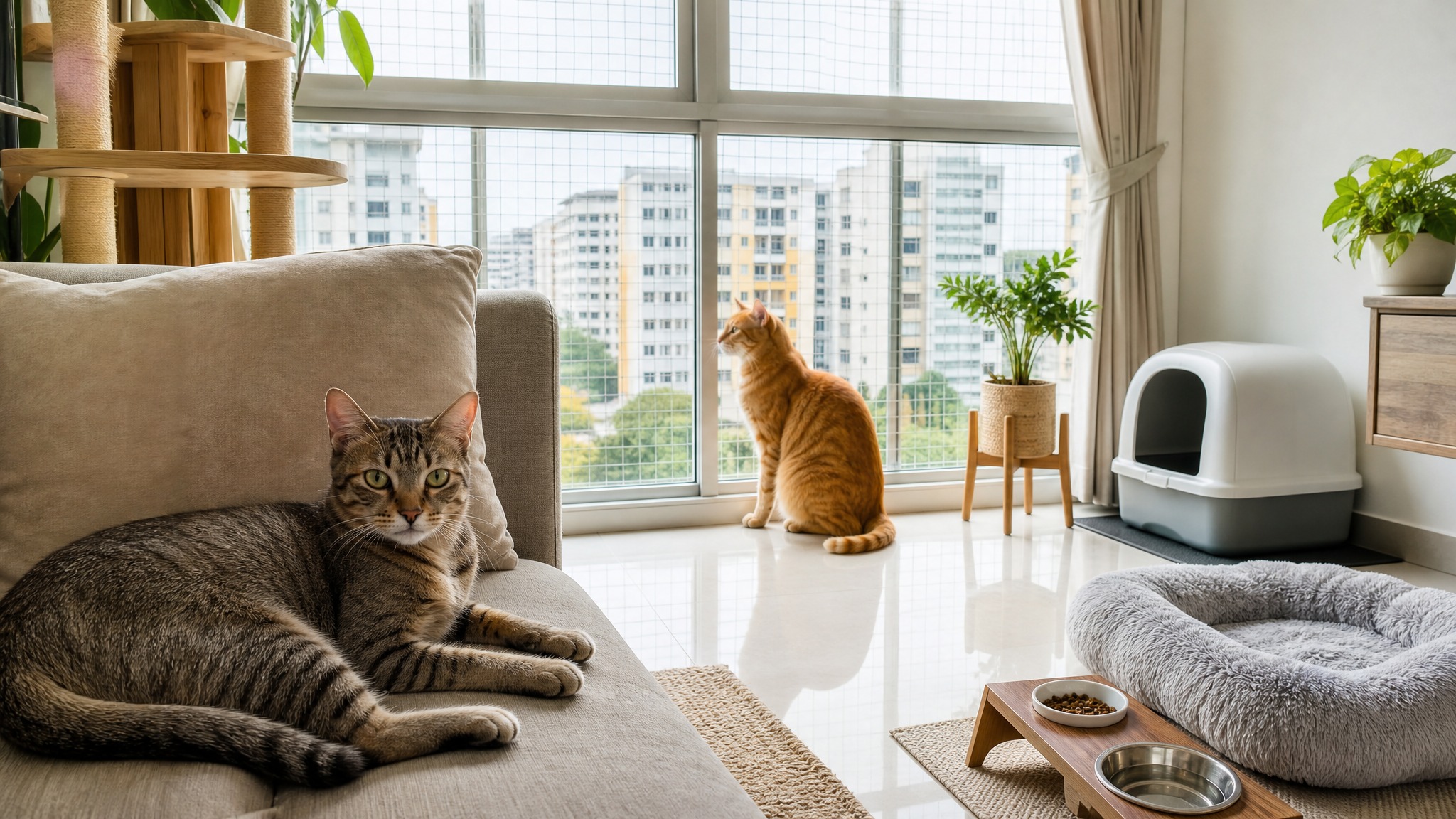
How Many Cats Can You Keep in an HDB Flat? A Singapore Owner’s Multi-Cat Checklist
For Singapore cat owners, the rules around HDB cats are no longer as unclear as they used to be. Under the current framework, HDB households may keep up to two pet cats in a flat, together with one approved small-breed dog if applicable. This makes the HDB cat limit Singapore owners need to plan around fairly simple on paper, but real life inside a flat needs more thought than just counting cats.
If you already had more than two cats before the new rules took effect, check the latest licensing and transition requirements with AVS or NParks before making decisions. The key point is that newly adding more cats beyond the allowed number is not something to treat casually. A responsible multi-cat home in Singapore should consider licensing, welfare, neighbours, odour, noise, hygiene, and whether every cat has enough space to live calmly indoors.
What Singapore HDB Cat Owners Need to Know About Cat Numbers
The most searched question is usually: how many cats can I keep in an HDB flat? For most owners, the practical answer is two cats per HDB flat, subject to licensing and the relevant pet ownership rules. This is why HDB cat limit Singapore is such an important keyword for new adopters, first-time owners, and families thinking of taking in a second cat.
However, the number alone does not tell you whether your home is ready. Two cats in a spacious, well-managed flat may be comfortable, while two cats in a cluttered home with poor litter management may be stressed. HDB living also means shared corridors, nearby neighbours, and less tolerance for smells, caterwauling, or roaming cats entering common areas.
Singapore owners should also remember that HDB cats are expected to be kept responsibly indoors. That means windows, gates, and service yards need to be secured so cats do not fall, escape, or wander into neighbours’ spaces. If you are still deciding whether to adopt another cat, treat the legal limit as the starting line, not the full checklist.
Licensing and responsibility matter
Cat licensing helps authorities trace pets, support responsible ownership, and respond better when welfare or public health concerns arise. Microchipping and updated owner details are especially important in dense estates where a missing cat can move quickly between blocks, stairwells, and car parks. If your cat slips out, proper identification makes it easier for rescuers, vets, or neighbours to help.
Before adding another cat, confirm the current requirements from official sources rather than relying only on social media comments. Rules can change, and different housing types may have different pet limits. For HDB households, the HDB cat limit Singapore owners should keep in mind is not just about avoiding fines; it is about proving that indoor cat ownership can work well in shared residential living.
Before Adding Another Cat: Space, Time, and Budget Checks
A second cat is not simply “one more bowl and one more toy”. Cats are territorial, and a small flat can feel even smaller when resources are placed badly. Before adopting, walk through your home and ask whether each cat can eat, drink, rest, scratch, hide, and use the litter box without being blocked by the other cat.
Space in Singapore HDB flats is not only about floor area. Vertical space matters because many cats feel safer when they can climb, perch, and observe. Cat trees, wall shelves, window perches, and quiet resting spots can help reduce pressure, especially when both cats are indoors all day while owners are at work.
Time is another serious check. Multi-cat homes need slow introductions, daily observation, play sessions, litter scooping, feeding management, and grooming support during shedding periods. Busy working owners in Singapore can still keep cats well, but the setup needs to be realistic rather than based on weekend energy.
Budget for the boring costs
The biggest mistake is budgeting only for adoption fees and basic cat food Singapore owners see online. Monthly costs can include quality food, cat litter Singapore delivery, parasite prevention, annual vet checks, vaccinations, sterilisation if not already done, dental care, and emergency funds. Two cats may not cost exactly double in every category, but vet care and litter usage can rise quickly.
Humid weather also affects spending. Food needs to be stored properly, litter may need stronger odour control, and bedding or scratchers can get musty if the room has poor airflow. If you use air-con rooms for comfort, remember that water intake, ventilation, and electricity costs are part of the real home environment too.
Multi-Cat Behaviour Signs That Your Flat Is Getting Too Stressful
Stress in cats is not always dramatic. Some cats do not fight openly; they avoid each other, freeze in doorways, stop using favourite resting spots, or wait until the other cat leaves before eating. In a compact HDB flat, these small signs matter because one confident cat can quietly control access to food, litter, windows, and sleeping areas.
Watch for chasing that does not look playful, blocking at corridors, staring, swatting, growling, hiding, over-grooming, or sudden litter box accidents. A cat that starts peeing outside the box may not be “naughty”; it may be stressed, unwell, or unable to reach a clean and safe litter tray. If behaviour changes suddenly, especially with appetite, urination, or pain signs, speak to a vet rather than assuming it is only personality.
Noise is another practical HDB issue. Cats may vocalise more when they are bored, anxious, in heat, hungry, or competing for attention. Repeated late-night yowling can affect neighbours, particularly in blocks where sound travels easily through windows and service yards.
When two cats are not actually bonded
Many owners hope their first cat will feel less lonely with a companion, but cats do not automatically want a housemate. Some enjoy social contact, while others prefer being the only cat. The right question is not “Can I fit another cat?” but “Can both cats live without constant tension?”
Slow introductions are essential. Separate the new cat first, exchange scents, feed on opposite sides of a barrier, and only allow short supervised meetings when both cats are calm. If you rush the process, you may create months of stress that is much harder to undo later.
Litter, Food, Water, and Odour Setup for Humid HDB Homes
A practical multi-cat rule is to provide more litter access than you think you need. Many behaviourists suggest one litter box per cat plus one extra, but HDB layouts may require creative placement. If space is tight, prioritise easy access, privacy, airflow, and distance from food and water.
Singapore humidity makes litter choice more important. Clumping litter can track, soften, or smell faster if the area is damp, while poorly ventilated corners may trap ammonia odour. For cat litter Singapore homes, choose a product that suits your cat’s paws, controls smell, and can be cleaned consistently rather than chasing only the strongest fragrance.
Food should also be managed carefully. In warm weather, wet food should not be left out too long, and opened food needs proper storage. If one cat eats faster or steals from the other, separate feeding areas can prevent bullying and help you monitor appetite changes.
Water stations and airflow
Multiple water points are helpful in multi-cat homes. Some cats prefer fountains, while others prefer still bowls placed away from food and litter. In air-con rooms, cats may drink less if water is not attractive or easy to reach, so refresh bowls often and observe habits.
Odour control is not about masking smells with heavy perfume. It starts with scooping daily, washing trays regularly, using the right litter depth, and keeping the area dry. For HDB cat owners, good odour management protects the cats’ comfort and keeps the home pleasant for family members and neighbours.
When to Pause, Ask a Vet, or Rework the Home Setup
If your home is already at the HDB cat limit Singapore owners need to follow, pause before taking in another cat, even temporarily. Good intentions can become stressful when the home lacks quarantine space, spare litter boxes, or the budget for vet checks. This is especially true if the new cat is a rescue, kitten, senior cat, or cat with unknown health history.
You should also pause if your current cat is already showing stress signs. Adding another cat will not fix spraying, hiding, aggression, or chronic litter box issues. Stabilise the existing home first, then decide whether a second cat is fair to everyone.
A vet should be involved when there are sudden changes in appetite, weight, urination, stool, grooming, breathing, mobility, or temperament. Behaviour and health are closely linked, and Singapore owners should not delay care because they assume a cat is “just stressed”. If the issue is medical, changing litter or buying new toys will not solve the root problem.
Reworking the flat before rehoming decisions
Sometimes the solution is not giving up a cat, but changing the environment. Add vertical routes, separate feeding zones, more hiding places, extra scratching posts, and better litter placement. Small changes can reduce competition and give each cat more control over daily life.
Still, if the cats are constantly distressed and professional advice has not helped, responsible rehoming may need to be considered. That decision should be careful, ethical, and based on welfare rather than convenience. The HDB cat limit Singapore framework gives owners a legal boundary, but the cats’ daily quality of life is the deeper measure.
Multi-Cat Checklist for Singapore HDB Owners
- Confirm the legal limit: For most HDB flats, plan around two cats and keep licensing requirements updated.
- Secure the home: Mesh windows, service yards, and gates so indoor cats cannot escape or fall.
- Plan litter properly: Provide enough trays, scoop daily, and choose litter that handles Singapore humidity.
- Separate key resources: Food, water, beds, scratchers, and resting spots should not all be in one contested area.
- Watch behaviour: Hiding, blocking, chasing, staring, spraying, and appetite changes can signal stress.
- Budget beyond food: Include vet care, litter, preventive health, emergency funds, and replacement supplies.
- Introduce slowly: Give new cats time, scent exchange, and supervised meetings instead of rushing contact.
Keeping cats in an HDB flat can work beautifully when the home is planned around real feline needs. The HDB cat limit Singapore owners search for answers the legal question, but the day-to-day checklist answers the welfare question. If your cats have clean litter, safe indoor enrichment, separate resources, steady routines, and timely vet care, apartment living can be calm and healthy. Before buying more items, look at what problem you are solving: odour, hydration, boredom, scratching, shedding, or feeding control. Choosing the right cat supplies for Singapore homes means thinking about humid weather, small-space storage, delivery convenience, and what your cats will actually use. A thoughtful setup helps you avoid clutter while giving each cat more comfort, confidence, and room to be themselves.
FAQ
How many cats can I keep in an HDB flat in Singapore?
For most HDB households, the current limit is up to two pet cats per flat, subject to licensing and responsible ownership rules. If you already had more than two cats before the framework changed, check the official transition and licensing conditions. Do not rely only on old forum posts because the rules have changed over time.
Can I keep three cats in an HDB flat if they are all indoor cats?
Indoor-only living is important, but it does not automatically change the HDB limit. If you are thinking of keeping more than two cats, you should verify your situation with the relevant Singapore authorities. From a welfare angle, three indoor cats also need significantly more litter, space, and behavioural management.
What is the best litter setup for two cats in a Singapore HDB flat?
A good target is multiple litter trays placed in low-stress areas, cleaned daily, with litter that controls odour in humid weather. Avoid putting all trays side by side if one cat tends to block access. The best cat litter Singapore owners choose should match both the home environment and the cats’ willingness to use it.
Should I adopt a second cat if my first cat seems lonely?
Maybe, but loneliness is not the only factor. Some cats enjoy companionship, while others are happier as solo cats. Try increasing play, enrichment, and routine first, then consider a slow and careful introduction only if your cat’s temperament and your home setup are suitable.
When should I see a vet for multi-cat stress?
See a vet if there is sudden aggression, appetite loss, weight change, vomiting, diarrhoea, over-grooming, breathing changes, or litter box accidents. These signs can be medical, behavioural, or both. A vet can help rule out health problems before you focus only on home setup changes.
延伸閱讀
- Why Does My HDB Cat Yowl at Night? A Singapore Owner’s Guide to Quiet, Calmer Evenings
- Should You Sterilise Your HDB Cat? Behaviour, Neighbour Complaints, and Vet Timing in Singapore
- Can Two or More Cats Live Happily in an HDB Flat? A Singapore Multi-Cat Behaviour Checklist
Last updated:2026-06-15 by CatGarden
CatGarden Deodorizing Mineral Cat Litter 3.0