▶Cat Column, Everyday beauty care
Can Cats Overheat in Singapore? Heat Stress Signs, Cooling Checks, and When to Call a Vet
Why Singapore Cats Can Overheat Even Indoors
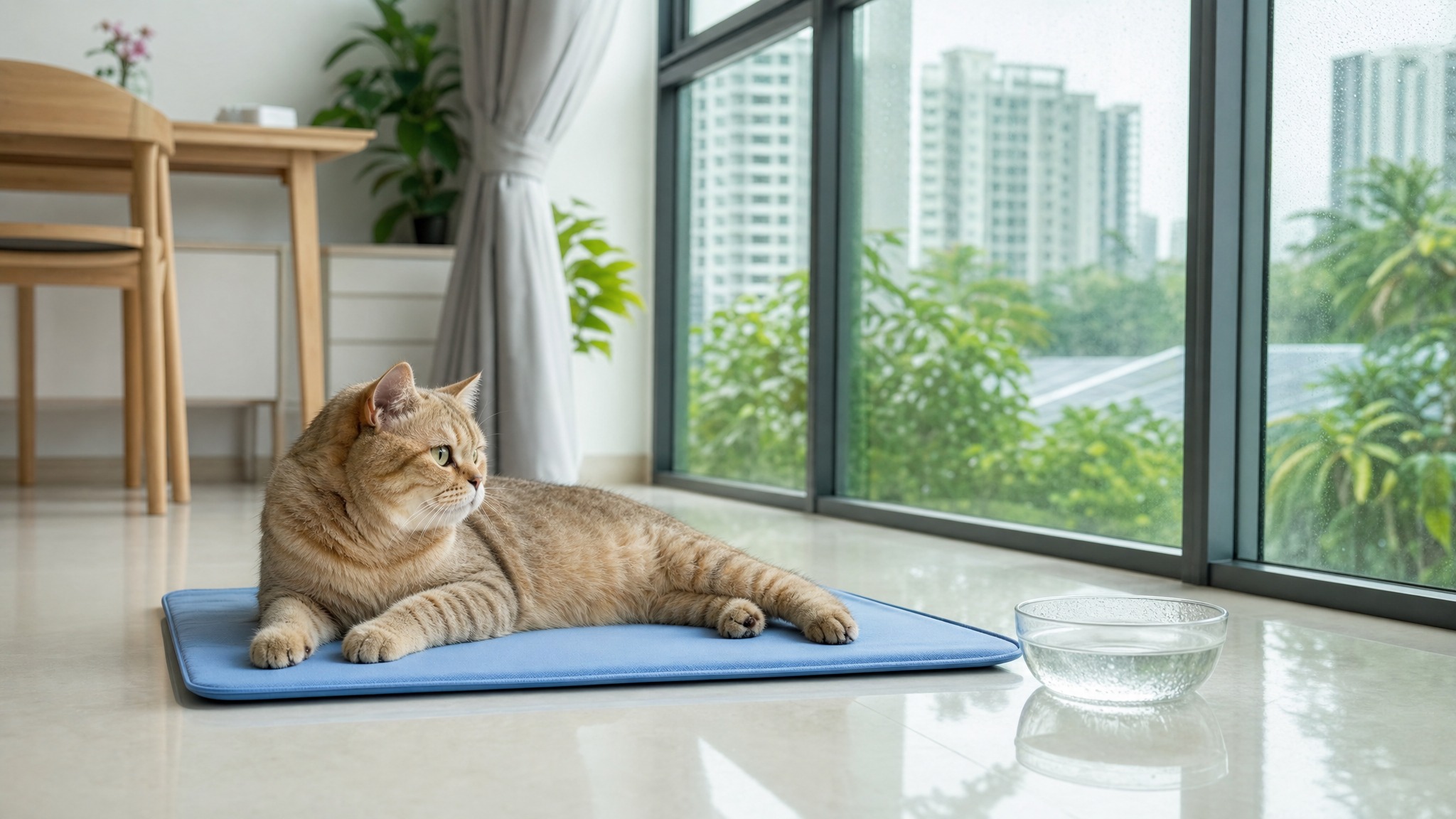
Many owners think indoor cats are protected from heat, but Singapore’s humid weather can make an HDB flat feel warm even when the temperature does not look extreme. Cats release heat less efficiently than humans, and high humidity makes it harder for their body to cool down. This is why cat overheating Singapore is not only an outdoor problem. It can happen in quiet indoor homes, especially during still afternoons or when windows are closed for long hours.
In Singapore apartments, airflow matters as much as temperature. A room that feels acceptable in the morning can become stuffy by mid-afternoon, especially if it faces strong sun or has limited cross-ventilation. Cats may choose warm corners, cupboards, laundry areas, or window ledges without realising they are getting too hot. Senior cats, overweight cats, flat-faced breeds, kittens, and cats with heart or breathing conditions need extra care.
Why HDB and apartment living changes the risk
Most HDB cats live fully indoors, which is safer for many reasons, but indoor life also means they rely on the home setup for cooling. If the owner is at work, the cat may spend hours with only a fan, closed curtains, or one water bowl. A cat that hides under furniture may not move to a cooler area until heat stress has already started. This makes prevention more reliable than waiting for obvious symptoms.
Air-con can help, but it should not be the only plan. Some cats leave air-con rooms for warmer spaces, while others may be shut out of the coolest room by accident. Power trips, timers, or closed doors can also change the environment quickly. For cat overheating Singapore prevention, owners should think in layers: shade, airflow, water access, cool resting spots, and daily observation.
Early Heat Stress Signs Cat Owners Should Not Ignore
Early heat stress in cats can be subtle. Unlike dogs, cats do not usually pant after normal activity, so panting should always be taken seriously. A warm cat may first become restless, groom more than usual, stretch out on tiles, or move away from sunny areas. If your cat seems uncomfortable in a hot room, act early instead of waiting for the situation to become urgent.
Other warning signs include drooling, red or dark gums, rapid breathing, weakness, vomiting, or unusual quietness. Some cats may hide, refuse food, or seem less responsive when called. In Singapore’s humid weather, these signs can develop faster than expected because evaporation is less effective. When in doubt, treat possible cat overheating Singapore as a health concern, not just a comfort issue.
Behaviour changes to watch closely
A cat that is normally active but suddenly lies flat for long periods may be trying to reduce body heat. You may notice them choosing bathroom tiles, kitchen floors, or shaded corners more often. If they are still alert, drinking, and breathing normally, you can start with gentle cooling and close monitoring. However, any worsening behaviour should move the situation into vet territory.
Pay attention to appetite and hydration too. A cat eating less for one hot afternoon may simply be uncomfortable, but skipping meals repeatedly is not normal. Reduced drinking is also risky because cats naturally have a low thirst drive. This is where daily routines, wet food, clean bowls, and the right cat supplies can make a real difference.
Simple Cooling Checks for HDB Flats and Air-Con Rooms
Start with a room-by-room check during the hottest part of the day, not only at night when the home feels cooler. Touch the floor, check whether curtains are blocking direct sun, and notice which rooms feel still or trapped with heat. Fans should improve airflow, but they should not blow directly at a cat with no way to move away. A good setup gives your cat choices: cooler tiles, shaded beds, open doorways, and fresh water in more than one location.
For air-con rooms, keep the temperature comfortable rather than icy. Sudden movement between very cold and very warm rooms may make some cats avoid the cooled area altogether. If your cat likes sleeping in the bedroom, make sure the door will not accidentally close them inside or outside. Practical cat overheating Singapore prevention is less about one expensive item and more about a stable, cat-friendly environment.
Daily cooling checklist
- Water: Place at least two clean water points in different rooms, away from litter trays.
- Shade: Close blinds or curtains before direct afternoon sun heats the room.
- Airflow: Keep safe ventilation available, especially in rooms without air-con.
- Resting spots: Offer cool mats, tile access, or breathable beds instead of thick enclosed bedding.
- Food: Use wet food or moisture-rich meals if suitable for your cat’s diet and vet advice.
Busy working owners may want to test the flat before leaving for the day. Check whether the afternoon sun hits the cat’s favourite sleeping area, whether the water bowl is still clean, and whether litter odour worsens in the heat. Odour can build up faster in humid weather, especially in smaller flats, so litter quality and regular scooping matter for comfort. A cooler home is not just about temperature; it is also about clean air, calm resting areas, and easy access to hydration.
When Panting, Lethargy, or Collapse Needs a Vet
Panting in cats is never something to casually monitor for hours. If your cat is panting, breathing hard, drooling, vomiting, very weak, confused, or unable to stand, contact a vet urgently. Move the cat to a cooler area immediately, but do not use ice baths or extreme cold. Gentle cooling is safer while you arrange professional help.
If collapse, seizures, severe lethargy, or unresponsiveness occur, treat it as an emergency. Call a vet clinic or emergency vet before travelling so they can advise you on the safest next step. Heat stress can affect organs, and cats may look slightly better after cooling while still needing medical assessment. For serious cat overheating Singapore cases, fast vet support is the right decision.
What to do while calling the vet
- Move: Bring your cat to an air-con room or the coolest shaded part of the flat.
- Cool gently: Use a damp towel on paws or body, but avoid ice-cold water.
- Offer water: Let your cat drink if they are alert, but do not force water into the mouth.
- Reduce stress: Keep handling calm and prepare the carrier quietly.
- Call ahead: Tell the vet about panting, collapse, gum colour, vomiting, and how long signs have lasted.
Do not give human fever medicine, supplements, essential oils, or home remedies unless a vet specifically instructs you. Cats are sensitive to many substances that may be unsafe for them. Also avoid shaving your cat suddenly as a heat solution, because fur can help protect skin and regulate comfort when properly maintained. Vet guidance is especially important for cats with known heart, respiratory, kidney, or endocrine conditions.
Cat Supplies That Help With Heat, Hydration, and Comfort
The right cat supplies will not replace vet care, but they can reduce everyday heat discomfort. In Singapore homes, hydration support is one of the most useful areas to improve. Many cats drink more from a water fountain than from a still bowl, especially if the water stays clean and fresh. Wide ceramic or stainless-steel bowls can also help cats drink comfortably without whisker stress.
Wet food is another practical tool for hydration, especially for cats that do not drink much on their own. If your cat has medical conditions, choose food with vet advice, not just based on online trends. For healthy cats, rotating suitable wet food with their usual diet may help support fluid intake. Owners searching for cat food Singapore should compare ingredients, texture, storage needs, and whether the food suits their cat’s age and health status.
Comfort items for humid Singapore homes
Cooling mats, breathable beds, and raised mesh resting spots can make a big difference in warm flats. Avoid thick enclosed beds during hot months unless your cat has a cooler alternative nearby. Some cats prefer simple solutions, such as a clean towel on tiles or a shaded shelf near gentle airflow. The best item is the one your cat actually uses consistently.
Litter setup also affects comfort in humid weather. Poor odour control can make a small flat feel hotter and more unpleasant, especially when the litter box is near living areas. When choosing cat litter Singapore options, look for reliable clumping, low dust, odour control, and a texture your cat accepts. A clean litter area supports both hygiene and stress reduction for an indoor HDB cat.
Smart buying priorities
- Hydration: Water fountains, extra bowls, and wet food options.
- Cooling: Breathable beds, cooling mats, and shaded rest zones.
- Clean air: Low-dust litter, odour control, and regular scooping tools.
- Monitoring: A room thermometer or humidity meter for the hottest areas of the flat.
- Travel readiness: A secure carrier for urgent vet visits.
For cat overheating Singapore prevention, buy based on your cat’s real routine rather than one-size-fits-all advice. A cat that sleeps in the living room needs different support from one that spends most of the day in an air-con bedroom. Multi-cat homes may need more water points and litter boxes so no cat avoids an area due to stress. Small upgrades often work best when they fit naturally into the home.
FAQ
Can indoor cats overheat in Singapore?
Yes. Indoor cats can overheat in Singapore because humidity, poor airflow, direct afternoon sun, and closed rooms can trap heat inside HDB flats or apartments. Even if your cat never goes outdoors, they still need shade, ventilation, water access, and cool resting spots. This is why cat overheating Singapore prevention should be part of normal indoor cat care.
Is panting normal for cats in hot weather?
No, panting is not normal for most cats and should be taken seriously. A cat may pant briefly from extreme stress, heat, or illness, but it is not something to ignore. If panting continues, appears with weakness, drooling, vomiting, or lethargy, contact a vet quickly.
Should I leave the air-con on for my cat?
You do not always need to leave air-con on all day, but your cat should have a reliably cool and ventilated space. If your flat gets very hot in the afternoon, timed air-con, fans with safe airflow, closed curtains, and multiple water stations can help. Make sure your cat can choose where to rest and is not trapped in a room that becomes warm.
What cat supplies help most during hot weather?
Water fountains, extra water bowls, wet food, cooling mats, breathable beds, and good odour-control litter are useful in Singapore homes. A thermometer or humidity meter can also help you understand which rooms become uncomfortable. Choose supplies based on your cat’s habits, age, and health needs.
When should I call a vet for heat stress?
Call a vet urgently if your cat is panting, very lethargic, drooling, vomiting, weak, confused, collapsing, or breathing abnormally. Move them to a cooler area and cool them gently while arranging help. Do not use ice baths, human medication, or force water into the mouth.
Keep Your Cat Cooler With the Right Cat Supplies
Singapore’s heat is part of daily life, but your cat should not have to struggle through it. A few thoughtful upgrades can make an HDB flat more comfortable: fresh water in more places, wet food that supports hydration, breathable resting spots, cooling mats, and litter that controls odour in humid weather. When you shop for cat supplies, focus on what helps your cat drink, rest, and stay calm during warm afternoons. Build a simple heat-care setup now, so your cat has safer comfort every day.
延伸閱讀
- How to Reduce Humidity for Cats in Singapore Flats: Mold, Damp Bedding, and When It Becomes a Health Risk
- Are Maine Coons Healthy Cats? Common Breed Risks, HDB Living Checks, and Care Tips for Singapore Owners
- Cat Microchipping in Singapore: Cost, Process, and What Owners Should Prepare
Last updated:2026-06-06 by CatGarden
CatGarden Deodorizing Mineral Cat Litter 3.0