▶Cat Column, Everyday beauty care
Are Maine Coons Healthy Cats? Common Breed Risks, HDB Living Checks, and Care Tips for Singapore Owners
Are Maine Coons generally healthy cats?
Maine Coons are often seen as strong, hardy cats, and many do live long and comfortable lives with good care. In general, they are considered a fairly robust breed, but like many pedigree cats, they do have some inherited risks that owners should take seriously. When people search about Maine Coon health, the main question is usually not whether they are “weak” cats, but whether their size and breed background create extra care needs.
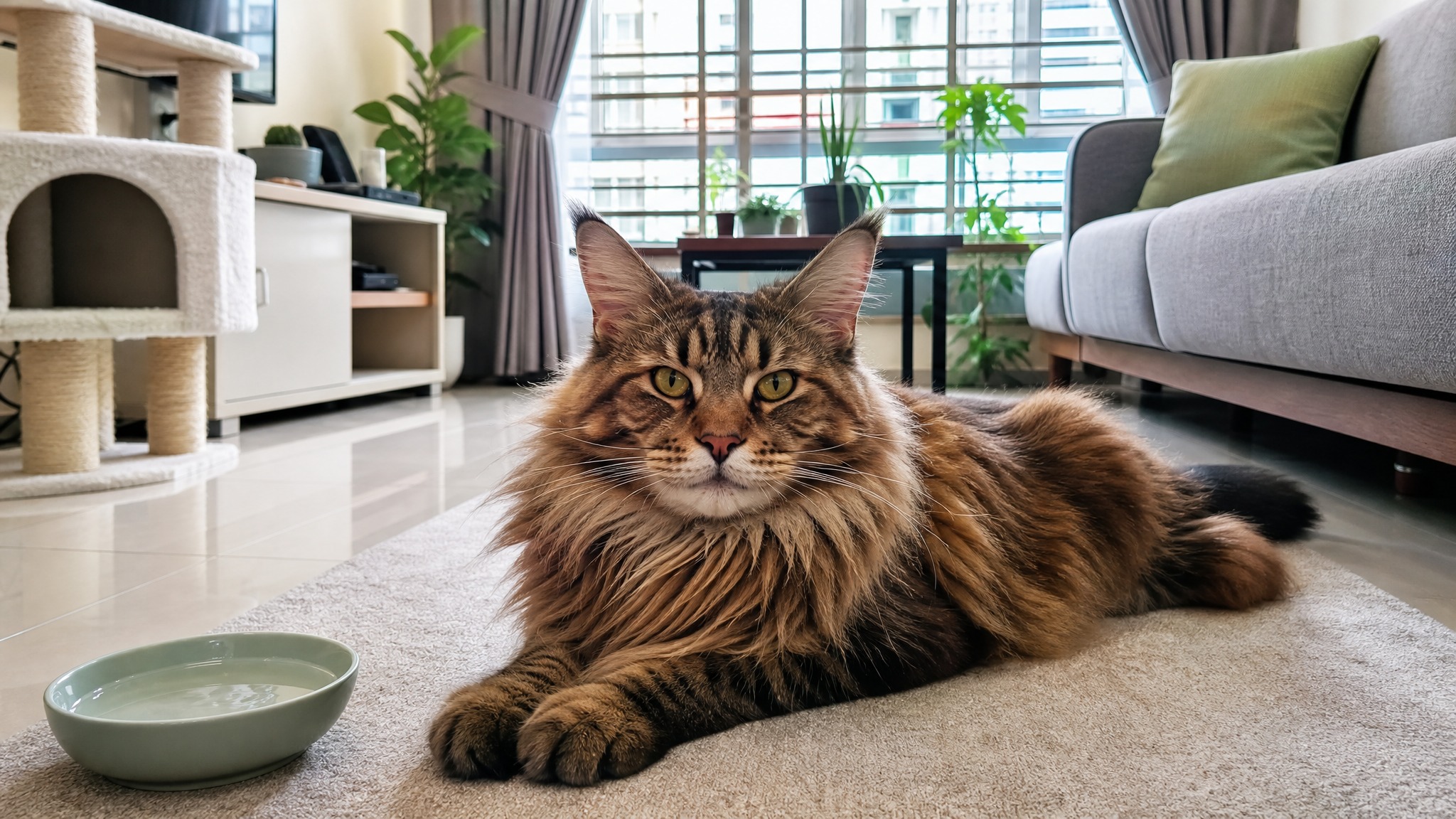
For Singapore owners, the answer is usually yes: Maine Coons can be healthy indoor cats, but they need proper weight control, routine vet checks, and a home setup that suits a large, long-haired breed. Their health outcomes depend a lot on diet, exercise, hydration, and early monitoring. In an HDB or condo setting, this matters even more because indoor cats rely fully on owners for movement, cooling, litter hygiene, and feeding structure.
It also helps to remember that “healthy” does not mean “low maintenance”. A Maine Coon’s bigger frame, thick coat, and slower maturation mean owners need to be more observant than they might be with a smaller short-haired cat. Good Maine Coon health starts with prevention: regular vet visits, sensible cat food choices, and a clean indoor environment that reduces stress and odour buildup.
Common Maine Coon health issues owners should know
One of the better-known concerns in Maine Coon health is hypertrophic cardiomyopathy, or HCM, a heart condition seen in some lines of the breed. Not every Maine Coon will develop it, and owners should not assume the worst, but it is worth discussing with a vet, especially if your cat comes from an unknown source. Signs may be subtle at first, such as lower energy, faster breathing, or reduced interest in play.
Hip dysplasia is another issue that can affect Maine Coons because of their large build. In a compact flat, this may be missed early, as cats often hide discomfort and simply become less active. If your cat hesitates to jump, seems stiff after rest, or avoids climbing, it is a good idea to ask your vet whether joint pain or mobility issues could be involved.
Some Maine Coons may also be prone to spinal muscular atrophy, a genetic condition that affects muscle control. This condition is not always common, but responsible breeders usually screen for inherited risks where possible. For owners adopting or buying in Singapore, asking about health history is a practical step, even if your cat already seems fine.
Beyond breed-specific conditions, obesity is one of the most common everyday problems. Large cats are often overfed because owners mistake size for a need for constant large meals. Good Maine Coon health depends on keeping them lean rather than simply “big”, especially in indoor homes where activity may be limited during long workdays.
Dental disease and urinary issues can also appear if routine care is overlooked. In Singapore’s warm climate, hydration matters because some cats drink less than they should, especially if they are picky about water bowls. Wet food, water fountains, and regular litter box observation can help owners spot trouble earlier.
Can a Maine Coon live comfortably in a Singapore HDB flat?
Yes, a Maine Coon can live comfortably in an HDB flat if the home is set up well and the cat gets enough stimulation. Despite their large size, Maine Coons are usually adaptable and people-oriented, which makes them suitable for indoor living. What matters most is not floor area alone, but whether the cat has climbing options, resting spots, scratching areas, and daily interaction.
For HDB cat households, vertical space is often more useful than simply having a bigger room. Tall cat trees, sturdy shelves, window perches, and safe hideouts can help a Maine Coon move naturally without feeling bored. Because this breed is heavier than average, furniture and cat structures should be stable and sized for large cats rather than designed for kittens or smaller breeds.
Singapore owners should also think about noise, heat, and litter odour in smaller homes. A stressed or uncomfortable cat may become less active, eat poorly, or avoid the litter box, which can affect Maine Coon health over time. Good ventilation, sensible placement of litter trays, and a regular cleaning schedule make apartment living much easier for both cats and humans.
If your household has working adults who are out most of the day, enrichment becomes even more important. Puzzle feeders, rotation toys, scratching posts, and short but consistent play sessions can help prevent boredom and unhealthy weight gain. Maine Coons are usually social cats, so they tend to do best when owners still make time for interaction every day.
Daily care tips for Maine Coons in Singapore’s humid weather
Singapore’s humidity can make long-haired cats feel warmer and less comfortable, even when they are indoors. That does not mean a Maine Coon must live in full air-con all day, but they do need cool resting areas, airflow, and fresh water at all times. For strong Maine Coon health, pay attention to panting, hiding on cool tiles, or avoiding activity during hotter parts of the day.
Brushing is a key part of daily or near-daily care. Maine Coons have thick coats that can trap loose fur, dust, and moisture, so regular grooming helps reduce matting and fur buildup around the home. In HDB flats where space is limited, this also helps with cleanliness and odour control, especially if your cat sheds heavily.
Diet matters too, especially for indoor cats in Singapore. Choose balanced cat food that matches your cat’s age and activity level, and avoid overfeeding treats just because your cat looks large and fluffy. If you are comparing cat food Singapore options, focus on quality ingredients, hydration support, and portion control rather than marketing claims.
Litter box care is another daily essential in a humid flat. Odours become stronger more quickly in warm weather, so scooping at least once or twice a day is important. Choosing suitable cat litter Singapore owners trust for clumping, odour control, and low dust can make a big difference in comfort, especially for large cats that need roomy trays and consistently clean toilet areas.
Hydration should never be overlooked. Some Maine Coons prefer running water, so a fountain may encourage better drinking habits. This is useful not just for comfort in humid weather, but also as part of everyday Maine Coon health support for urinary wellbeing and general energy levels.
When should you see a vet for a Maine Coon?
It is best to see a vet not only when something is obviously wrong, but also for routine health tracking. Because Maine Coons are a large breed with known inherited risks, regular check-ups can help catch subtle changes before they become serious. This is especially useful for indoor cats, where owners may assume reduced movement is just laziness rather than discomfort.
You should arrange a vet visit if your Maine Coon shows breathing changes, sudden tiredness, limping, appetite loss, vomiting that keeps happening, or difficulty using the litter box. These signs do not always mean a severe disease, but they should not be ignored. In many cases, early action gives better outcomes and prevents more stressful emergency treatment later.
Weight gain, poor coat condition, repeated hairballs, and changes in drinking or urination are also worth discussing. These can point to diet issues, grooming problems, stress, or underlying medical conditions. Good Maine Coon health is often about noticing small patterns early rather than waiting for dramatic symptoms.
For kittens, newly adopted cats, or senior Maine Coons, routine vet support is even more important. A vet can advise on body condition, feeding amounts, parasite prevention, and whether any breed-specific screening is appropriate. In Singapore, where many cats live fully indoors in HDB flats or condos, preventive care is often the most practical way to keep long-term health stable.
FAQ
1. Are Maine Coons high maintenance in Singapore?
They are not impossible to care for, but they do need more attention than many short-haired cats. Their coat, size, and exercise needs mean owners should be ready for regular brushing, litter maintenance, and weight monitoring. In Singapore’s humid weather, comfort and hygiene need a bit more planning.
2. Is a Maine Coon suitable for an HDB cat home?
Yes, if the flat has enough enrichment and stable furniture for a large cat. Vertical space, scratching areas, clean litter boxes, and daily play matter more than having a very large floor area. Many Maine Coons can adapt well to indoor apartment life when their routine is consistent.
3. What is the biggest Maine Coon health concern?
There is no single issue that affects every cat, but owners often watch for heart disease such as HCM, joint problems, and obesity. These are important because they may be missed early in indoor cats. Regular vet checks and sensible daily care are the best first steps.
4. Do Maine Coons need air-con in Singapore?
Not necessarily all day, but they do need a cool and well-ventilated environment. Fans, shaded resting spots, cool surfaces, and fresh water can help a lot. During very warm periods, air-con can improve comfort, especially for long-haired cats that seem heat sensitive.
5. What kind of litter box setup is best for a Maine Coon?
A large, sturdy litter tray is important because Maine Coons need more space to turn and dig comfortably. In smaller homes, strong odour control and frequent scooping matter even more. Many owners find that high-quality clumping litter helps keep the area cleaner and easier to manage.
6. How can I support Maine Coon health at home?
Focus on portion control, hydration, regular brushing, daily movement, and consistent litter box cleaning. Observe your cat’s breathing, appetite, coat, mobility, and toilet habits. Small changes can be early signs that a vet visit is needed.
If you are caring for a Maine Coon in Singapore, the right home setup makes everyday care much easier. From roomy litter trays and odour-control litter to water fountains, feeding tools, scratchers, and other practical cat supplies, choosing products that suit a large indoor cat can support comfort, cleanliness, and better routines. If you are comparing essentials for HDB living, explore Cat Garden’s Singapore store for useful cat supplies picked for indoor cats and daily home care needs.
延伸閱讀
- Cat Microchipping in Singapore: Cost, Process, and What Owners Should Prepare
- Cat Skin Problems in Singapore Humidity: What’s Mild, What Needs a Vet, and What Products May Help
- Why Is My Cat Itching More in Singapore’s Humid Weather? Common Skin Causes and When to See a Vet
Last updated:2026-06-04 by CatGarden
CatGarden Deodorizing Mineral Cat Litter 3.0