
▶Cat Column, Nutrition eating guide
Bringing Home Your First Cat in Malaysia? Set Up These Resting Spots Before the Stress Starts
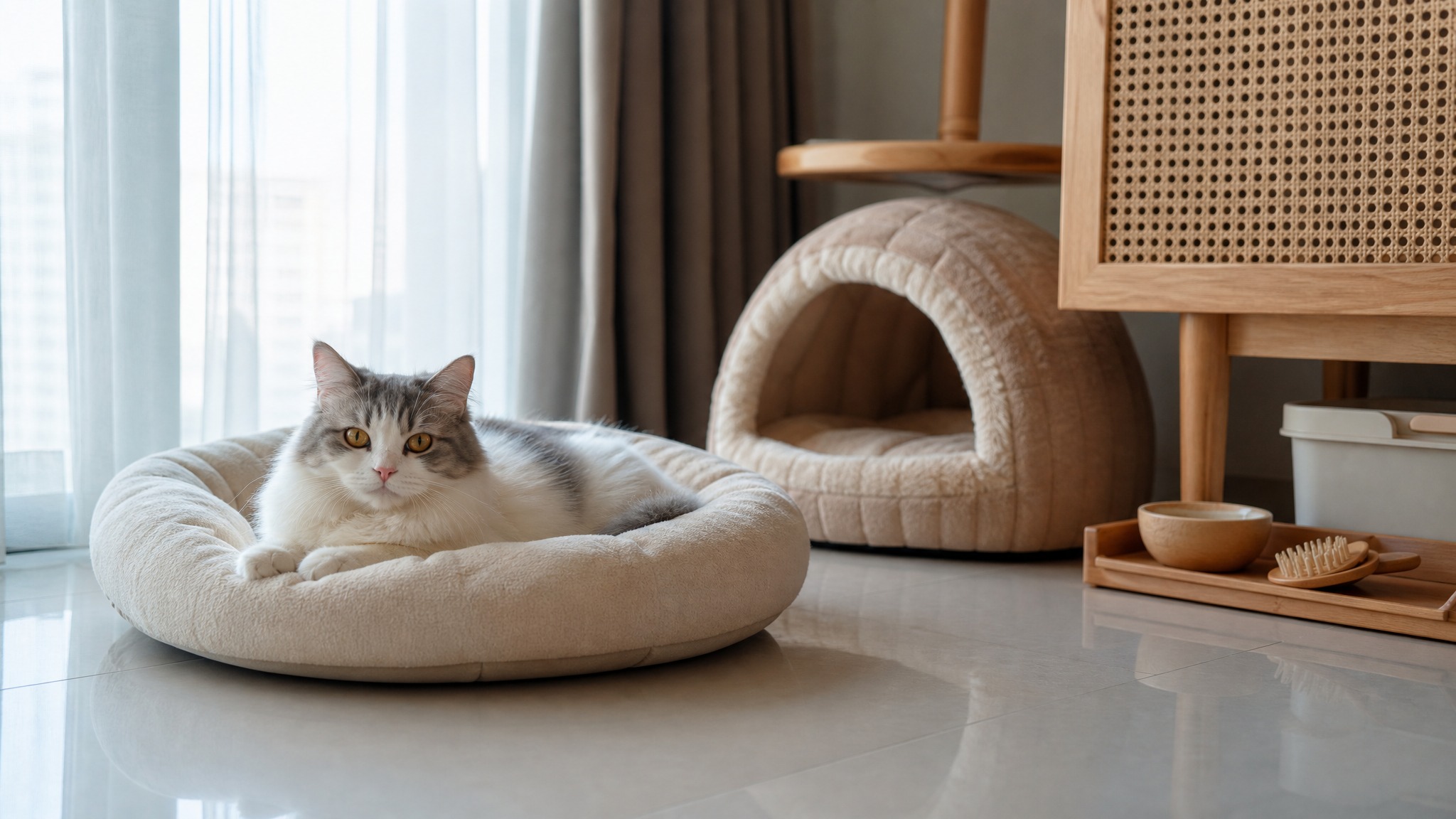
Why Resting Spots Matter More Than One Cute Cat Bed
Bringing home your first cat in Malaysia is exciting, but the first few days can feel intense for a newly adopted cat. A cat is entering unfamiliar smells, sounds, flooring, furniture, people, and routines all at once. Before thinking about toys or photo-worthy corners, it helps to plan several cat resting spots around the home so your cat can choose where to decompress.
One cute cat bed is rarely enough because cats do not rest in just one way. Sometimes they want to hide, sometimes they want to watch the room from a distance, and sometimes they want a cool floor near airflow. Giving your cat different options reduces pressure and helps them feel that they have control over their new space.
Rest Is Part of Feeling Safe
For a first cat, rest is not just sleep. It is how they reset after being handled, hearing renovation noise, smelling new people, or exploring a room for the first time. If your home already has safe resting areas before the cat arrives, the transition usually feels calmer for both the cat and the family.
Good resting areas also prevent common early problems, such as the cat hiding behind appliances, squeezing into dusty storage corners, or sleeping too close to busy doors. When the better option is already available, your cat is more likely to use it. This is especially useful in Malaysian homes where open windows, balcony grilles, wet kitchens, and shoe areas can introduce extra smells and movement.
Best Places to Put Cat Beds in Malaysian Condos and Landed Homes
In a condo, start with one quiet resting spot in the room where your cat will first stay. This could be a bedroom, study room, or enclosed area away from the main door and balcony. Place the bed near a wall or corner rather than in the middle of the room, because cats often feel safer when they are not exposed from every side.
A second option can be placed near a window with safe grilles or secure mesh, especially if the view is not too noisy. Many cats enjoy watching birds, rain, traffic, or people moving below, but the resting area should not overheat in direct afternoon sun. In Malaysia’s weather, a sunny spot can quickly become too warm, so check the surface temperature before leaving your cat there for long periods.
For Landed Homes
In landed homes, your cat may hear more outdoor sounds such as motorbikes, gates, neighbourhood cats, insects, or people walking past. Put one resting area in a quieter interior room, not beside the front gate, laundry area, or sliding door. If your cat has indoor-only access, make sure windows and doors are secure before creating a tempting window perch.
If your house has multiple floors, set up at least one rest point on the level where your cat spends the most time. A new cat should not need to climb stairs every time they want to feel safe. For older cats, kittens, or nervous rescues, easy access matters more than having the prettiest setup.
Think in Zones, Not Decorations
Useful cat resting spots usually cover different emotional needs. One should be hidden and quiet, one should let the cat observe the room, and one should be cooler or breezier. This gives your cat freedom to choose based on mood, weather, and household activity.
A simple cardboard box with a towel can be just as valuable as a premium bed during the first week. Many Malaysian cat owners compare products on Shopee or Lazada before buying, which is practical, but do not wait for the perfect item to arrive before preparing the space. A safe temporary setup is better than leaving your cat with no secure place to retreat.
How Humidity Changes Bedding, Odour and Cleaning Choices
Malaysia’s humidity affects cat bedding more than many first-time owners expect. Thick plush beds can trap moisture, fur, litter dust, and odour, especially in rooms without strong ventilation. If the bedding stays damp or smells musty, your cat may avoid it or develop skin discomfort.
Choose washable covers, breathable fabrics, and bedding that dries quickly after cleaning. Cotton towels, thin fleece layers, and removable mats are easier to rotate than one bulky bed. If you use air-conditioning often, provide a slightly warmer option too, because some cats move between cool tile and soft bedding depending on the temperature.
Odour Control Starts With Dryness
Odour problems are often blamed on the cat, but the real issue can be damp fabric, dirty litter tracking, or poor airflow. Keep resting areas away from the litter box, rubbish bins, wet bathrooms, and kitchen drains. Even if the cat litter or pasir kucing is good, fine dust and smell can travel if the bed is placed too close.
Wash bedding regularly with a mild, pet-safe detergent and avoid strong fragrances. Cats have sensitive noses, and heavy perfume smells can make a bed feel unsafe. If you use sprays for odour control, let the surface dry completely before allowing your cat back onto it.
Flea and Outdoor Exposure Risks
In Malaysian landed homes, outdoor exposure can increase flea and parasite risk, especially if neighbourhood cats pass through the compound. Even indoor cats can be affected if fleas come in through shoes, clothing, or other pets. Resting spots should be easy to vacuum, inspect, and clean, especially during humid or rainy periods.
Raised beds, washable mats, and smooth surfaces around sleeping areas make cleaning much easier. Avoid placing bedding directly beside dusty storerooms, shoe racks, or open drains. The calmer your cleaning routine is, the less likely you are to disturb your cat’s sense of security.
Signs Your New Cat Feels Unsafe or Overstimulated
A new cat may hide for a while, and that alone is not a failure. Some cats explore on the first day, while others need several days before eating confidently or resting in the open. What matters is whether your home gives them safe choices instead of forcing them to interact.
Watch for signs such as flattened ears, dilated pupils, tail tucked tightly, growling, hissing, swatting, or constant hiding in hard-to-reach areas. A cat that keeps moving from one hiding place to another may not have found a resting area that feels secure. This is a good time to improve your cat resting spots rather than trying to handle the cat more.
Overstimulation Can Look Like “Bad Behaviour”
First-time owners sometimes think a cat is being naughty when it bites, runs away, scratches furniture, or refuses to be carried. In many cases, the cat is overstimulated or unsure how to escape politely. Resting areas help because they give the cat a clear place to go when social time is too much.
Children and guests should be told not to pull the cat out of its bed, box, carrier, or hiding place. If the cat learns that resting areas are respected, it will usually become more confident faster. Trust grows when the cat can say “not now” without being chased.
When to Adjust the Setup
If your cat never uses a bed, the location may be too exposed, too hot, too close to noise, or too strongly scented. Move it beside a wall, under a table, near a quiet shelf, or into a room with less foot traffic. Small changes often work better than buying another expensive bed immediately.
Also check whether the bed texture suits your cat. Some cats prefer firm surfaces, some prefer soft blankets, and some prefer cardboard or cooling mats. The best cat resting spots are the ones your cat actually chooses, not necessarily the ones that look best in the room.
Simple Supplies That Make a First-Cat Setup Calmer
A calm first-cat setup does not need to be complicated. Start with a secure carrier, two or three washable resting surfaces, food and water bowls, suitable cat food Malaysia options, a litter tray, cat litter, a scratcher, and a few gentle toys. These basics reduce stress because your cat’s daily needs are already covered.
Keep the first week simple. Too many toys, beds, tunnels, visitors, and room changes can overwhelm a cat that is still learning the home. Build confidence slowly by letting your cat explore one area first, then expanding access once eating, drinking, litter use, and resting look stable.
Resting Supplies Worth Preparing First
- Washable bed or mat: Choose breathable material that can dry quickly in humid weather.
- Cardboard box or covered hideout: This helps nervous cats settle without feeling watched.
- Light towel or blanket: Easy to rotate, wash, and place inside a carrier or box.
- Raised perch or safe shelf: Useful for cats that prefer observing from above.
- Scratch mat or post nearby: Cats often stretch and scratch after resting.
Do not place all supplies in one crowded corner. Food, water, litter, scratching, and rest should each have their own sensible space. This helps prevent odour issues and gives your cat a more natural daily flow around the home.
Product Choices for Malaysian Homes
When comparing cat supplies online, think about cleaning effort, ventilation, and your home layout. A fluffy bed may look comfortable, but if it takes too long to dry during rainy weather, it may not be practical. A simple washable mat and a covered hideout may perform better in daily Malaysian home care.
If you live in a condo, look for compact, stable items that do not block walkways or balcony access. If you live in a landed home, prioritise easy cleaning and flea monitoring. The goal is not to buy everything at once, but to create a few reliable cat resting spots that support your cat’s confidence from day one.
FAQ
How many resting spots does a new cat need?
Most first cats do well with at least three options: one hidden, one open but quiet, and one cooler or higher spot. These should be spread across the area your cat is allowed to use. As your cat becomes more confident, you can adjust the locations based on where it naturally rests.
Should I put my cat’s bed near the litter box?
No, it is better to keep resting areas away from the litter box. Even good cat litter or pasir kucing can carry odour, dust, and tracking, especially in humid weather. Cats usually prefer their sleeping area to be clean, dry, and separate from toileting spaces.
Is air-conditioning okay for a new cat in Malaysia?
Air-conditioning is usually fine if your cat has choices. Some cats enjoy cool rooms, while others prefer a warmer blanket or box nearby. Avoid placing the bed directly under strong airflow, and observe whether your cat curls tightly, leaves the room, or seeks a warmer surface.
Why does my cat ignore the bed I bought?
Your cat may dislike the location, smell, texture, heat, or exposure level of the bed. Try moving it to a quieter corner, adding a familiar towel, or placing it near a wall. Cats choose resting places based on safety first, not price or design.
Can I let my new cat sleep on my bed immediately?
You can, but it is better to let the cat choose without pressure. Some cats bond quickly and enjoy sleeping near people, while others need time before sharing a bed. Even if your cat sleeps with you, keep separate cat resting spots available so it can retreat whenever needed.
Choosing Cat Supplies for a Calmer First Week
Your first week with a cat becomes easier when the home is prepared before stress appears. Start with practical cat supplies that suit Malaysian humidity, your condo or landed layout, and your cleaning routine: washable bedding, a secure carrier, reliable cat litter, bowls, scratchers, and simple comfort items. Compare materials, sizes, and care requirements instead of buying only by appearance. With the right supplies in place, your new cat gets safer choices, and you get a smoother, calmer start to life together.
延伸閱讀
- Why Newly Adopted Indoor Cats Try to Escape: Door-Dashing Tips for Malaysian Homes
- Is Your Indoor Cat Bored or Anxious? Simple Enrichment Ideas for Malaysian Homes
- Adopting Two Cats Together in Malaysia: How to Set Up a Calm Indoor Home
Last updated:2026-06-10 by CatGarden
CatGarden Deodorizing Mineral Cat Litter 3.0