
▶Cat Column, Everyday beauty care
How to Reduce Humidity for Cats in Singapore Flats: Mold, Damp Bedding, and When It Becomes a Health Risk
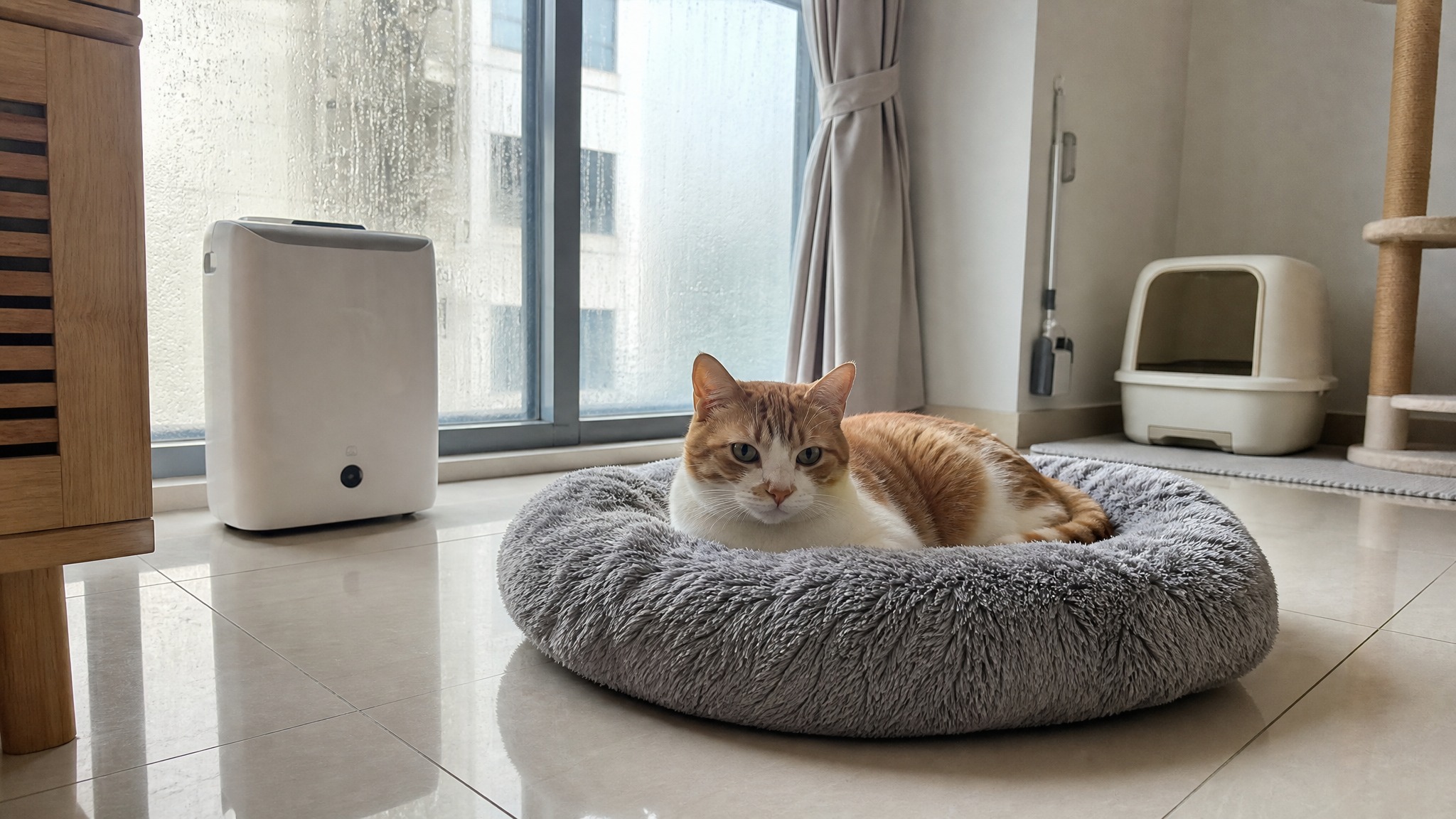
Why Singapore Humidity Can Be Hard on Indoor Cats
Singapore’s weather is warm and humid for most of the year, and that can make indoor living less comfortable for cats than many owners realise. In an HDB flat or condo, moisture can build up from closed windows, laundry drying indoors, bathrooms, kitchens, and limited airflow. For owners searching cat humidity Singapore, the issue is not only heat but also how damp air affects bedding, litter areas, and overall comfort.
Unlike outdoor animals that can move around to find drier ground or more breeze, indoor cats depend on the home environment we create for them. A cat that spends most of the day in one room, under the bed, or on fabric surfaces may be exposed to dampness for hours at a time. In smaller flats, even minor moisture problems can feel bigger because sleeping, litter, feeding, and resting zones are all close together.
Humidity also tends to linger in places owners do not check every day. Behind furniture, near window tracks, around enclosed litter cabinets, and inside storage areas, moisture can stay trapped long after the room seems normal. This is why cat humidity Singapore is a practical home-care concern, especially for busy working owners who may only notice the problem when there is already a smell, mold spot, or change in their cat’s behaviour.
Air-con can help, but many homes do not run it all day due to cost or routine. When the air-con is switched off for long stretches, the flat can quickly feel stuffy again, especially in the afternoon or after rain. That constant cycle of cool-dry to warm-damp may affect sensitive cats more than owners expect.
Signs Your Flat Is Too Damp: Bedding, Litter Area, Windows, and Hidden Mold
One of the first places dampness shows up is your cat’s bedding. If blankets, cushions, or plush beds feel slightly cold, clammy, or never fully fresh even after washing, the room may be too humid. Some cats respond by avoiding their usual bed and choosing a tile floor, shelf, or other spot that feels cooler and drier.
The litter area is another common warning sign. In humid weather, clumps may break more easily, litter may hold odours faster, and the space around the tray may start smelling musty even when you scoop regularly. For homes researching cat humidity Singapore, this is important because litter performance can change a lot in damp rooms, especially if the tray is placed in a bathroom, service yard, or enclosed corner with weak airflow.
Common home signs to watch for
- Windows and frames: condensation, black specks, or a stale smell near tracks and seals
- Walls and corners: peeling paint, dark patches, or powdery spots behind furniture
- Bedding and fabrics: beds that stay damp-smelling, towels that dry slowly, or soft toys that feel musty
- Litter zone: stronger odour, damp litter mat, or a tray area that never feels fully dry
- Hidden storage spaces: wardrobes, under-bed boxes, and cabinets with poor ventilation
Mold is not always obvious at first. It may begin as a faint smell behind a cabinet, under the sofa, or near a window your cat likes to sit by. If your cat sleeps in these areas often, it is worth checking them closely rather than only cleaning visible surfaces.
Some owners assume a mild “rainy season smell” is normal in Singapore flats, but persistent mustiness usually means moisture is staying trapped somewhere. If the litter room, bedroom, or study smells stale even after cleaning, the flat may need better moisture control. In many cat humidity Singapore cases, improving airflow and reducing damp fabric surfaces makes a noticeable difference within days.
How Humidity May Affect Your Cat’s Skin, Breathing, Appetite, and Comfort
Humidity does not automatically make a cat sick, but it can make existing sensitivities harder to manage. Cats with delicate skin may become itchier if bedding stays damp or if the environment encourages yeast, bacteria, or mold growth on surfaces. You may notice more scratching, overgrooming, greasy fur, or reluctance to lie in their usual sleeping area.
Breathing comfort matters too, especially in homes with poor ventilation, dust buildup, or hidden mold. Some cats may seem fine most of the time but become noisier in their breathing, sneeze more often, or avoid stuffy rooms. While not every sneeze is caused by damp air, cat humidity Singapore concerns are worth taking seriously when respiratory signs appear together with visible mold, odour, or condensation.
Appetite and general mood can also change when a home feels too warm and damp. A cat that is uncomfortable may eat less enthusiastically, sleep in odd places, or become less playful. Some cats spend more time stretched on the floor, grooming excessively, or moving between rooms looking for a cooler resting spot.
There is also the issue of litter box comfort. If the litter area feels humid, smells stronger, or stays damp around the tray, some cats may hesitate to use it as normally as before. Owners may think the problem is behavioural, but sometimes the setup is simply less pleasant in humid weather and needs adjustment.
Simple Ways to Reduce Dampness in an HDB or Condo Without Stressing Your Cat
The best approach is usually steady, low-stress improvement rather than a sudden overhaul. Cats prefer familiar routines, so it helps to make changes gradually while keeping feeding, litter, and sleeping areas predictable. If you are dealing with cat humidity Singapore conditions, focus first on airflow, fabric care, and moisture-prone corners.
A dehumidifier can help in bedrooms, studies, or rooms where your cat spends most of the day, especially when windows stay closed. If you use one, place it safely with cords secured and avoid pointing strong dry air directly at your cat’s bed. Even running it for a few hours during the dampest part of the day can improve comfort and reduce musty smells.
Practical ways to reduce indoor dampness
- Improve airflow: use fans, open windows when weather allows, and avoid trapping litter boxes in fully enclosed spaces
- Wash bedding often: rotate beds, mats, and blankets so your cat always has a dry sleeping surface
- Choose the right materials: quick-drying beds and washable mats are often better than thick plush items in humid weather
- Clean hidden areas: move furniture slightly away from walls and check behind cabinets, curtains, and bed frames
- Review litter setup: use a litter that controls odour well in humidity and keep the surrounding mat dry
- Use air-con strategically: short cooling periods in the hottest, dampest hours may be more effective than random use
If you dry laundry indoors, keep it away from your cat’s sleeping and litter areas. Wet clothes can raise moisture levels in small flats surprisingly quickly, especially in bedrooms or utility areas. Likewise, if your bathroom stays damp, it is usually better not to place the litter tray there unless ventilation is strong and consistent.
Owners should also think about product choice. Some beds trap moisture more than others, and some litter types handle humid conditions better than others. For many homes dealing with cat humidity Singapore, simple swaps such as a more breathable bed, a better litter mat, or a litter formula designed for odour control can make everyday care much easier.
When to Monitor at Home and When to Call a Vet
If your cat is eating normally, using the litter box well, and behaving as usual, you can often start by monitoring at home while improving the environment. Keep an eye on where your cat chooses to rest, whether bedding stays dry, and whether odour or condensation improves after cleaning and ventilation changes. Mild comfort issues may settle once the home becomes less damp.
It is sensible to document what you see for a few days. Note any scratching, sneezing, changes in appetite, avoidance of certain rooms, or litter box hesitation. This helps you tell the difference between a temporary humidity-related comfort problem and a pattern that may need veterinary advice.
Call a vet if your cat has persistent coughing, wheezing, open-mouth breathing, repeated vomiting, clear skin irritation, ear issues, strong lethargy, or a noticeable drop in appetite. You should also seek help if there is known mold exposure and your cat’s breathing or energy changes soon after. Humidity alone is not a diagnosis, so a vet should assess symptoms that are ongoing, severe, or getting worse.
In Singapore, indoor cats often hide discomfort well, especially in quiet HDB homes where owners are out during the workday. That means small signs can be easy to miss until they become bigger. If you are already managing cat humidity Singapore issues at home and your cat still seems uncomfortable after environmental changes, it is best not to wait too long before checking with a vet.
Keeping your flat dry, clean, and comfortable does not have to be complicated. Small changes in airflow, bedding, and litter setup can help your cat rest better and keep the home fresher too. If you are reviewing your home routine, it is also a good time to refresh the basics with practical cat supplies such as breathable beds, odour-control litter, mats, and other everyday essentials suited to humid Singapore living. Choosing the right supplies can make it easier to manage damp weather while keeping your cat comfortable in an HDB flat or condo.
FAQ
What is the ideal indoor humidity level for cats in Singapore?
There is no single perfect number for every cat, but many homes aim for a comfortable indoor range that does not feel damp or stuffy. If you notice condensation, musty smells, or bedding that never feels fully dry, humidity is likely too high for comfort. A basic humidity meter can help you monitor rooms where your cat sleeps most.
Can high humidity make cat litter smell worse?
Yes, humid air can make odours stronger and may reduce how well some litters clump or stay fresh. This is especially common in enclosed litter spaces or rooms with weak ventilation. Scooping more often and choosing litter suited for humid weather can help.
Should I use a dehumidifier or air-con for my cat?
Either can help, depending on your home setup. A dehumidifier is useful for reducing dampness, while air-con can improve both temperature and comfort. The key is to use them safely, maintain airflow, and avoid blasting cold air directly onto your cat’s resting spot.
How do I know if mold is affecting my cat?
You may notice sneezing, increased scratching, avoidance of certain areas, or a general drop in comfort if there is mold in the home. These signs are not specific to mold, so they should not be used for self-diagnosis. If symptoms persist or breathing seems affected, contact a vet.
Is it okay to keep the litter box in the bathroom in a Singapore flat?
It depends on ventilation. Bathrooms in Singapore flats can stay damp for long periods, especially after showers, which may worsen odour and litter performance. If you use the bathroom for the tray, make sure airflow is good and the area dries quickly.
Do cats get stressed by changes made to reduce humidity?
They can, especially if furniture, litter location, or resting areas change suddenly. It is usually better to adjust one thing at a time and keep your cat’s daily routine stable. Gradual changes are easier for most indoor cats to accept.
延伸閱讀
- Are Maine Coons Healthy Cats? Common Breed Risks, HDB Living Checks, and Care Tips for Singapore Owners
- Cat Microchipping in Singapore: Cost, Process, and What Owners Should Prepare
- Cat Skin Problems in Singapore Humidity: What’s Mild, What Needs a Vet, and What Products May Help
Last updated:2026-06-05 by CatGarden
CatGarden Deodorizing Mineral Cat Litter 3.0